

Mirrorless vs DSLR for Travel Photography (2026 Guide)
Mirrorless vs DSLR for Travel Photography (2026 Guide)
Travel photography in 2026 is about more than just image quality. It is about mobility, reliability, and having a camera that works with your travel rhythm instead of against it.
Whether you are exploring cities, hiking through landscapes, or documenting trips for social media or clients, your camera choice affects how often you shoot and how confident you feel while doing so.

The debate between Mirrorless vs DSLR for Travel Photography still matters, even as mirrorless systems dominate headlines. Many travelers still own DSLRs or wonder if switching systems is worth the cost, learning curve, and disruption.
Others are choosing their first serious travel camera and feel overwhelmed by opinions, specs, and marketing claims.
This guide breaks the decision down clearly. You will learn how mirrorless and DSLR systems actually perform for travel in 2026, what matters most on the road, and which system best supports real-world photography rather than idealized use cases.
Why the Mirrorless vs DSLR Decision Still Matters in 2026
Camera technology has evolved quickly, but travel photography presents unique challenges that expose the strengths and weaknesses of any system. You are often shooting handheld, working in unpredictable lighting, moving between environments quickly, and carrying your gear for long hours.
Mirrorless and DSLR cameras approach these challenges differently.
Mirrorless systems prioritize compact design, advanced autofocus, and electronic viewfinder feedback. DSLR systems emphasize optical viewing, traditional handling, and long-established reliability.
Neither approach is inherently wrong. The better choice depends on how you travel, how you shoot, and how much gear you want to carry.

What Travel Photographers Should Prioritize Before Choosing a System
Before comparing mirrorless and DSLR cameras directly, it helps to clarify what actually matters for travel photography in 2026.
Portability and Carry Comfort
Travel days are long. A camera that feels fine for 30 minutes can become exhausting after eight hours of walking.
You should prioritize:
-
Lightweight camera bodies
-
Smaller lens options
-
Balanced ergonomics with travel lenses
-
Reduced overall system weight
Even small reductions in size and weight compound over time.
Autofocus Performance in Real Situations
Travel photography often involves fleeting moments. Street scenes, candid portraits, wildlife, and fast-changing light do not allow second chances.
Reliable autofocus matters more than resolution or burst speed.
Look for:
-
Accurate face and eye detection
-
Strong subject tracking
-
Minimal focus hunting in low light

Battery Life and Charging Flexibility
Outlets are not always available. Power management matters more than lab-tested battery ratings.
You want:
-
Efficient battery usage
-
USB-C charging support
-
Easy access to spare batteries
Lens Ecosystem for Travel
Your camera body matters, but your lenses define your experience.
A good travel system offers:
-
Compact zoom lenses
-
Lightweight prime lenses
-
Affordable options without sacrificing quality

Ease of Use While Moving
Travel photography rewards intuition. Complex menus and heavy customization slow you down.
A good travel camera:
-
Starts quickly
-
Switches modes easily
-
Allows confident shooting without constant menu diving
Mirrorless Cameras for Travel Photography in 2026
Mirrorless cameras have become the dominant choice for new travel photographers, and for good reason.
Advantages of Mirrorless for Travel
Mirrorless systems offer several benefits that align well with modern travel needs.
Smaller and Lighter Bodies
Without a mirror mechanism, mirrorless cameras can be significantly smaller and lighter than DSLRs. This directly improves portability and comfort.
Advanced Autofocus Systems
Mirrorless cameras use on-sensor autofocus, allowing for:
-
Accurate eye detection
-
Reliable subject tracking
-
Better focus coverage across the frame
This is especially valuable for street photography and candid moments.

Real-Time Exposure Feedback
Electronic viewfinders show you exactly how your image will look before you press the shutter. This reduces guesswork when moving between lighting conditions.
Better Hybrid Photo and Video Capability
Most mirrorless cameras handle photo and video equally well, making them ideal for travelers who create mixed content.
Trade-Offs of Mirrorless for Travel
Mirrorless systems are not perfect.
Potential drawbacks include:
-
Shorter battery life compared to DSLRs
-
Electronic viewfinders that some photographers dislike
-
Higher initial cost for newer systems
However, many of these issues have improved significantly by 2026.

DSLR Cameras for Travel Photography in 2026
DSLRs still have a loyal following, and for some travel photographers, they remain a practical option.
Advantages of DSLRs for Travel
Optical Viewfinders
Some photographers prefer optical viewfinders for their clarity and lack of lag. This can feel more natural in bright outdoor conditions.
Strong Battery Life
DSLRs often last longer on a single battery, which can be useful on long travel days.
Mature Lens Ecosystems
DSLR systems have extensive lens options, including affordable used lenses that can reduce overall cost.
Familiar Handling
If you already use a DSLR, sticking with it avoids retraining muscle memory and the need for workflow changes.
Trade-Offs of DSLRs for Travel
DSLR systems also have limitations.
-
Larger and heavier bodies
-
Bulkier lenses
-
Slower autofocus for video and live view
-
Declining manufacturer support for new models
For travelers who prioritize mobility and hybrid shooting, these drawbacks matter more each year.

Mirrorless vs DSLR for Travel Photography: Head-to-Head Comparison
Size and Weight
Mirrorless systems are clearly smaller and lighter overall. This matters for travel.
Winner: Mirrorless
Autofocus Performance
Mirrorless cameras offer faster, more accurate autofocus for moving subjects and people.
Winner: Mirrorless
Battery Life
DSLRs still hold an advantage for battery endurance.
Winner: DSLR
Lens Availability
DSLRs offer a wider user base, but mirrorless systems now offer excellent native and third-party lenses.
Winner: Tie, depending on budget
Future-Proofing
Manufacturers are focusing development on mirrorless systems.
Winner: Mirrorless
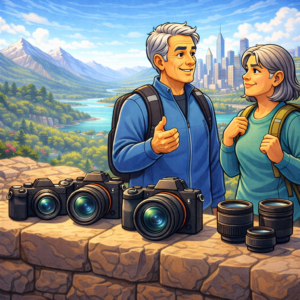
Recommended Cameras for Travel Photography in 2026
Below are strong options that align well with travel needs. These recommendations focus on portability, reliability, and real-world usability rather than pure specs.
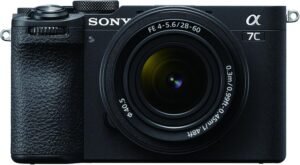
Sony Alpha a7C II
Style: Full-Frame Mirrorless
Manufacturer: Sony
✅ Get Customer Reviews & Best Price
The a7C II delivers full-frame image quality in a rangefinder-style body that is significantly smaller than traditional full-frame cameras. This makes it ideal for travelers who want high dynamic range and low-light performance without carrying a bulky kit.
Pros
-
Extremely compact for a full-frame camera
-
Excellent autofocus with subject recognition
-
Strong battery efficiency for mirrorless
-
Works well with compact Sony and third-party lenses
Cons
-
A smaller grip may feel cramped with large lenses
-
A single card slot may concern some professionals
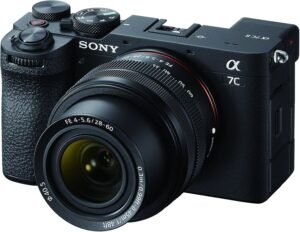
The Sony Alpha a7C II is designed for travelers who want full-frame image quality in one of the smallest bodies available. Its rangefinder-style design reduces bulk while still delivering strong sensor performance and advanced autofocus capabilities. This makes it appealing for photographers who want high dynamic range and low-light flexibility without carrying a traditional full-frame kit.
The camera integrates well with compact Sony and third-party lenses, allowing you to build a lightweight travel setup that covers wide, standard, and short telephoto needs. Autofocus performance is reliable with both people and moving subjects, helping maintain consistency across varied travel environments.
While the smaller grip may feel less comfortable with large lenses, many travelers pair this body with compact primes or zooms to maintain balance. The a7C II is ideal if portability is a top priority, but image quality cannot be compromised.
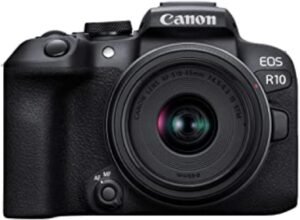
Canon EOS R10
Style: APS-C Mirrorless
Manufacturer: Canon
✅ Get Customer Reviews & Best Price
The EOS R10 is a lightweight APS-C camera that balances speed, autofocus reliability, and ease of use. It is especially appealing for travelers who want Canon’s color science and ergonomics in a compact, affordable body.
Pros
-
Very lightweight and easy to carry all day
-
Fast and reliable autofocus
-
Simple menu system for quick shooting
-
Strong performance for street and travel action
Cons
-
APS-C sensor limits extreme low-light performance
-
Smaller battery compared to higher-end models
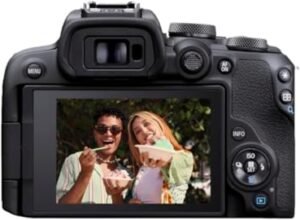
The Canon EOS R10 is a strong travel option for photographers who want speed, portability, and modern autofocus without the size or cost of a full-frame system. Its APS-C sensor keeps the body lightweight, making it comfortable to carry throughout long travel days.
This is particularly useful when navigating cities, public transportation, or crowded destinations where discretion matters.
Autofocus performance is one of the R10’s standout features. It handles moving subjects well, which benefits street photography, travel action, and candid moments. The camera’s interface is approachable, reducing the learning curve for photographers transitioning from smartphones or older cameras.
While battery life is shorter than on larger models, USB-C charging support helps manage power while traveling. The EOS R10 is well-suited for travelers who want responsive performance and ease of use in a compact system.
Nikon Z f
Style: Full-Frame Mirrorless
Manufacturer: Nikon
✅ Get Customer Reviews & Best Price
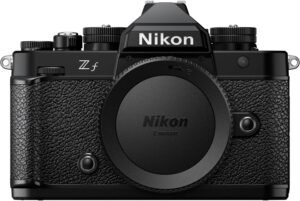
The Nikon Z f combines modern full-frame performance with a retro-inspired body. It appeals to photographers who value tactile controls and deliberate shooting while still benefiting from current sensor and autofocus technology.
Pros
-
Excellent image quality and dynamic range
-
Strong in-body stabilization
-
Retro controls encourage intentional shooting
-
Solid build quality for travel
Cons
-
Heavier than some compact full-frame options
-
Retro ergonomics are not for everyone
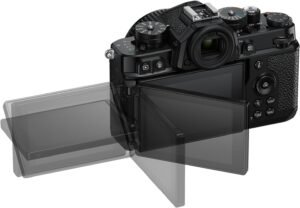
The Nikon Z f blends modern mirrorless performance with a retro-inspired design that encourages a more deliberate approach to photography. For travel photographers who enjoy slowing down and being intentional with composition, its physical dials and tactile controls provide a satisfying shooting experience.
These controls allow you to adjust exposure quickly without relying heavily on menus, which can be helpful in bright outdoor conditions or fast-changing scenes.
Beyond aesthetics, the Z f delivers strong full-frame image quality, good dynamic range, and reliable in-body stabilization. This makes it versatile for a wide range of travel scenarios, from city streets to landscapes.
While the body is slightly heavier than some compact full-frame options, many photographers appreciate the balance it offers with small prime lenses. The Z f is especially appealing if you value creative engagement and modern performance in a camera that feels distinct from typical digital designs.
OM System OM-5
Style: Micro Four Thirds Mirrorless
Manufacturer: OM System
✅ Get Customer Reviews & Best Price
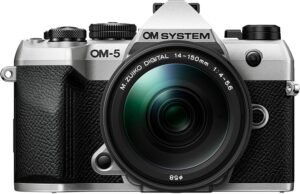
The OM-5 is built for outdoor and adventure travel. Its lightweight body, strong weather sealing, and excellent stabilization make it ideal for hikers, nature travelers, and photographers who prioritize mobility.
Pros
-
Extremely lightweight system
-
Excellent weather resistance
-
Strong in-body stabilization
-
Compact lenses reduce overall kit weight
Cons
-
Smaller sensor limits extreme low-light work
-
Less subject separation compared to full-frame
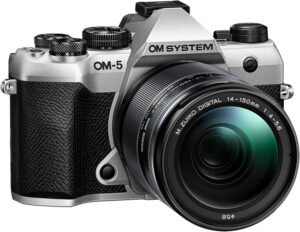
The OM System OM-5 is designed for travelers who value mobility, durability, and outdoor performance. Its Micro Four Thirds system allows for significantly smaller lenses, reducing overall kit weight and making it easier to carry gear for long hikes, city walks, or multi-day trips.
This portability often leads to more consistent shooting, since the camera is less likely to be left behind.
Weather sealing is another major advantage. The OM-5 handles dust, moisture, and changing conditions well, making it suitable for adventure travel and unpredictable environments.
Its in-body image stabilization helps compensate for the smaller sensor, enabling handheld shooting in low light or on uneven terrain. While the sensor size limits extreme low-light performance and shallow depth-of-field effects, many travel photographers find the trade-off worthwhile for the comfort and flexibility this system provides during long days on the move.
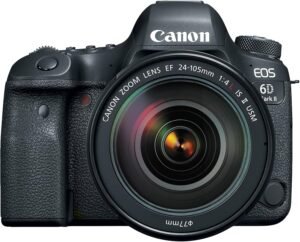
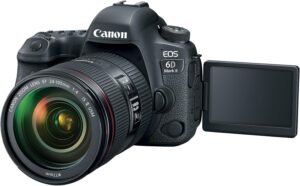
Canon EOS 6D Mark II
Style: DSLR
Manufacturer: Canon
✅ Get Customer Reviews & Best Price
The Canon EOS 6D Mark II remains a relevant option for travel photographers who prefer DSLR handling and optical viewfinders. Its full-frame sensor delivers dependable image quality for landscapes, architecture, and portraits, especially in well-lit travel conditions.
Pros
-
Excellent battery life for long travel days
-
Full-frame image quality
-
Comfortable ergonomics
-
Wide availability of affordable lenses
Cons
-
Larger and heavier than mirrorless options
-
Autofocus and video features lag behind modern mirrorless cameras
One of its strongest advantages for travel is battery efficiency. You can often shoot an entire day without worrying about recharging, which is valuable when outlets are limited or when you are frequently moving between locations.
The camera’s ergonomics are another strength. The grip is comfortable for long shooting sessions, and the control layout feels intuitive for photographers familiar with Canon systems. Access to the extensive EF lens ecosystem also makes this camera appealing for budget-conscious travelers, as high-quality used lenses are widely available.
While it lacks modern mirrorless autofocus and video features, it remains a practical choice for photographers who prioritize still photography, reliability, and long battery life over cutting-edge technology.
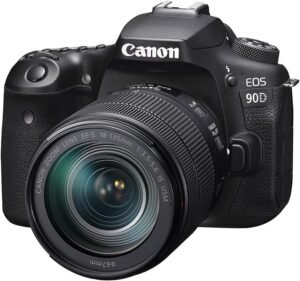
Canon EOS 90D
Style: DSLR
Manufacturer: Canon
✅ Get Customer Reviews & Best Price
The Canon EOS 90D represents one of the most capable APS-C DSLRs still relevant for travel photography. It offers a strong balance of resolution, battery life, and familiar DSLR handling. For travelers who already own EF or EF-S lenses, the 90D lets you keep using existing gear without switching to a new system.
Pros
-
Excellent battery life
-
Strong image quality
-
Extensive lens options
Cons
-
Larger and heavier than mirrorless
-
Slower video autofocus
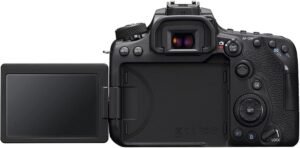
The EOS 90D’s battery life is a major advantage for travel. You can shoot extensively without worrying about frequent recharging, which is useful on long days or in remote locations. The optical viewfinder performs well in bright sunlight, and the camera’s ergonomics support extended shooting sessions.
While the body and lenses are larger than mirrorless alternatives, some photographers prefer the stability and familiarity of DSLR systems. The EOS 90D is best suited for travelers who prioritize still photography, endurance, and system continuity over compact size.
Use Our Decision Tool
We created this quiz to help you select the best mirrorless or DLSR camera for your needs. Just answer 7 questions, and the tool will recommend a travel camera for your unique situation.
Find Your Perfect Travel Camera
Answer 7 quick questions to get a personalized camera recommendation for your travel photography needs
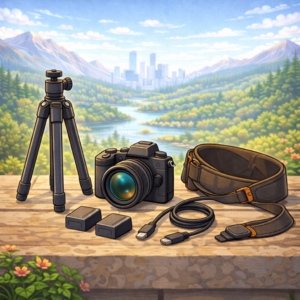
Accessories That Improve Travel Photography More Than a Camera Upgrade
Accessories often deliver greater real-world benefits than upgrading bodies.
Lightweight Travel Tripod
-
Supports long exposures
-
Enables self-portraits and night shots
-
Carbon fiber designs reduce weight
Extra Batteries and Compact Charger
-
Reduces downtime
-
Essential for long travel days
Weather-Resistant Camera Sling
-
Keeps gear accessible
-
Protects equipment while moving
Frequently Asked Questions
Is mirrorless better than DSLR for travel photography in 2026?
For most travelers, mirrorless systems are better suited to modern travel photography because they align more closely with how people actually shoot on the road in 2026. Lighter bodies reduce fatigue during long walking days, and smaller lenses make it easier to pack efficiently.
Faster, more intelligent autofocus systems are especially helpful when photographing people, street scenes, wildlife, or fleeting moments when there is no opportunity to retry a shot.
Mirrorless cameras also provide real-time exposure previews through electronic viewfinders, which helps you adjust quickly when moving between bright outdoor environments and darker interiors.
While DSLRs are still capable of producing excellent images, they tend to be bulkier and less adaptable for hybrid photo and video workflows. For travelers who want a future-proof system that supports both stills and video, mirrorless cameras generally offer a more practical long-term choice.
Are DSLRs still worth buying for travel?
DSLRs can still be worth buying for travel in specific situations, particularly if you already own compatible lenses or strongly prefer optical viewfinders. Many DSLRs offer excellent battery life, which can be valuable on long travel days when charging opportunities are limited.
Their handling and control layouts may also feel more comfortable if you are accustomed to traditional camera designs.
However, for new buyers, DSLRs are becoming harder to recommend. Manufacturers are investing far more heavily in mirrorless systems, which means future lenses, accessories, and firmware updates will primarily support mirrorless platforms.
DSLRs are also generally larger and heavier, which can discourage frequent use during travel. If you value simplicity, portability, and long-term support, mirrorless systems are usually the safer investment, while DSLRs make the most sense as a continuation of an existing setup.

Does mirrorless autofocus really matter for travel?
Yes, mirrorless autofocus performance matters significantly for travel photography because many travel moments are unpredictable and short-lived. Street scenes, candid portraits, local markets, and wildlife encounters rarely allow time to manually adjust focus or retry shots.
Advanced mirrorless autofocus systems with face, eye, and subject detection increase your chances of capturing sharp images in these situations.
Reliable autofocus also reduces mental load while traveling. Instead of worrying about focus accuracy, you can concentrate on composition, timing, and storytelling. This becomes especially important when you are tired, moving quickly, or shooting in unfamiliar environments.
While older autofocus systems can still work, modern mirrorless autofocus consistently delivers higher success rates, which means fewer missed moments and less frustration during post-processing when reviewing images.
Is battery life a major issue with mirrorless cameras?
Battery life can be shorter on mirrorless cameras compared to DSLRs, but for most travelers, it is a manageable consideration rather than a deal-breaker.
Modern mirrorless cameras have improved power efficiency, and many now support USB-C charging, allowing you to recharge batteries with power banks, car chargers, or laptops while on the move.
Carrying one or two spare batteries is usually sufficient for a full day of shooting. In practice, the flexibility of charging options often offsets the reduced battery capacity.
Additionally, mirrorless cameras avoid the need for constant chimping because exposure previews are visible in the viewfinder, which can actually reduce unnecessary shots. With basic planning, battery life rarely limits travel photography in a meaningful way.

Should beginners choose mirrorless or DSLR?
Beginners are often better served by mirrorless cameras because they reduce the learning curve associated with photography. Live exposure previews show you how changes in settings affect the final image before you take the shot, making it easier to understand concepts like exposure, depth of field, and white balance.
Modern autofocus systems also help beginners capture sharp images without needing extensive technical knowledge.
Mirrorless cameras tend to integrate better with mobile workflows, making image transfer and sharing easier while traveling. DSLRs can still be used by beginners, but they often require more trial and error to achieve consistent results.
For someone learning photography while traveling, mirrorless systems provide faster feedback, more automation when needed, and greater confidence early in the learning process.
Is APS-C good enough for travel photography?
Yes, APS-C cameras are more than good enough for travel photography and are often a practical choice. Modern APS-C sensors deliver excellent image quality, especially in daylight and typical travel conditions.
They provide sufficient resolution for online publishing, social media, and moderate print sizes, covering the needs of most travelers.
APS-C systems also offer important advantages for travel. Lenses are generally smaller and lighter, making the overall kit easier to carry for long periods. Increased depth of field can be beneficial for landscapes and street photography, where keeping more of the scene in focus is often desirable.
While full-frame cameras offer advantages in extreme low light and shallow depth-of-field control, APS-C cameras strike a strong balance between quality, portability, and affordability for travel-focused photographers.

Final Thoughts
The Mirrorless vs. DSLR debate for travel photography matters because travel photography is demanding. You need gear that works quickly, carries comfortably, and adapts to unpredictable conditions.
In 2026, mirrorless systems clearly align better with modern travel needs, but DSLRs still serve certain photographers well. The best choice is the one that fits how you actually travel, not how you imagine shooting.
When your camera feels intuitive and reliable, you focus less on gear and more on storytelling. That is what travel photography is really about.
Learning Resources
- Read hands-on camera production coverage from CineD reviews.
- Go deeper on editing and production with ProVideo Coalition post and production articles.