
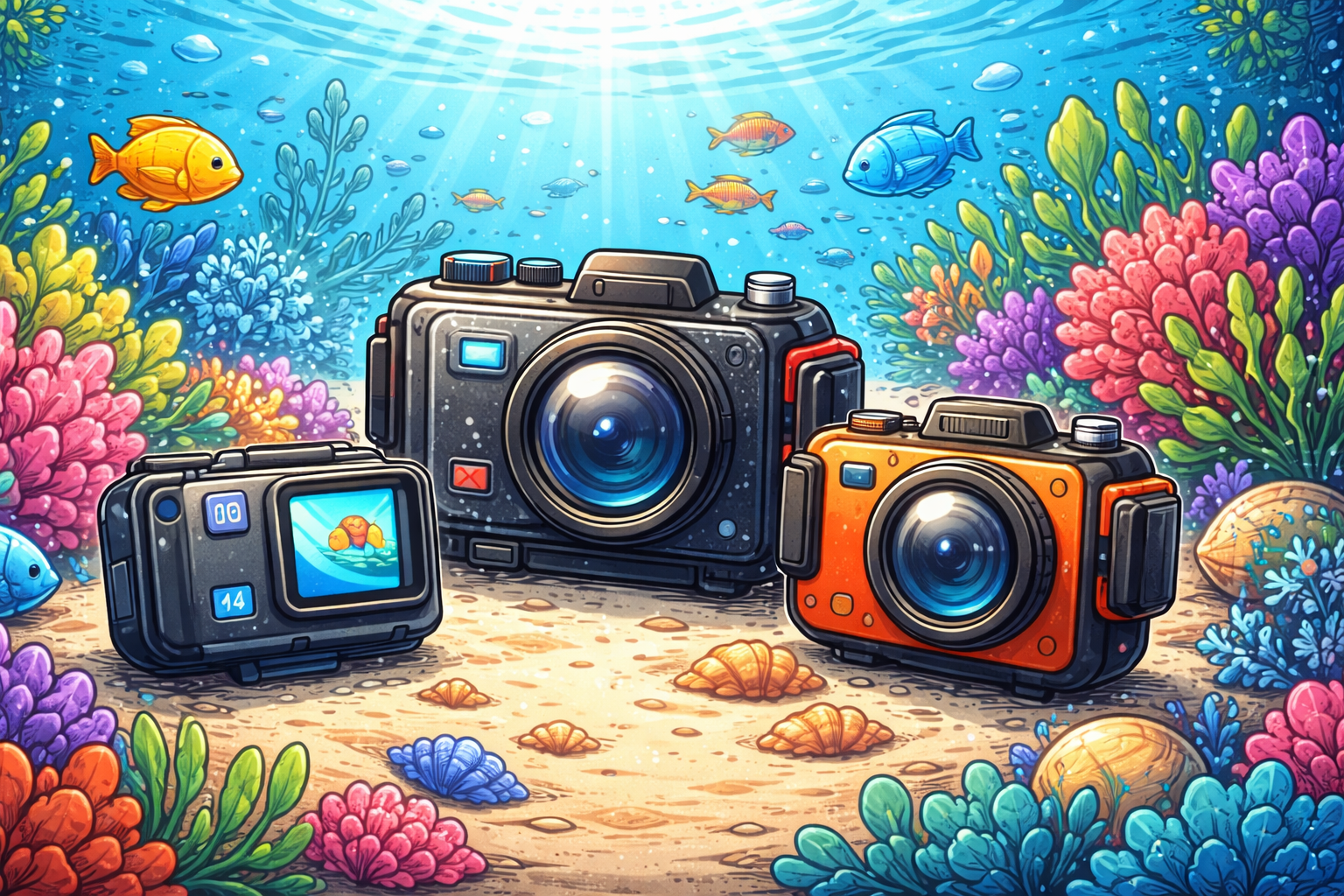
GoPro vs Compact Underwater Camera for Travel Photography
GoPro vs Compact Underwater Camera for Travel Photography
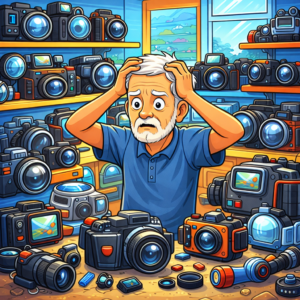
When you plan a trip that involves oceans, lakes, waterfalls, or snorkeling, you quickly realize that ordinary cameras feel fragile around water. You want to capture vivid colors, moving fish, and split shots where sky meets sea, yet you also want something portable that fits into your travel routine.
This tension is exactly why the debate between GoPro vs Compact Underwater Camera for Travel Photography matters so much to you.
If you want a deeper overview of how travel creators think about water-ready gear, you can also read go here for a broader guide to underwater options.
Why this decision feels confusing
You are not choosing in a vacuum. You are juggling many priorities at once.
You want images and videos that look professional enough for social media, personal branding, or client work. At the same time, you do not want to carry bulky equipment that slows you down during long travel days.
You see action cameras everywhere, but you also notice rugged compact cameras that look more like traditional point-and-shoots. Each option promises waterproofing, stabilization, and stunning visuals, yet they feel very different in real use.
Your pain points are familiar:
-
You feel overwhelmed by choice
-
You worry about buying the wrong device
-
You want portability without sacrificing quality
-
You want gear that works reliably in saltwater, glare, waves, and shifting light
-
You want something intuitive that does not require deep technical expertise
Understanding these frustrations helps clarify what really matters when you compare GoPro vs Compact Underwater Camera for Travel Photography.
What you actually need from an underwater travel camera
Portability and ease of travel
When you move through airports, ferries, beaches, and boats, weight and size matter more than specs on paper. You want something small that slips into a daypack without taking up too much space in your luggage.
A GoPro is extremely compact and almost pocketable. A rugged compact camera is slightly larger but still travel-friendly. The real question is whether that extra size gives you meaningful benefits.
Image quality underwater
Underwater light behaves differently from surface light. Colors fade, contrast shifts, and movement creates blur. You need a camera that handles these challenges gracefully.
GoPro cameras are excellent for dynamic video and wide-angle scenes. They capture movement smoothly and produce vibrant footage in daylight water.
Compact underwater cameras often produce better still photos, especially close-ups, because they use larger sensors and better optics for detailed images.
Stabilization and motion
Water is never still. Even small waves, currents, or your breathing create camera shake.
A GoPro excels here. Its advanced digital stabilization makes swimming footage look smooth and cinematic.
Compact cameras usually have stabilization, but it is often less aggressive than GoPro systems, especially for fast motion.
Depth rating and durability
If you snorkel or free dive, built-in waterproofing is critical. You do not want to deal with bulky housings or complicated setups.
-
Most GoPros are waterproof to around 33 feet without a case
-
Many rugged compact cameras go deeper, often to 50 feet or more
Control and creativity
You need a camera that matches your comfort level. A GoPro is simple. You press record and move. A compact camera offers more manual controls, zoom lenses, and traditional photo settings.
If you love simplicity, GoPro feels natural. If you enjoy photography settings, a compact camera may feel more satisfying.

GoPro strengths for travel creators
Perfect for video-first creators
If your content focuses on action, movement, and storytelling through motion, a GoPro shines.
You can swim, dive, jump, or paddle without worrying about shaky footage. You can mount the camera to a floating grip, a selfie stick, or even your wrist.
Minimal setup, maximum capture
You do not need to adjust many settings. You can turn it on and start shooting within seconds.
This matters when a turtle swims by or a school of fish suddenly appears.
Great for mixed environments
You can use a GoPro underwater, on land, on boats, or even on hikes. One device covers many travel moments.
Limitations you should consider
-
The wide-angle lens can distort faces or close-up subjects
-
Still photos are not as strong as those from many compact cameras
-
Zoom is limited without cropping
-
In low light or deeper water, image quality can drop
Compact underwater camera strengths
Better still, image quality
These cameras often have better photo sensors. You get richer colors, sharper details, and more natural depth.
Macro modes let you photograph tiny fish, coral textures, or shells with clarity.
Optical zoom matters
Unlike GoPro, many compact cameras include optical zoom. This lets you frame subjects without moving closer, which can disturb wildlife.
Deeper waterproof ratings
Many rugged compacts handle deeper water without extra housing, giving you peace of mind.
Trade-offs you should know
-
They are bulkier than a GoPro
-
Stabilization is usually weaker for fast motion
-
Video features can lag behind action cameras

Head-to-head comparison
Video performance
If video is your priority, GoPro usually wins.
You get smoother footage, better stabilization, and more dynamic action shots.
If you mainly film calm snorkeling or shallow dives, a compact camera can still perform well.
Photo performance
If photography is your focus, compact cameras typically win.
You get better color accuracy, detail, and control over composition.
GoPro photos can look good, but they often feel less refined.
Ease of use
GoPro is simpler.
Compact cameras require more button presses and menu navigation.
Portability
GoPro is lighter and smaller.
Compact cameras take up more space but remain travel-friendly.
Who should choose GoPro
You should lean toward GoPro if you are:
-
Primarily a video creator
-
Constantly moving in water
-
Wanting the smallest possible setup
-
Shooting wide, immersive scenes
-
Creating social media reels, vlogs, or adventure clips
Who should choose a compact underwater camera
You should choose a compact camera if you:
-
Care more about photos than video
-
Want optical zoom
-
Shoot close-up subjects like coral or small fish
-
Prefer traditional camera controls
-
Plan to dive deeper without housing
Recommended products
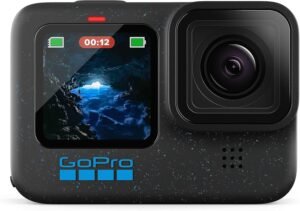
GoPro Hero 12 Black
Manufacturer: GoPro
Style: Action camera
✅ Get Customer Reviews & Best Price
Pros
-
Excellent stabilization
-
Very compact and lightweight
-
Waterproof to 33 feet without housing
-
Strong 4K video quality
-
Great wide-angle perspective
Cons
-
A small screen can make framing tricky
-
Still photos are not as strong as compact cameras
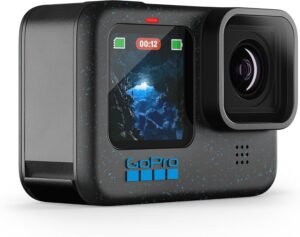
The GoPro Hero 12 Black is widely recognized for its ability to capture immersive action footage, especially underwater and in fast-moving environments. Beyond its top-tier stabilization, it offers intuitive shooting modes that help smooth handheld movement, even in choppy water.
Its waterproof design means you can confidently take it snorkeling, paddleboarding, or cliff jumping without fear of damage. The compact size makes it easy to pack into a travel bag and forget about it until the perfect moment arrives. The wide coverage of its lens also makes it easy to frame group shots without repositioning.
Advanced features like horizon leveling help keep your shots straight, while a suite of creative modes lets you experiment with time lapse, slow motion, and burst shooting. Despite its focus on video, the Hero 12 Black still produces respectable still images that work well for everyday travel photography, making it a versatile tool for creator workflows.
Its ecosystem of mounts and accessories means you can adapt it to nearly any shooting scenario you encounter on your travels.
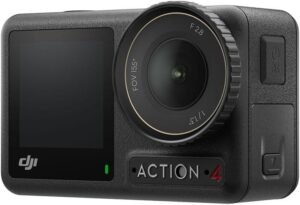
DJI Osmo Action 4
Manufacturer: DJI
Style: Action camera
✅ Get Customer Reviews & Best Price
Pros
-
Bright front screen
-
Strong stabilization
-
Better low-light performance for an action camera
-
Intuitive controls
Cons
-
Less flexible for still photography
-
Accessories add cost
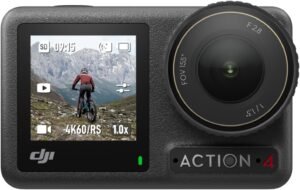
The DJI Osmo Action 4 offers a compelling alternative to other action cameras, with its dual vivid screens and rock-solid stabilization that translate well on land and at sea. The front screen is especially helpful for creators who vlog or film themselves, making it easier to frame shots without guesswork.
Underwater, its stabilization helps smooth out swimming footage and fast motion that might otherwise look shaky or unusable. The camera also offers a variety of shooting modes designed to enhance footage quality without added complexity, such as intelligent HDR and low-light optimization.
Its rugged body is built to withstand salt spray, sand, and sunlight, giving you confidence to use it in unpredictable travel environments. The user interface is responsive, and the intuitive button layout makes it easy to switch between shooting modes, even when you are wet or wearing gloves.
While its still photo capabilities do not match dedicated compact cameras in terms of resolution or depth of field, the Osmo Action 4 strikes a strong balance between video performance and still imaging, making it especially attractive for hybrid creators who document their journeys through motion.
The accessory ecosystem also offers mounting options for boards, helmets, and floating grips.
Olympus Tough TG-6
Manufacturer: OM System
Style: Rugged compact camera
✅ Get Customer Reviews & Best Price
Pros
-
Waterproof to 50 feet
-
Excellent macro mode
-
Physical buttons that work well with gloves
-
Very durable
Cons
-
The video is weaker than GoPro
-
Small sensor limits low-light performance
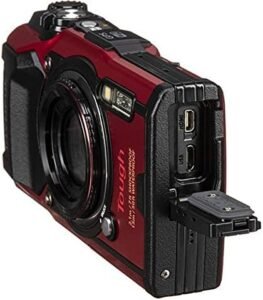
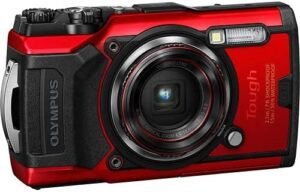
The Olympus Tough TG-6 is a rugged compact camera built for creators who want reliable still imaging and the ability to capture detailed underwater scenes. Its waterproofing to 50 feet without additional housing means you can shoot freely in deeper snorkeling zones and shallow reefs.
The dedicated macro and microscope modes are standout features that let you capture subjects such as tiny reef organisms, seashell textures, and seaweed patterns with clarity and artistic flair. Physical buttons and robust build materials make it ideal for travel, as it can withstand drops, cold, sand, and water pressure without complaint.
The TG-6 also offers multiple shooting modes tailored for underwater conditions, helping you achieve accurate white balance and contrast even in limited light. While its video stabilization is not as aggressive as that of action cameras, its strength lies in producing crisp still images with accurate color rendering.
The camera’s GPS and sensor data is also helpful if you document your travel stats or want geotagged memories. Although bulkier than a GoPro, many photographers appreciate the traditional camera feel and tactile controls that make manual adjustments straightforward.
Panasonic Lumix TS7
Manufacturer: Panasonic
Style: Rugged compact camera
✅ Get Customer Reviews & Best Price
Pros
-
Deeper waterproof rating
-
Good optical zoom
-
Reliable build
-
Simple operation
Cons
-
Bulkier than action cameras
-
Moderate stabilization
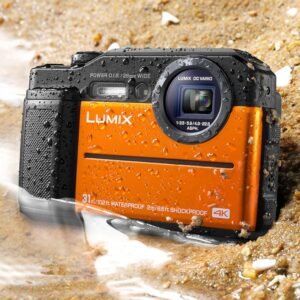
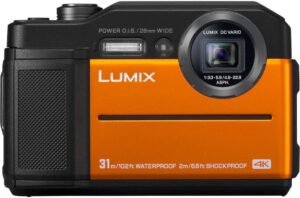
The Panasonic Lumix TS7 is an all-terrain compact camera that balances ruggedness and imaging performance. Its generous waterproof rating means you can confidently explore scenes below 100 feet, making it a dependable companion for snorkeling and shallow dives.
The optical zoom lens on the TS7 allows for more flexible framing, which is especially useful for photographing subjects that are hard to approach closely, such as schools of fish or shoreline wildlife. In addition to still photography, the camera’s video functions deliver smooth footage with reasonable clarity, though stabilization is less robust than that of dedicated action cameras.
The solid build quality includes shock and freeze resistance, giving you confidence in a wide range of weather conditions and environments. For travelers, the ergonomic grip feels comfortable during long shooting sessions, and the intuitive menu helps you adjust settings quickly.
While it does not specialize in any single creative niche, the TS7’s versatility across stills, zoom, and durability make it a strong choice for creators who want an all-in-one tool. Its user-friendly design and rugged features mean you can focus more on creating and less on protecting your gear.
Insta360 X3
Manufacturer: Insta360
Style: 360 action camera
✅ Get Customer Reviews & Best Price
Pros
-
Unique 360-degree perspective
-
Reframe shots after recording
-
Waterproof to 33 feet
-
Creative potential
Cons
-
Image quality spread across the frame
-
More complex editing
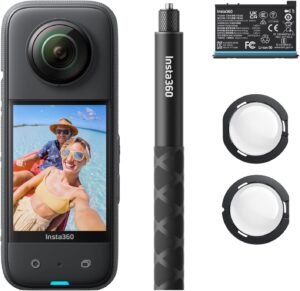
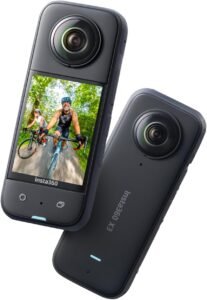
The Insta360 X3 stands out by offering a creative 360-degree capture experience that lets you reframe your shots long after you shoot. This unique capability is powerful underwater because you can film the entire scene and later decide how best to present it, giving you flexibility that traditional cameras simply do not offer.
The waterproof build supports use up to 33 feet without housing, which fits well with snorkeling and shallow dive scenarios. The editing workflow differs from typical camera files because it involves stitching and reframing, which can be a creative advantage for travel cinematography, especially if you want immersive content for social platforms.
Stabilization in 360 mode is strong, making footage feel smooth and dynamic. Because the camera captures everything around it simultaneously, you can create both wide-angle shots and close-ups from a single session, reducing the need for multiple takes.
While this camera is not a traditional pick for still photography, its creative video potential is unmatched in its class. The ecosystem of mounts and accessories expands your options for capturing immersive perspectives in water, on land, or in the air.
Use Our Decision Tool
We created this quiz to help you select the best Underwater Camera for Travel for your needs. Just answer the 7 questions, and the tool will recommend an Underwater Camera for Travel for your unique situation.
🌊 Find Your Perfect Underwater Camera
Answer 7 quick questions to get a personalized recommendation
Accessories that elevate your underwater shots
Floating hand grip
Keeps your camera buoyant and easier to control.
Dome port
Allows half-underwater, half-above-water split shots.
Red filter
Restores warmer colors underwater.
How to choose based on your travel style
-
If you move constantly, choose GoPro
-
If you focus on details, choose a compact camera
-
If you snorkel casually, either works
-
If you dive deeper, choose a rugged compact
-
If social video matters most, choose GoPro

Frequently Asked Questions
Do you need a housing for a GoPro?
For snorkeling and shallow dives, no.
Is 4K video necessary underwater?
Not required, but very helpful for editing.
Which camera is best for beginners?
Action cameras are usually easiest.
Can you use these cameras above water?
Yes, both perform well on land.
How important is battery life?
Very important. Bring spares.
Do you need underwater lighting?
Not always, but helpful in deep water.
Are these cameras safe in saltwater?
Yes, but rinse with fresh water after use.
Final Thoughts on GoPro vs Compact Underwater Camera for Travel Photography
If you move fast and film often, choose GoPro. If you love detailed photography, choose a compact camera. The right tool is the one that fits your travel rhythm.
Photography and Video References
- Take structured lessons from Sony Alpha Universe Academy courses.
- Learn post-production and on-set craft at Frame.io Insider.