
Airline Approved Camera Backpacks for Travel
Airline-Approved Camera Backpacks for Travel
Choosing the right Airline Approved Camera Backpacks for Travel can feel overwhelming if you are an aspiring or intermediate traveler looking to shoot photos and video on the move.
You need gear that protects expensive cameras and lenses, meets airline carry-on rules, and doesn’t slow you down on long days of shooting. Many travelers feel stressed by confusing product jargon, unclear size limits, and backpacks that look great in photos but fall short in real-world travel conditions.
This guide will help you understand what matters most and offer actionable recommendations.
Why Airline Approval and Travel Usability Matter
Airline carry-on limits vary, and your backpack may be considered your only bag allowed on the plane. A good airline-approved backpack helps protect cameras and lenses through security, while keeping you comfortable walking city streets, hopping between flights, or shooting for social media content.
You want a backpack that fits overhead bins or under the seat, gives quick access to your camera when the light changes, and distributes weight so it doesn’t tire you out before the golden hour.
Key Pain Points for the Travel Creator
- You feel overwhelmed choosing between dozens of backpacks that all claim to be travel-ready.
- You want a backpack that meets airline carry-on size limits so you can keep gear with you on flights.
- You need solid protection for cameras and lenses without excess bulk or weight.
- Backpacks that look cool online sometimes lack access panels or organization that help during a rush shoot.
- Finding the right balance between protection, comfort, and easy access is confusing and time-consuming.

How to Choose Airline-Approved Camera Backpacks for Travel
Carry on and Airline Size Compliance
Look for bags that explicitly state airline-compliant carry-on dimensions, usually 22 x 14 x 9 inches or less for most major carriers. Packing too large a backpack can force you to check it, exposing gear to rough luggage handling and delays.
Comfort and Ergonomics
Travel days often involve long walks, cobblestone streets, and extended shooting hours. Backpacks with padded straps, breathable back panels, and even removable hip belts improve comfort and reduce fatigue.

Accessibility and Organization
Travel creators open their backpacks dozens of times during a shoot. Side or rear access panels help get to your camera or accessories quickly without fully unpacking or setting your bag down on dirty ground.
Protection and Weather Resistance
Cameras are expensive. Look for backpacks with padded camera cubes, reinforced compartments, and water-resistant fabrics. Extra features like rain covers add peace of mind during unexpected weather.
Recommended Airline-Approved Camera Backpacks for Travel
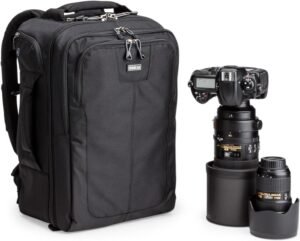
1. Think Tank Airport Commuter Backpack
Manufacturer: Think Tank Photo
✅ Get Customer Reviews & Best Price
The interior layout feels intentional rather than cluttered, which helps you maintain a consistent packing system from trip to trip. Thick padding around the camera compartment absorbs impact when the bag is placed on hard airport floors or squeezed into overhead bins.
The structured shape prevents the gear from shifting, even when partially packed. Shoulder straps are broad and well cushioned, making long terminal walks or city explorations less fatiguing. Small accessory pockets reduce friction when you need batteries, cards, or a lens cap in a hurry.
The durable exterior resists scuffs, light rain, and daily wear, making it a dependable option for frequent flyers who travel to multiple destinations in a single week.
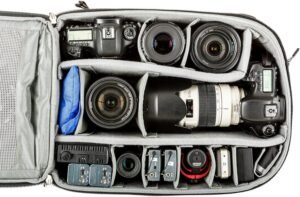
- Pros: Designed for airline carry-on limits, plenty of internal organization for camera bodies, lenses, and travel items, smooth zippers and strong build quality. Reliable choice if you travel often through airports.
- Cons: Can be pricier than basic camera backpacks and may feel larger when fully packed.
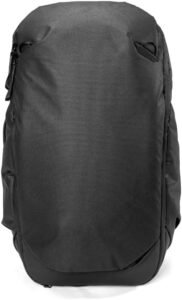
2. Peak Design Everyday Backpack 30L V2
Manufacturer: Peak Design
✅ Get Customer Reviews & Best Price
This bag works equally well as a camera pack or a general travel backpack, which reduces the need to own multiple bags. Quick side access lets you grab your camera without removing the pack, a major advantage in crowded streets or fast-moving situations.
The weather-resistant shell adds confidence in light rain or dusty environments. Internal dividers can be repositioned in seconds, allowing you to adjust the space in your kit for each trip. The padded laptop sleeve keeps tech secure while clearing room for personal items.
Even when fully loaded, the harness system spreads weight evenly, helping you stay comfortable during long sightseeing days or extended photo walks.
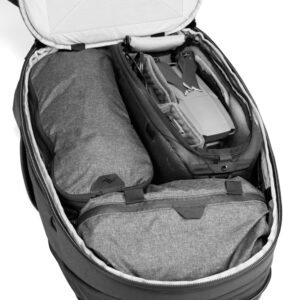
- Pros: Flexible internal layout, top and side access, great modularity with packing cubes, comfortable on long walking days, and integrated laptop storage.
- Cons: More expensive, may feel technical for travel creators who carry minimal gear.
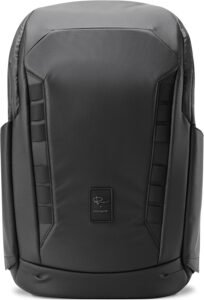
3. Nomatic McKinnon Camera Backpack 25L
Manufacturer: Nomatic
✅ Get Customer Reviews & Best Price
The exterior material is tough enough to handle outdoor travel, rough sidewalks, and busy transit environments without showing heavy wear. Dedicated tripod and bottle pockets keep essential tools accessible without crowding the main compartment.
Modular camera inserts help you customize storage for photo or video kits, whether you carry multiple lenses or additional audio gear. The ventilated back panel improves airflow, which matters on hot travel days or long walks.
Internal organization feels intuitive, making packing and unpacking faster in hotel rooms or airports. This design favors creators who move between photography, video, and general travel, seeking a single, dependable backpack that performs well in many environments.
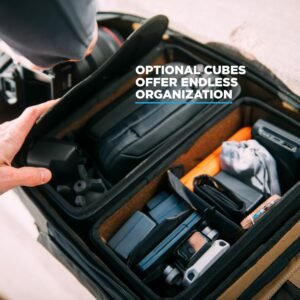
- Pros: Water-resistant, rugged build, excellent organization for cameras and a laptop, well-sized for most airline carry-on policies.
- Cons: Price is premium, may be more than needed if you carry only a single camera and lens
Accessories to Improve Your Travel Backpack Setup
- Camera Rain Cover: Protects gear in wet conditions and stows compactly when not needed.
- Modular Packing Cubes: Helps separate camera gear from clothes and personal items, speeding up packing and builds.
- Memory Card Wallet: Keeps cards secure and organized, preventing accidental loss or damage during the trip.
Use Our Decision Tool
We created this quiz to help you select the best airline travel camera backpack for your needs. Just answer the 7 questions, and the tool will recommend an airline backpack for your unique situation.
🎒 Find Your Perfect Camera Backpack
Answer 7 quick questions to discover which airline-approved camera backpack matches your travel style
Frequently Asked Questions
What makes a camera backpack airline-approved?
Airline-approved backpacks typically fall within carry-on size limits set by major airlines. This means the backpack fits overhead bins or under seats without incurring extra fees.
In practice, airline approval also depends on how the bag is packed and how rigid its structure is. Soft-sided backpacks are more forgiving in tight bins than hard-framed packs, while overstuffed bags may be flagged even if they technically meet dimensions.
Many travel creators look for backpacks that compress slightly when full, making them easier to fit in regional jets or budget airline cabins. Weight limits can also matter on smaller carriers, so a lightweight design paired with smart organization often makes a real difference in stress-free boarding and smoother security screening.
Do airline-approved backpacks protect gear well?
Most quality airline-approved backpacks include padded compartments and reinforced walls to keep camera gear secure during travel, though additional rain covers provide enhanced weather protection.
Protection is not just about padding; it is also about internal stability. Good backpacks use adjustable dividers that prevent lenses and bodies from shifting when the bag is moved, dropped gently, or squeezed into overhead space.
Many include raised bases or reinforced bottoms that reduce impact when placed on hard floors or tarmac surfaces. External materials often resist abrasion, minor bumps, and light moisture, which helps preserve both the bag and your equipment over repeated trips.
Smart pocket design also keeps accessories from pressing against delicate glass elements during long flights or crowded transit.
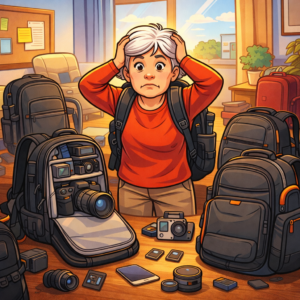
Can I carry a laptop in these backpacks?
Many airline-approved camera backpacks also include a padded laptop compartment, making them versatile for both gear and travel essentials.
Most modern camera backpacks position the laptop sleeve against the back panel, which improves balance and protects the tech from impact. This layout also makes it easier to remove your computer quickly at security checkpoints without unpacking your entire bag.
Travelers often use this space for tablets, notebooks, or editing devices. Some models even separate the laptop from camera gear to reduce pressure on sensitive equipment. This dual-purpose design helps creators stay productive while traveling without needing a second bag for tech.
Is a bigger backpack better for travel?
Bigger is not always better. A backpack that fits your gear but stays within carry-on size limits reduces the need to check it, protecting your gear and reducing travel stress.
Larger bags can encourage overpacking, which adds weight and fatigue during long walking days. A slightly smaller backpack often pushes you to carry only what you truly need, resulting in a lighter kit and a more enjoyable travel experience.
Compact bags are also easier to navigate through crowded airports, trains, and narrow streets. In many cases, choosing the smallest bag that comfortably fits your core gear leads to faster movement, less shoulder strain, and more willingness to shoot throughout the day.

How should I pack lenses in my camera backpack?
Use padded dividers to separate each lens and body so they do not bump into one another. Fast-access pouches help keep frequently used items within reach.
It also helps to place heavier items lower in the bag to improve balance and reduce strain on your shoulders. Keep caps on lenses whenever possible to protect the glass from scratches or dust.
Frequently used lenses can sit in quick-access side pockets, while specialty glass stays deeper in the main compartment. Wrapping delicate items in microfiber cloths adds another layer of protection. Labeling or color-coding dividers can speed packing and unpacking on busy travel days.
Are weatherproof features important for travel backpacks?
They are useful. Water-resistant materials and included rain covers protect gear from rain, spills, and unexpected weather conditions during outdoor shoots.
Weather resistance also helps in airports, trains, and unpredictable environments where drinks can spill, or bags may be placed on wet surfaces. Some backpacks use coated fabrics, sealed zippers, or rubberized bases to prevent moisture from seeping in.
Even in dry climates, dust and sand protection can be just as important. A reliable rain cover or weatherproof shell gives you confidence to keep shooting without constantly worrying about sudden downpours or splashes near water.
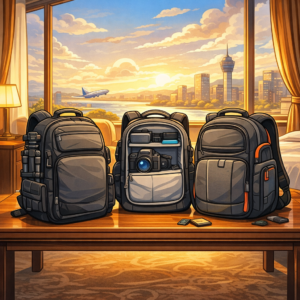
Can I use these backpacks for non-camera gear?
Yes. Many airline-approved camera backpacks feature extra compartments for clothes, snacks, and travel documents, in addition to your gear.
Some models allow you to remove camera inserts entirely, converting the bag into a standard travel backpack. This makes them useful for weekend trips, commuting, or everyday use beyond photography.
Separate pockets help you organize passports, chargers, headphones, and personal items without mixing them with your camera equipment. This flexibility makes a single backpack practical for both creative work and general travel, reducing the need to carry multiple bags on every trip.
Conclusion
Choosing the right Airline Approved Camera Backpacks for Travel is less about brand loyalty and more about matching your bag to how you actually move through the world.
The best backpack is not the one with the most compartments, but the one that makes travel smoother, shooting easier, and decision-making simpler. When your bag works with your workflow instead of against it, you spend less time managing gear and more time creating.
For aspiring and intermediate creators, the priority should be reliability, portability, and real-world usability. A carry-on compliant camera backpack protects your equipment, reduces travel stress, and keeps you ready to shoot the moment inspiration strikes. Comfort matters just as much as protection, because a backpack you enjoy wearing is a backpack you will actually carry.
Before you buy, think about your typical travel day. If you walk a lot, prioritize comfort and weight distribution. If you fly frequently, prioritize airline compliance and structured protection. If you shoot on the move, prioritize fast access. The right choice will make your gear feel like a support system rather than a burden.
Ultimately, the smartest investment is the backpack that helps you show up consistently, stay mobile, and create your best work wherever your travels take you.
related article Best Camera Backpacks for Travel Photography in 2026
Outgoing Authority Links
- Camera Backpacks from Lowepro
- Backpacks and Daypacks at B&H Photo Video
- Nomatic Camera Backpacks and Travel Cases