Camera Backpack Buying Guide for Social Creators
Camera Backpack Buying Guide for Social Creators
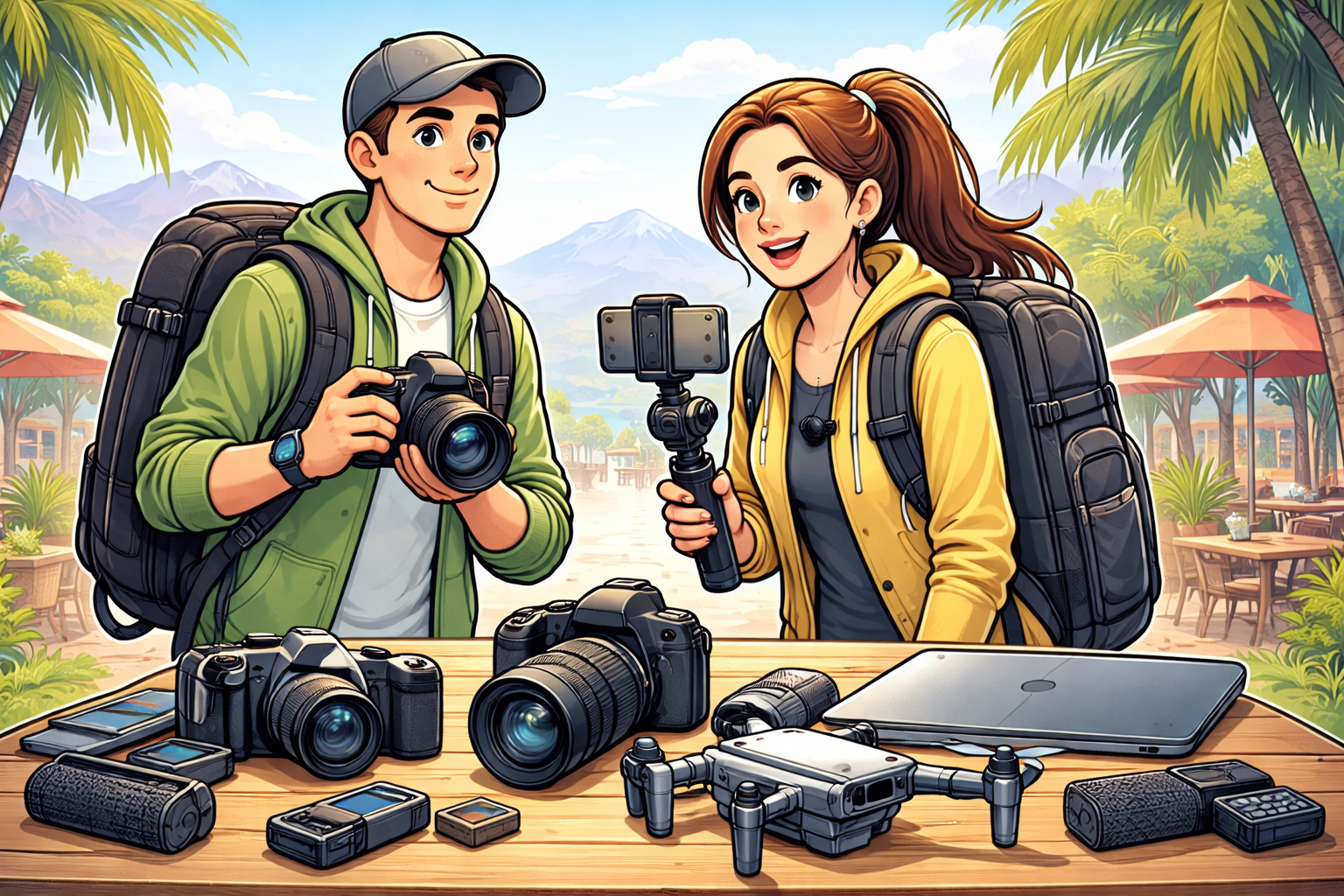
Choosing the right camera backpack in 2026 is no longer just about protecting your camera. As a social creator, your backpack has become a mobile production hub that carries cameras, lenses, audio gear, batteries, laptops, and personal items while remaining comfortable in airports, city streets, and on long shooting days.
This camera backpack buying guide for social creators exists because the market is overwhelming. Hundreds of bags promise protection, portability, and organization, yet most fail once you start traveling and creating content consistently. You need a backpack that supports real workflows, not just product photos.
This guide walks you through exactly how to choose the right camera backpack for social content creation, what features actually matter, and which bags are worth considering in 2026.
Why Social Creators Need a Different Kind of Camera Backpack
Social creators shoot differently from traditional photographers. You are constantly switching between photo and video, moving locations quickly, filming handheld, and editing on the go. Your backpack must support speed and flexibility, not just storage.
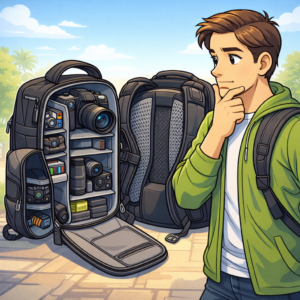
You may need to access a camera quickly for spontaneous moments, swap lenses without setting your bag down, or grab audio gear during a fast transition. A poorly designed backpack slows you down and breaks creative momentum.
Unlike studio shooters, you are dealing with airlines, public transportation, weather changes, and long walking days. Comfort and accessibility matter just as much as protection.
Core Features That Actually Matter
Before looking at specific products, you need to understand what separates a good camera backpack from a frustrating one.
Side access panels allow you to pull a camera without removing the backpack. Rear access keeps gear secure in crowded areas. Top access is useful for quick lens swaps. The best backpacks combine multiple access points without compromising structure.
A backpack that feels fine at first can become painful after several hours. Padded shoulder straps, breathable back panels, and proper weight distribution reduce fatigue. Bags that shift weight toward the hips help protect your shoulders and neck.
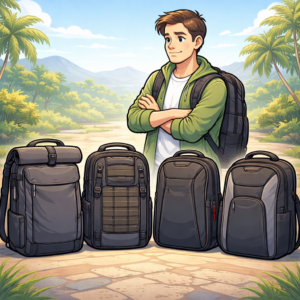
You want defined spaces for camera bodies, lenses, batteries, memory cards, and audio gear without excessive dividers. Over-engineered interiors slow you down. Modular systems that adapt to your kit work best.
If you travel, carry-on compatibility is non-negotiable. Backpacks designed to fit airline size limits protect your gear from being checked and reduce stress at the airport.
You do not need a fully waterproof backpack for most travel, but water-resistant materials and a rain cover are essential. Unexpected rain happens often when creating content outdoors.
Choosing the Right Size for Your Workflow
Bigger is not better. Many creators overbuy backpacks, leaving them with unused space and unnecessary weight.
If you typically carry one camera body, two lenses, audio gear, and a laptop, a 20 to 30 liter backpack is usually ideal.
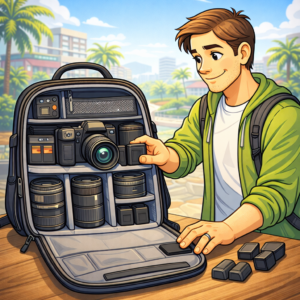
If you carry multiple bodies, larger lenses, or drones, you may need closer to 30-35 liters.
Your backpack should match your real working kit, not a hypothetical future setup.
Recommended Camera Backpacks for Social Creators in 2026
The following four backpacks are strong options for social creators and travel shooters. None of these are Peak Design, Wandrd, Shimoda, or Lowepro ProTactic models.
Thule Covert DSLR Rolltop Backpack
- Manufacturer: Thule
- Style: Rolltop camera backpack
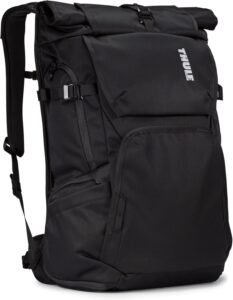
The Thule Covert DSLR Rolltop Backpack is particularly well-suited for social creators who want their camera bag to blend into everyday environments. If you are filming in cities, cafes, or public transportation, the understated design helps you avoid drawing attention to expensive gear.
This matters more than most people realize, especially when creating content in unfamiliar locations.
✅ Get Customer Reviews & Best Price
The rolltop design gives you flexibility that traditional structured camera backpacks cannot. On lighter shooting days, you can keep the bag compact and streamlined. When you need to carry extra layers, a jacket, or additional accessories, the rolltop expands without forcing you into a bulky profile.
This makes it practical for creators who balance camera gear with daily travel essentials.
Internally, the removable camera cube allows you to customize how much of the bag is dedicated to gear versus personal items. This modularity is ideal if your workflow changes from day to day.
One day, you might be filming reels with a mirrorless camera and mic, and the next, you might only need a compact setup. The bag adapts without requiring repacking everything.
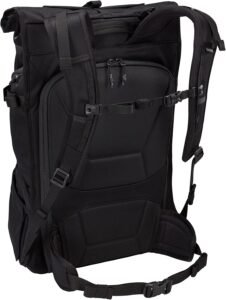
Comfort remains solid for urban travel, with padded shoulder straps and a breathable back panel that handles long walking days. While it is not designed for extreme outdoor environments, it performs very well for creators focused on cities, lifestyle content, and social platforms where mobility and discretion matter most.
Pros
-
Rolltop design allows flexible capacity
-
Side access for fast camera retrieval
-
Removable camera cube for modular use
-
Clean look that does not scream camera bag
Cons
-
Limited space for very large lenses
-
Rolltop access is slower for full unpacking
-
Less rigid structure than fully framed packs
Tenba Axis V2 24L Backpack
- Manufacturer: Tenba
- Style: Tactical style camera backpack
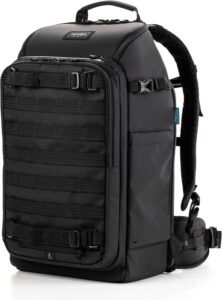
The Tenba Axis V2 24L Backpack is built for social creators who prioritize durability, modularity, and protection without stepping into oversized expedition packs. If your content includes travel, outdoor environments, or unpredictable conditions, this backpack provides confidence that your gear stays protected.
✅ Get Customer Reviews & Best Price
The structured interior offers excellent support for camera bodies, lenses, and audio equipment. The padding is dense without feeling bulky, and the dividers hold their position even with frequent access. This is especially helpful when you are switching lenses often or grabbing batteries mid shoot.
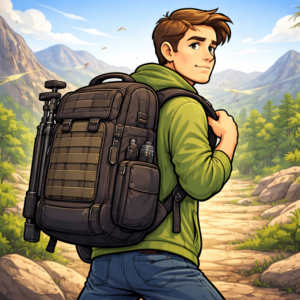
One standout feature is the external MOLLE webbing system. This allows you to attach additional pouches, tripod holders, or accessory cases without filling internal space. If your setup evolves over time, the bag evolves with it rather than forcing you to upgrade.
The harness system supports longer carry times better than minimalist backpacks. Weight distribution remains stable even when fully loaded, reducing shoulder fatigue during full-day shoots. The back panel ventilation helps manage heat, especially in warm climates.
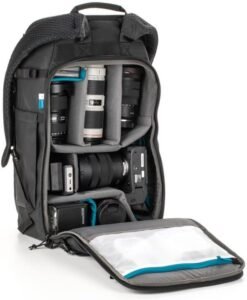
This bag works best for creators who want one backpack that can handle both urban travel and rugged environments. While the tactical styling may not suit everyone, the performance benefits outweigh aesthetics for creators who value reliability over subtlety.
Pros
-
Excellent padding and gear protection
-
Multiple access points, including rear and side
-
MOLLE webbing for accessory expansion
-
Comfortable harness system for long days
Cons
-
Tactical styling may attract attention in some settings
-
Slightly heavier than minimalist backpacks
-
Exterior attachments can snag in tight spaces
Think Tank Photo StreetWalker V2
- Manufacturer: Think Tank Photo
- Style: Slim professional camera backpack
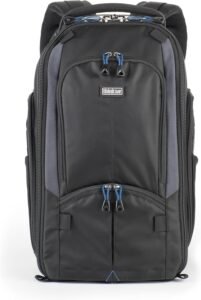
The Think Tank Photo StreetWalker V2 is designed for creators who value speed, efficiency, and low-profile movement. If you shoot street photography, travel documentaries, or fast-paced social content, this backpack supports quick reactions and minimal bulk.
✅ Get Customer Reviews & Best Price
Its slim vertical profile makes it ideal for crowded environments. You can move through busy streets, public transit, and events without bumping into people or feeling weighed down. This improves both comfort and safety when filming or photographing in public spaces.
Internally, the organization is clean and purposeful. The dividers prioritize camera bodies and lenses rather than excessive accessory storage. This encourages a focused kit that supports fast shooting rather than overpacking. For creators who know their core setup, this simplicity is a strength.
Comfort is excellent for its size. The shoulder straps distribute weight evenly, keeping the bag close to your back and improving balance. This is particularly helpful when carrying a camera for long periods while walking or filming handheld.
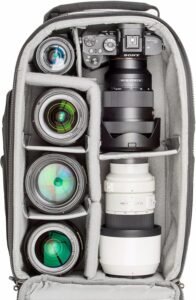
The StreetWalker V2 is best suited for creators who travel light and prioritize shooting efficiency over carrying everything. If you mainly shoot with one body and a few lenses, this backpack keeps you agile and focused rather than overloaded.
Pros
-
Slim profile for crowded environments
-
Excellent internal protection
-
Lightweight and comfortable
-
Strong reputation for durability
Cons
-
Limited space for personal items
-
Not ideal for bulky travel loads
-
No rolltop or expandable capacity
Manfrotto Advanced Gear Backpack III
- Manufacturer: Manfrotto
- Style: Structured hybrid camera backpack
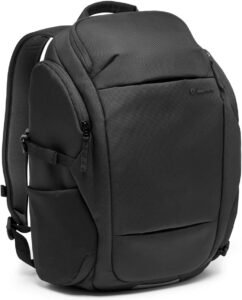
The Manfrotto Advanced Gear Backpack III offers a well-rounded solution for social creators who want structure, protection, and organization without moving into premium pricing tiers. It is a practical choice for creators looking to build a reliable setup without unnecessary complexity.
✅ Get Customer Reviews & Best Price
The dual-compartment layout separates camera gear from personal items, which helps maintain organization throughout the day. You can store cameras and lenses securely while keeping space for chargers, clothing layers, or travel essentials. This separation reduces clutter and speeds up access.
Side access lets you pull your camera without fully opening the bag, which is useful for spontaneous shooting. Rear access adds security when traveling in crowded areas, protecting your gear from unwanted access.
The backpack includes a dedicated laptop compartment, making it suitable for creators who edit on the go. The padding provides sufficient protection for daily travel and typical shooting environments.
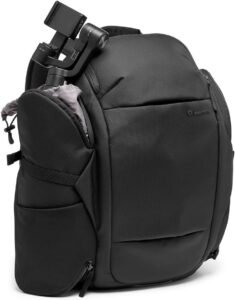
While the materials are not as rugged as high-end adventure packs, they hold up well for standard travel use. This backpack fits creators who want dependable organization, moderate protection, and a clean design that works across travel, work, and content creation without over-specialization.
Pros
-
Dedicated laptop and camera compartments
-
Side access and rear access options
-
Good balance between structure and flexibility
-
Affordable compared to premium alternatives
Cons
-
Less premium materials than higher-priced bags
-
Limited expansion options
-
Padding is solid but not extreme duty
Use Our Decision Tool
We created this quiz to help you choose the camera backpack that best suits your needs. Just answer 7 questions, and the tool will recommend the best camera backpack for social media creators based on your unique situation.
Find Your Perfect Camera Backpack
Answer 7 quick questions to discover which backpack matches your content creation style
Accessories That Improve Any Camera Backpack Setup
The right accessories turn a good camera backpack into a reliable mobile production system. These additions do not add much weight, but they significantly improve protection, speed, and peace of mind while traveling.
Camera Rain Cover
A camera rain cover is one of the most underrated accessories for travel creators, yet it solves a problem you will encounter sooner or later. The weather is unpredictable, and travel schedules rarely wait for perfect conditions. Even backpacks marketed as water-resistant can struggle in sustained rain, strong winds, or sudden downpours.
A dedicated camera backpack rain cover provides an additional protective barrier, shielding zippers, seams, and fabric panels where moisture often penetrates first. This is especially important when you are moving quickly between locations and do not have time to seek shelter.
A rain cover allows you to keep shooting instead of packing up the moment the weather shifts.
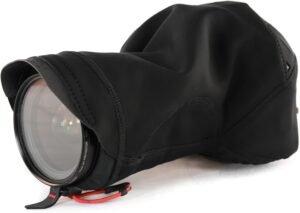
Rain covers also protect against dust, sand, and airborne debris, which are common in deserts, beaches, markets, and construction-heavy urban areas. Fine particles can work their way into zippers and fabric over time, reducing the lifespan of your bag and gear.
Look for rain covers that pack down small, deploy quickly, and include elastic or drawcord systems to prevent flapping in the wind. Bright interior linings can help you locate the cover quickly inside your backpack.
Even if your backpack includes a built-in cover, carrying a secondary lightweight option provides redundancy for longer trips.
Memory Card Wallet
Memory cards are some of the smallest items in your kit, yet they hold your most valuable content. A memory card wallet gives you control, visibility, and protection over your files while traveling.
Without a dedicated wallet, cards often end up loose in pockets, backpacks, or side compartments where they can be lost, bent, or exposed to dust and moisture. A structured memory card wallet keeps cards secure, organized, and easy to access when you need to swap quickly during a shoot.
Many wallets include labeled slots or directional indicators that let you separate full cards from empty ones.
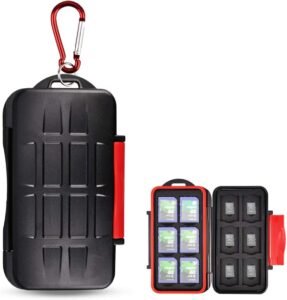
This reduces the risk of accidentally formatting a card that still contains footage. Some creators also use color-coded systems or orientation methods to track used versus unused cards during long shooting days.
Choose a wallet made of water-resistant materials and with a secure closure. Hard-shell designs offer additional protection against impact and bending, while soft-shell options reduce weight. Compact wallets that fit into backpacks, quick-access pockets, or even jacket pockets work best for travel creators who need speed.
This single accessory dramatically reduces stress when managing content across multiple days and locations.
Compact Travel Tripod
A compact travel tripod adds creative flexibility without forcing you to carry bulky support gear. While many creators rely heavily on handheld shooting, a tripod still plays a critical role in certain situations.
Travel tripods enable stable shots for low-light, time-lapse, long-exposure, talking-head, and group photography. They also allow you to step away from the camera without sacrificing framing or focus.
Even short tabletop tripods can make a meaningful difference for indoor filming or cafe setups.
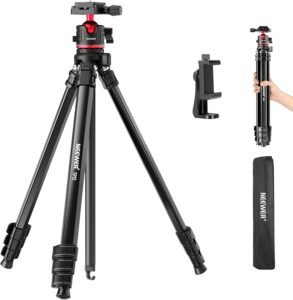
When selecting a travel tripod, portability matters more than maximum height. Look for models that fold small, weigh under three pounds, and fit easily inside or on the side of your backpack.
Carbon fiber options reduce weight, while aluminum versions often cost less and still perform well for most travel use.
Pay attention to quick-release plates and head design. Fast setup and breakdown keep your workflow moving, especially when shooting in public spaces. Some travel tripods double as monopods or include removable center columns for versatility.
A compact tripod gives you more creative control without adding much burden, making it one of the smartest additions to any camera backpack setup.
How to Organize Your Backpack for Content Creation
Place your most frequently used items in the most accessible compartments. The camera body and primary lens should be reachable without unpacking.
Group accessories by function. Keep batteries, audio gear, and memory cards in one dedicated place. Consistency builds muscle memory and speeds up shooting. Avoid overpacking. Empty space is better than unused gear weighing you down.
Airport and Travel Considerations
Carry on size compliance matters. Choose backpacks designed for overhead bins and under-seat storage. Remove external accessories before boarding to maintain a clean profile.
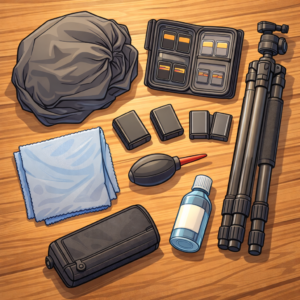
Lithium batteries must stay in carry-on bags. Use protective cases and avoid loose storage. Security-friendly layouts with visible compartments reduce screening delays.
Common Buying Mistakes to Avoid
Buying the largest backpack available is the most common mistake. Another is prioritizing brand reputation over actual workflow fit.
Avoid backpacks with excessive dividers you will never use. Avoid bags that look too rigid if you walk long distances. Avoid fashion bags with poor padding if you carry expensive gear.
Final Buying Guidance
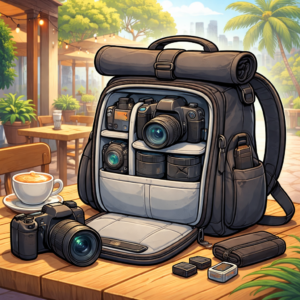
A camera backpack should disappear into your workflow. When it works well, you stop thinking about it and focus on creating. The best choice is not the most expensive or popular bag. It is the one that matches how you shoot, travel, and move.
When your backpack supports speed, comfort, and organization, your content quality improves simply because friction disappears.
For readers exploring broader gear decisions, this article pairs well with Best Camera Backpacks for Travel Photography in 2026. It supports this buying guide by focusing on travel-specific scenarios.
Expert References for Deeper Learning
- Build your fundamentals fast with Digital Photography School’s beginner-friendly lessons.
- Improve editing and shooting workflows with SLR Lounge education and tutorials.