
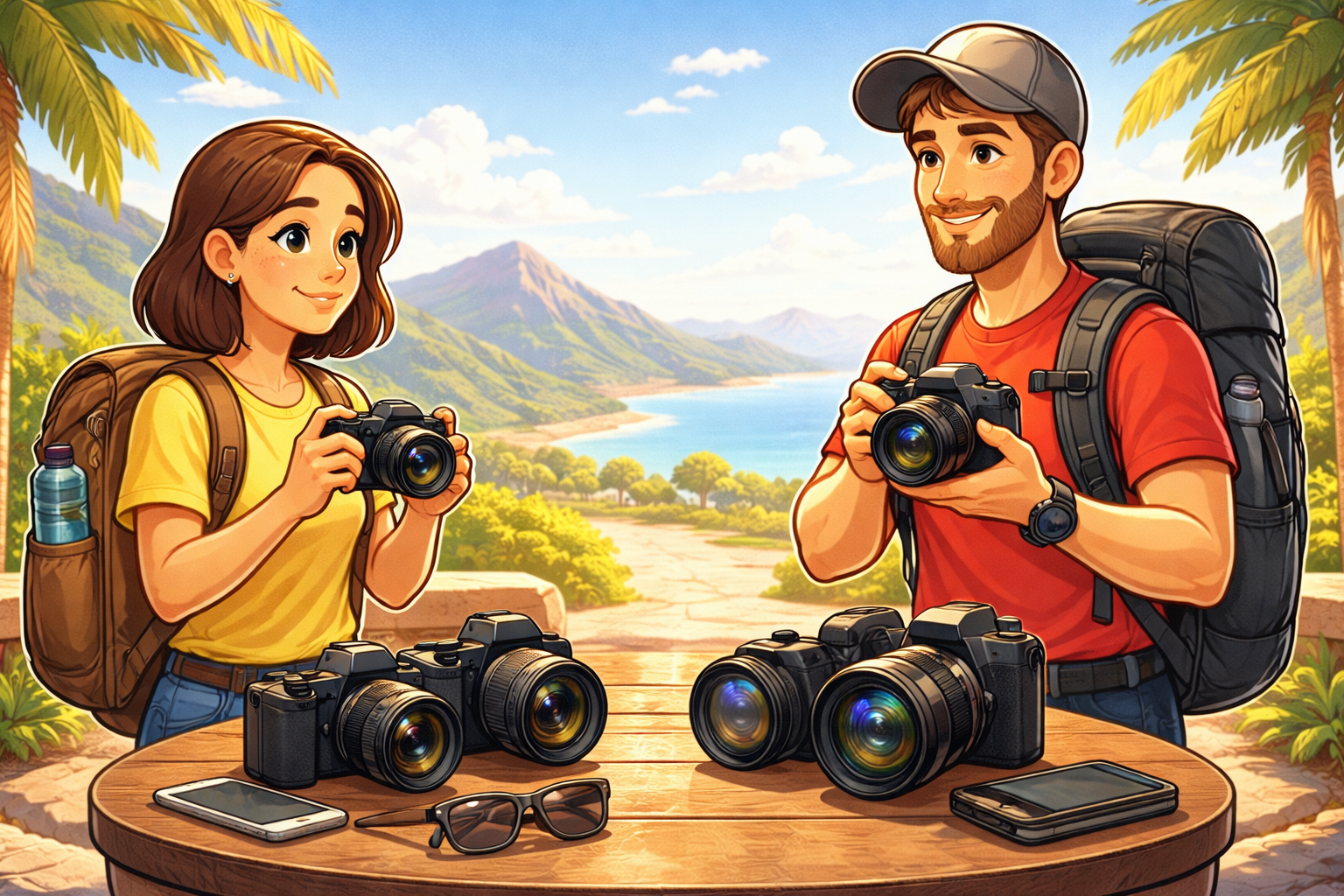
Compact vs Full-Frame Travel Cameras 2026
Compact vs Full-Frame Travel Cameras 2026 — Which Should You Choose?
Travel photography in 2026 is about balance. You want images and video that look polished and intentional, but you also want gear that works on real travel days, with walking, transitions, and unpredictable conditions.
The decision between compact and full-frame travel cameras is one of the most common and confusing choices travelers face.

Both camera types can produce excellent results. The difference lies in how they affect your workflow, your comfort, and how often you actually use your camera while traveling.
This guide breaks down compact vs. full-frame travel cameras in practical terms, so you can choose the option that fits your travel style rather than chasing specifications.
Why the Compact vs Full-Frame Debate Matters for Travel
When you travel, your camera is not just a tool. It is something you carry through airports, cities, trails, and long days on foot. A camera that feels manageable encourages shooting. A camera that feels heavy or complicated often stays in the bag.
Compact cameras and full-frame cameras approach travel differently. Compact systems prioritize portability and simplicity. Full-frame systems prioritize image flexibility and low-light performance. Neither approach is inherently better. The right choice depends on what you value most while traveling.
Understanding how each system behaves in real-world travel situations helps you avoid buyer’s remorse and unused gear.

What Travel Creators Should Prioritize in 2026
Before comparing camera types, it helps to focus on what actually improves travel results.
Portability and Daily Carry Comfort
If a camera feels heavy after a few hours, you will use it less. This affects how much content you capture during a trip.
You should prioritize:
-
Lightweight bodies
-
Compact lenses
-
Comfortable grips for extended use
-
Balanced handling while walking
Small differences in weight compound quickly during travel days.
Image Quality That Matches Your Output
If your content lives on social platforms, personal websites, or moderate print sizes, extreme resolution is rarely necessary. What matters more is consistency, color, and sharpness in typical travel lighting.
Full-frame cameras offer more editing flexibility, but compact cameras already exceed the needs of most travelers.

Autofocus Reliability in Motion
Travel photography and video often involve people, movement, and fleeting moments. Reliable autofocus increases your success rate and reduces stress.
Look for:
-
Face and eye detection
-
Strong subject tracking
-
Minimal focus hunting
Autofocus performance often matters more than sensor size.
Simplicity and Speed
When you are moving between locations, simplicity matters. Cameras that start quickly, switch modes easily, and do not require menu diving help you capture moments as they happen.
Understanding Compact Travel Cameras
Compact travel cameras include APS-C mirrorless systems, Micro Four Thirds cameras, and fixed-lens compacts. These systems are designed to reduce size and weight without sacrificing usability.
Strengths of Compact Travel Cameras
Compact cameras shine in real-world travel conditions.
Key advantages include:
-
Lighter bodies and lenses
-
Easier daily carry
-
Faster shooting without fatigue
-
Discreet appearance for street photography
-
Lower overall system cost
Because they are easier to carry, compact cameras often result in more photos and video captured over a trip.

Limitations of Compact Cameras
Compact systems do have trade-offs.
Common limitations include:
-
Less low-light flexibility than full-frame
-
Reduced background blur potential
-
Slightly less dynamic range for heavy editing
For many travelers, these limitations rarely affect the final output.
Understanding Full-Frame Travel Cameras
Full-frame cameras use larger sensors that capture more light and offer greater editing flexibility. In recent years, manufacturers have made full-frame bodies smaller, making them more travel-friendly than before.
Strengths of Full-Frame Travel Cameras
Full-frame systems excel when image quality is the top priority.
Key advantages include:
-
Better low-light performance
-
Greater dynamic range
-
More control over depth of field
-
Strong performance for large prints and commercial use
If you shoot frequently in difficult lighting, full-frame cameras offer clear benefits.

Limitations of Full-Frame Systems for Travel
The biggest trade-off is size and weight.
Common challenges include:
-
Heavier bodies and lenses
-
Larger bags required
-
Faster fatigue during long days
-
Higher system cost
Full-frame cameras reward intentional shooting but demand more planning.
Compact vs Full-Frame Travel Cameras: Head-to-Head Comparison
Weight and Portability
Winner: Compact cameras
Compact systems are easier to carry all day and encourage spontaneous shooting.
Low-Light Performance
Winner: Full-frame cameras
Full-frame sensors handle dim environments with less noise and more flexibility.

Ease of Use
Winner: Compact cameras
Simpler setups reduce friction during travel.
Editing Flexibility
Winner: Full-frame cameras
Larger sensors offer more latitude for heavy post-processing.
Cost
Winner: Compact cameras
Compact systems generally cost less when lenses are included.
Compact Travel Cameras (Portable, Lightweight Systems)
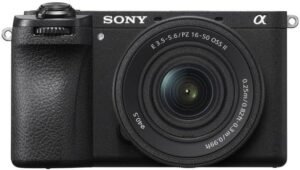
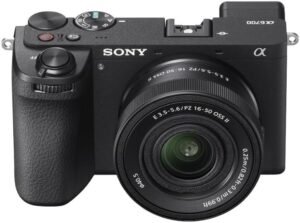
Sony Alpha a6700
Style: APS-C Mirrorless
Manufacturer: Sony
✅ Get Customer Reviews & Best Price
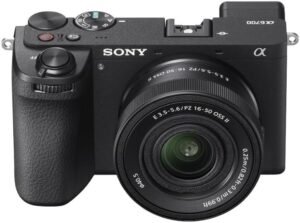
The Sony Alpha a6700 is one of the strongest compact travel cameras for 2026 if you want professional performance without full-frame bulk. Its APS-C sensor allows for smaller, lighter lenses, significantly reducing fatigue on long travel days.
This matters when you are walking through cities, navigating public transportation, or carrying your camera for hours at a time.
Autofocus performance is a major strength. The camera reliably tracks faces, eyes, and moving subjects, which is especially useful in travel environments where moments unfold quickly. In-body stabilization helps keep handheld photos sharp and smooths video clips when you are filming casually while moving.
The a6700 fits easily into compact shoulder bags and backpacks, encouraging daily carry rather than selective use. That consistency often leads to better travel storytelling throughout a trip.
Pros
-
Excellent autofocus for people and movement
-
Strong in-body stabilization
-
Compact body with lighter lens options
-
Reliable hybrid photo and video performance
Cons
-
APS-C sensor limits extreme low-light flexibility
-
Menus can feel complex at first
-
A smaller grip may feel tight with larger lenses
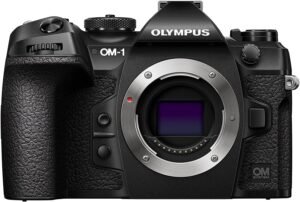
OM System OM-1
Style: Micro Four Thirds Mirrorless
Manufacturer: OM System
✅ Get Customer Reviews & Best Price
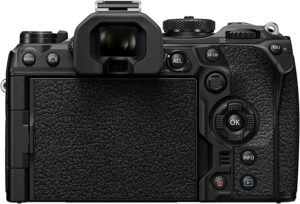
The OM System OM-1 is built for travelers who prioritize mobility, durability, and comfort over sheer sensor size. Its Micro Four Thirds system allows for exceptionally small lenses, keeping the entire kit lightweight and easy to carry during long days of exploration.
Weather sealing is one of its standout advantages. The OM-1 performs confidently in rain, dust, humidity, and changing conditions, making it ideal for outdoor travel, hiking, and unpredictable environments.
Its in-body image stabilization is among the best available, enabling sharp handheld shots and smoother video without additional gear.
While the smaller sensor does not offer the same low-light flexibility as a full-frame sensor, the trade-off is a system that feels effortless to carry and use. For many travelers, that usability leads to more consistent shooting and better results overall.
Pros
-
Extremely lightweight system
-
Excellent weather resistance
-
Class-leading in-body stabilization
-
Compact lenses reduce travel fatigue
Cons
-
Smaller sensor limits low-light performance
-
Less background separation than a full-frame
-
Not ideal for night-heavy shooting styles
Full-Frame Travel Cameras (Maximum Image Quality & Flexibility)
Canon EOS R8
Style: Full-Frame Mirrorless
Manufacturer: Canon
✅ Get Customer Reviews & Best Price
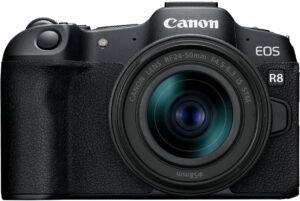
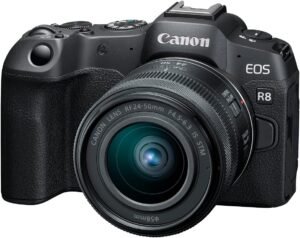
The Canon EOS R8 delivers full-frame image quality in one of the lightest bodies available, making it a compelling option for travelers who want maximum image flexibility without carrying a large professional camera.
Its sensor performs well in low light and offers strong dynamic range for landscapes, interiors, and mixed lighting conditions.
Canon’s autofocus system is reliable and predictable, especially for people-focused travel photography. Skin tones and colors look natural straight out of the camera, helping reduce editing time on the road. The simplified interface allows you to focus on shooting rather than navigating menus.
When paired with compact RF lenses, the R8 remains comfortable for all-day carry. While battery life and weather sealing are limited compared to higher-end models, the image quality benefits make it a strong travel-focused full-frame option.
Pros
-
Lightweight full-frame body
-
Strong low-light and dynamic range performance
-
Reliable autofocus and pleasing color science
-
Simple, intuitive controls
Cons
-
Smaller battery capacity
-
Limited weather sealing
-
RF lenses can be expensive
Sony Alpha a7C II
Style: Full-Frame Mirrorless
Manufacturer: Sony
✅ Get Customer Reviews & Best Price
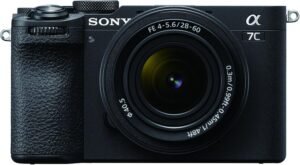
The Sony Alpha a7C II is designed for travelers who want full-frame performance in the smallest possible package. Its rangefinder-style body significantly reduces bulk compared to traditional full-frame cameras, making it easier to carry throughout long travel days.
Autofocus performance is excellent, handling people, movement, and spontaneous moments confidently. In-body stabilization supports handheld shooting, allowing sharper photos and smoother video without relying on tripods or gimbals. This makes it well-suited for fast-paced travel environments.
The a7C II pairs best with compact primes and lightweight zooms, keeping system weight under control. While the smaller grip and single card slot may concern some users, the overall balance of size and image quality makes it one of the most travel-friendly full-frame cameras available.
Pros
-
Extremely compact full-frame body
-
Excellent autofocus performance
-
Effective in-body stabilization
-
Strong image quality in low light
Cons
-
Small grip with larger lenses
-
Single card slot
-
The compact body may feel less balanced for some users
Use Our Decision Tool
We created this quiz to help you select the best compact or full-frame travel camera for your needs. Just answer the 6 questions, and the tool will recommend a camera for your unique situation.
🎥 Find Your Perfect Travel Camera
Answer 6 quick questions to discover which camera best matches your travel photography style
Accessories That Improve Travel Photography
Often, accessories improve results more than upgrading cameras.
Recommended additions:
-
Lightweight travel tripod
-
Spare batteries and USB-C charger
-
Weather-resistant camera sling
These accessories increase flexibility without adding much weight.
How to Choose Between Compact vs Full-Frame Travel Cameras
Ask yourself:
-
How long do you carry your camera each day?
-
Do you shoot mostly in daylight or low light?
-
Do you prioritize comfort or editing flexibility?
-
How much gear do you want to manage?
Your answers clearly point to one option.

Frequently Asked Questions
Is full-frame overkill for travel photography?
For many travelers, yes. Full-frame offers advantages, but compact systems already exceed the needs of social media, personal brands, and most client work. The reality is that full-frame benefits such as extreme low-light performance and maximum dynamic range are only noticeable in specific situations.
If you mostly shoot during daylight, the golden hour, or well-lit interiors, compact systems already deliver higher quality than most platforms can.
Full-frame becomes worthwhile if you regularly shoot in very low light, print large, or rely heavily on post-processing flexibility. Otherwise, the extra weight and cost may not translate into better real-world results.
Do compact cameras look professional?
Absolutely. Modern compact cameras produce sharp, clean images that look professional when used well. Image quality today is driven as much by technique, composition, and lighting as by sensor size. Many viewers cannot distinguish between compact and full-frame images once they are published online.
Compact cameras also encourage consistency. Because they are easier to carry, you shoot more often, which improves storytelling and visual cohesion over time.
Professional-looking results come from reliability and repeatability, not just technical specifications. In many travel scenarios, compact cameras actually outperform larger systems simply because they get used more consistently.
Does sensor size matter for video?
Less than you think. Stabilization, autofocus, and lighting matter more for travel video than sensor size. Smooth motion, reliable subject tracking, and consistent exposure have a greater impact on video quality than shallow depth of field or extreme low-light capability.
Most travel videos are viewed on phones, tablets, and social platforms, where differences in sensor size are far less noticeable.
A well-stabilized APS-C or Micro Four Thirds camera with good autofocus will often produce more usable footage than a full-frame camera that is harder to control handheld. Practical usability outweighs theoretical advantages for travel videos.
Are compact cameras better for beginners?
Often yes. They are easier to carry and use, and they encourage consistent shooting. Beginners benefit from cameras that reduce friction rather than introduce complexity. Compact systems tend to have simpler controls, lighter lenses, and more forgiving autofocus, which builds confidence faster.
Because compact cameras are less intimidating, beginners are more likely to experiment, learn, and shoot frequently. That repetition accelerates improvement far more than owning advanced gear.
For someone learning photography or video while traveling, a compact system creates a smoother, less frustrating learning curve that leads to better long-term results.

Can professionals use compact cameras?
Many do. Professionals often choose compact systems specifically for travel efficiency. When assignments involve long walking days, tight schedules, or multiple locations, carrying lighter gear improves stamina and focus. Many professionals prioritize reliability and comfort over maximum sensor size when traveling.
Compact cameras are commonly used for location scouting, editorial travel work, and hybrid photo-video assignments. In skilled hands, they deliver results that meet professional standards. The key difference is not the camera category, but how intentionally it is used within the constraints of travel environments.
Should you choose based on brand?
Brand matters less than ergonomics, lens options, and how the camera feels in your hands. A camera you enjoy using will always outperform a technically superior model that feels awkward or frustrating. Comfort affects how long you shoot and how confident you feel while working.
Lens availability, weight balance, menu clarity, and button placement all influence real-world usability more than brand reputation.
Choosing a system that fits your shooting style and travel habits leads to better results than chasing brand-specific advantages. The best camera is the one that integrates naturally into how you move and shoot while traveling.

Final Thoughts
Choosing between compact vs full-frame travel cameras in 2026 is not about right or wrong. It is about alignment. When your camera fits your travel rhythm, you shoot more, stress less, and return with stronger content.
The best camera is the one that feels effortless to bring everywhere.
Essential Resources
- Follow working pros in portrait and wedding niches via Rangefinder Magazine.
- Track pro-grade post workflows and camera-to-cloud conversations through Frame.io cinematography and production topics.