
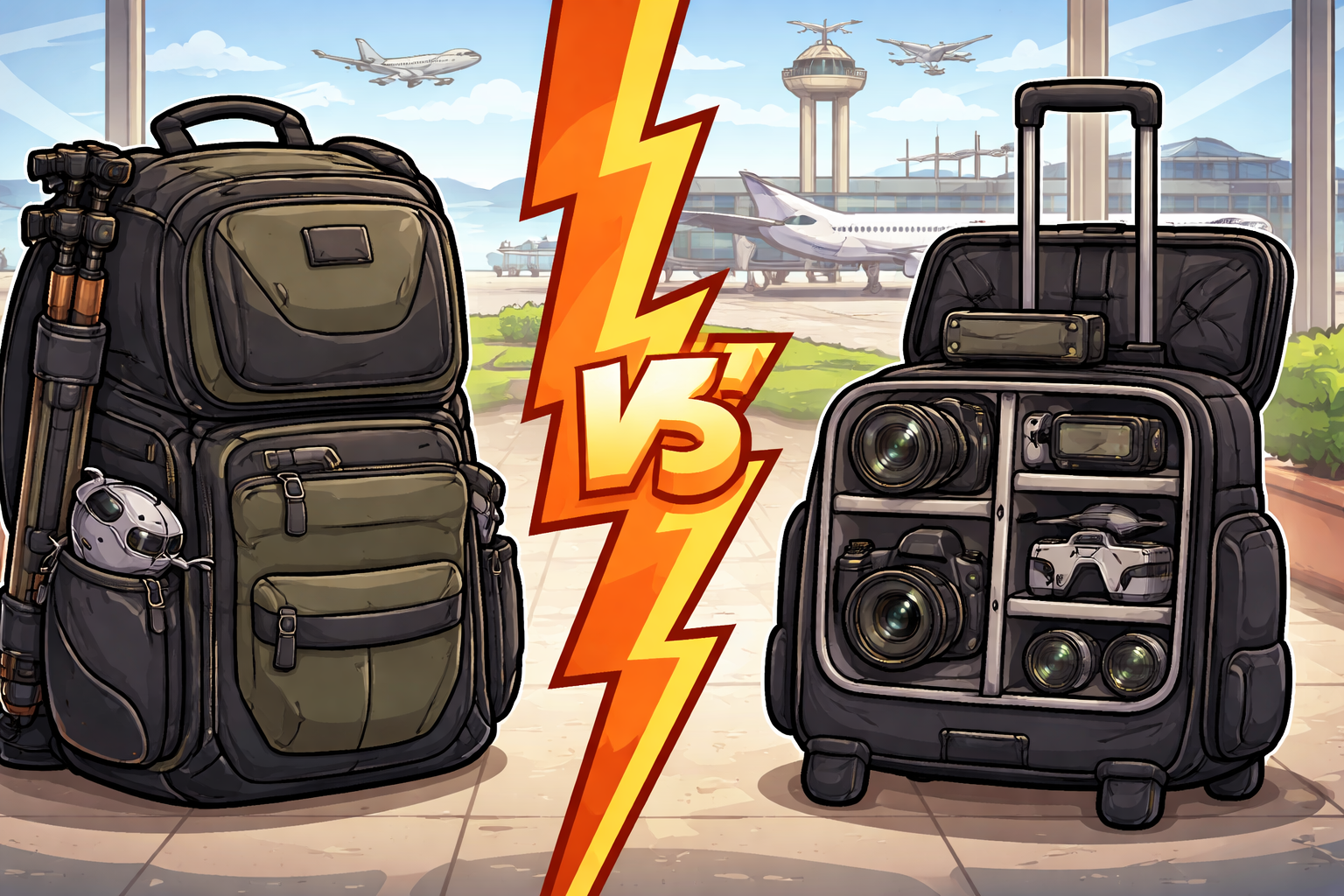
Camera Backpack vs Roller Bag for Travel Camera Gear
Camera Backpack vs Roller Bag for Travel Camera Gear
Travel photography and video demand more than just a good camera. How you carry your gear can determine whether you shoot all day comfortably or feel worn down before the best moments happen.
The choice between a camera backpack and a roller bag is not just about preference. It affects mobility, safety, speed, and the amount of gear you realistically use while traveling.
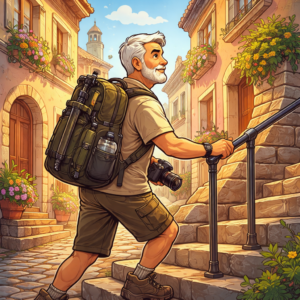
If you have ever skipped bringing a lens because your bag felt too heavy or avoided shooting because accessing your gear felt inconvenient, your bag may be working against you.
Understanding when a camera backpack or a roller bag makes more sense helps you travel smarter, protect your equipment, and stay focused on creating content rather than managing logistics.
This guide breaks down the real differences between camera backpacks and roller bags for travel camera gear so you can choose with confidence.
Why Your Camera Bag Choice Matters More Than You Think
When you travel, your camera bag is with you for hours at a time. You carry it through airports, train stations, city streets, hotels, and sometimes rough terrain. A bag that works well in one situation may feel like a liability in another.
A camera backpack prioritizes mobility and comfort while walking. A roller bag prioritizes capacity and ease of transport on smooth surfaces. Neither option is inherently better. The right choice depends on how you travel, how much gear you carry, and where you shoot most often.
Many travelers make the mistake of choosing a bag based on how it looks online rather than how it functions during real travel days. This often leads to overpacking, shoulder fatigue, or gear that stays in the hotel instead of being used.
Your goal is not to carry the most gear. Your goal is to carry the right gear comfortably and access it when the moment arises.

What Travel Creators Should Prioritize Before Choosing a Bag
Before comparing backpacks and roller bags, clarify what matters most to your travel style.
Mobility Across Different Environments
Travel rarely involves only smooth floors. You may encounter cobblestone streets, stairs, uneven sidewalks, gravel paths, or public transportation with limited space. Your bag should support movement rather than slow you down.
Ask yourself where you shoot most often:
-
Urban streets
-
Airports and hotels
-
Outdoor locations
-
Events and interiors
Your environment strongly influences whether wheels or shoulder carry makes more sense.
Gear Protection and Organization
Your bag should protect expensive gear without forcing you to overthink organization. A good bag keeps cameras and lenses secure, prevents items from shifting, and allows you to pack efficiently.
You should be able to:
-
Secure bodies and lenses without stacking
-
Access batteries and memory cards easily
-
Keep personal items separate from camera gear
Good organization reduces stress and speeds up shooting.

Carry Comfort Over Long Days
Travel days are longer than you expect. What feels manageable for one hour can become exhausting after six.
Comfort depends on:
-
Weight distribution
-
Padding quality
-
Handle and strap design
-
Bag balance when fully loaded
Comfort affects how long you shoot and how alert you feel during moments.
Speed of Access
Travel photography rewards responsiveness. If accessing your camera requires stopping, opening a large bag, or navigating tight compartments, you may miss shots.
Speed matters more for:
-
Street photography
-
Events
-
Spontaneous travel moments
Your bag should support your shooting rhythm.
Understanding Camera Backpacks for Travel Camera Gear
Camera backpacks are designed to distribute weight across both shoulders and keep gear close to your body. They are often the most popular choice for travel photographers because they strike a balance between comfort and flexibility.
Strengths of Camera Backpacks
Camera backpacks excel in travel scenarios that involve movement and long walking days.
Key advantages include:
-
Even weight distribution across the shoulders and back
-
Hands-free mobility
-
Better stability on uneven terrain
-
Space for personal items alongside camera gear
Backpacks make it easier to move through crowds, navigate stairs, and walk long distances without stopping.
Limitations of Camera Backpacks
Backpacks are not perfect for every travel situation.
Common drawbacks include:
-
Slower access compared to front-opening bags
-
Need to remove the bag to access gear
-
Bulkier feel in tight indoor spaces
-
Potential heat buildup on the back
Backpacks reward planning but can slow spontaneous shooting if access is not well designed.
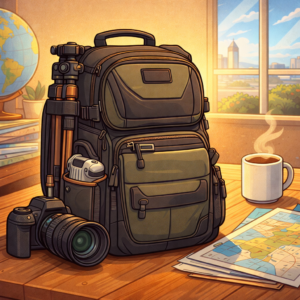
When a Camera Backpack Makes Sense
A camera backpack is often the better choice if you:
-
Walk long distances daily
-
Carry multiple lenses or accessories
-
Shoot outdoors or on varied terrain
-
Move frequently between locations
-
Want hands-free comfort
Backpacks shine when endurance and versatility matter most.
Understanding Roller Bags for Travel Camera Gear
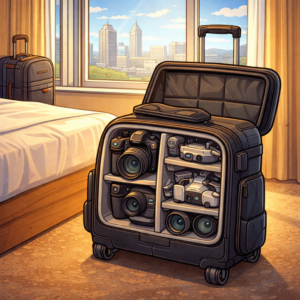
Roller bags are designed to carry heavier loads with minimal physical strain on smooth surfaces. They are commonly used by professionals who travel with extensive gear or fly frequently.
Strengths of Roller Bags
Roller bags are ideal for transporting larger kits through airports and hotels.
Key advantages include:
-
Ability to carry heavy gear with minimal physical effort
-
Excellent protection with a rigid structure
-
Easy organization for multiple bodies and lenses
-
Less strain on the shoulders and back during transit
If you travel with multiple cameras, lenses, lighting, or audio equipment, a roller bag significantly reduces fatigue.
Limitations of Roller Bags
Roller bags struggle outside controlled environments.
Common drawbacks include:
-
Difficult to use on stairs or uneven surfaces
-
Slower movement in crowded streets
-
Limited use once you arrive at shooting locations
-
Often require a secondary shooting bag
Roller bags are excellent for transport, but less useful once you are actively shooting.
When a Roller Bag Makes Sense
A roller bag is often the better choice if you:
-
Fly frequently with large kits
-
Carry multiple camera bodies
-
Transport lighting or video equipment
-
Work from hotels, venues, or studios
-
Use a secondary bag for daily shooting
Roller bags excel at moving gear safely, not necessarily at shooting on the move.

Camera Backpack vs Roller Bag for Travel Camera Gear: Head-to-Head Comparison
Mobility
Backpacks move easily up and down stairs, through crowds, and over uneven surfaces.
Winner: Camera backpack
Gear Capacity
Roller bags carry more gear with less physical strain.
Winner: Roller bag
Shooting Access
Backpacks allow a quicker transition into shooting than roller bags, which usually stay behind.
Winner: Camera backpack
Comfort Over Distance
Roller bags reduce load strain during transit, but backpacks distribute weight better during walking days.
Winner: Depends on the environment
Versatility
Backpacks adapt better to mixed travel days that include shooting and movement.
Winner: Camera backpack
Professional Transport
Roller bags provide better structure and protection for large professional kits.
Winner: Roller bag
Recommended Camera Backpacks for Travel Camera Gear
Below are reliable backpack options that balance comfort, protection, and travel usability.
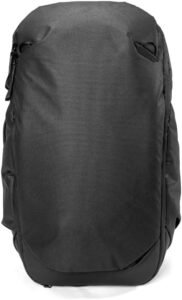
Peak Design Travel Backpack 30L
Style: Camera Backpack
Manufacturer: Peak Design
✅ Get Customer Reviews & Best Price
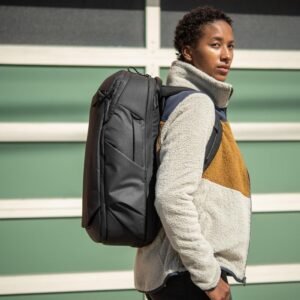
The Peak Design Travel Backpack 30L is designed for travelers who want flexibility without committing to a large expedition pack. Its modular interior lets you configure the space to your daily kit, making it suitable for both transit and shooting days.
The harness system distributes weight evenly, which helps during long walks. Side and rear access panels allow you to reach your camera without unpacking everything. The materials feel durable and weather resistant, which is useful when moving between airports, streets, and unpredictable conditions.
Pros:
-
Excellent weight distribution
-
Modular interior system
-
Weather-resistant materials
-
Clean, professional appearance
Cons:
-
Premium price
-
Can feel bulky when fully packed
Lowepro ProTactic BP 350 AW II
Style: Camera Backpack
Manufacturer: Lowepro
✅ Get Customer Reviews & Best Price
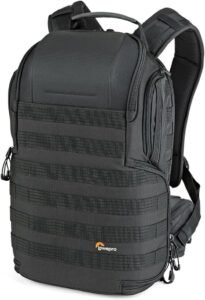
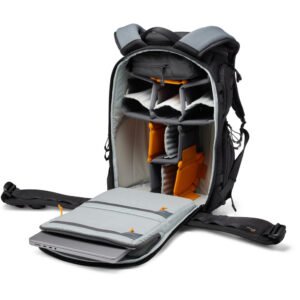
The Lowepro ProTactic BP 350 AW II is built for photographers who prioritize protection and structure. Its rigid padding and customizable dividers keep gear secure, while multiple access points reduce the typical backpack access problem.
The harness system is supportive, making it suitable for heavier kits. The included rain cover adds confidence when traveling through changing weather.
Pros:
-
Excellent gear protection
-
Multiple access panels
-
Comfortable for heavier loads
-
Included rain cover
Cons:
-
Heavier than minimalist backpacks
-
Tactical styling may draw attention
Recommended Roller Bags for Travel Camera Gear
Roller bags are best for efficiently transporting larger kits.
Think Tank Airport Advantage XT
Style: Camera Roller Bag
Manufacturer: Think Tank Photo
✅ Get Customer Reviews & Best Price
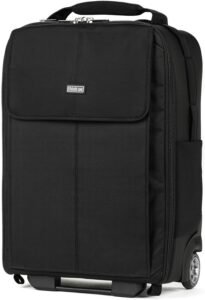
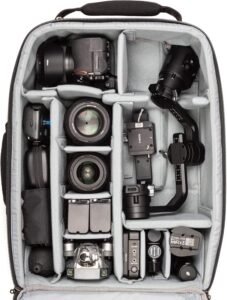
The Think Tank Airport Advantage XT is designed specifically to meet airline carry-on requirements while maximizing internal capacity. It securely fits multiple camera bodies and lenses, making it ideal for professional travel.
The wheels roll smoothly through airports, reducing physical strain during long transit days. The interior layout keeps gear organized and protected.
Pros:
-
Carry-on compliant design
-
Smooth rolling wheels
-
Excellent internal organization
-
Strong protection for expensive gear
Cons:
-
Limited use on rough surfaces
-
Not suitable for active shooting days
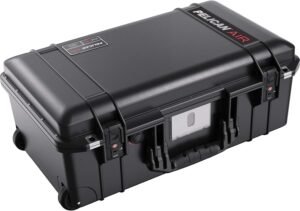
Pelican Air 1535TRVL
Style: Camera Roller Case
Manufacturer: Pelican
✅ Get Customer Reviews & Best Price
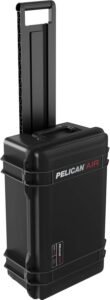
The Pelican Air 1535TRVL offers unmatched protection for sensitive gear. Its hard shell design shields equipment from impacts, moisture, and pressure changes.
This case is ideal for safely transporting gear, but it requires a secondary shooting bag for daily use.
Pros:
-
Exceptional protection
-
Durable hard shell
-
Smooth rolling design
-
Weather resistant
Cons:
-
Heavy when fully loaded
-
Not practical for shooting access
Use Our Decision Tool
We created this quiz to help you select the best Camera Backpack or Roller Bag for Travel Camera Gear for your needs. Just answer the 7 questions, and the tool will recommend a camera bag for your unique situation.
🎒 Camera Bag Finder Quiz
Answer 7 questions to find your perfect camera bag
Accessories That Improve Either Setup
Accessories often improve usability more than changing bags.
Recommended additions:
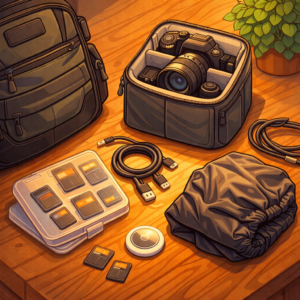
-
Lightweight camera cube for modular packing
-
Cable organizer pouch
-
AirTag or tracking device
-
Compact rain cover
These additions improve organization and security regardless of bag type.

How to Choose Between a Camera Backpack vs Roller Bag for Travel Camera Gear
Ask yourself:
-
How much gear do you realistically carry?
-
Do you walk long distances while shooting?
-
Are your environments smooth or uneven?
-
Do you need quick access or maximum capacity?
-
Will you use a secondary shooting bag?
Many travelers use both. A roller bag for transit and a backpack for shooting days.
Internal Resource for Travel Creators
If you are refining your travel setup, explore related camera and gear guides available on travelcreatorgear.com that focus on lightweight systems and travel-friendly workflows.
Frequently Asked Questions
Is a camera backpack safer than a roller bag for travel?
A camera backpack can feel safer in crowded environments because it stays close to your body and is harder for someone else to access without you noticing. Many travel backpacks also use rear-facing access panels, which add another layer of security when walking through busy areas.
That said, roller bags often provide better physical protection thanks to rigid frames and structured interiors. They reduce the risk of impact damage during flights or rough handling. Overall safety depends more on thoughtful design, zipper placement, awareness, and how you move through environments than on whether the bag has wheels or shoulder straps.
Do professionals use roller bags for travel photography?
Yes, many professional photographers rely on roller bags when traveling, especially for flights or assignments that require carrying multiple camera bodies, lenses, or additional equipment. Roller bags make it easier to transport heavy kits through airports, hotels, and convention centers without straining your back.
However, professionals rarely rely solely on roller bags. Most use them strictly for transport and then switch to a backpack, sling, or shoulder bag for actual shooting. This two-bag approach allows them to protect and move gear efficiently while still staying mobile and responsive on location.
Can a roller bag replace a camera backpack?
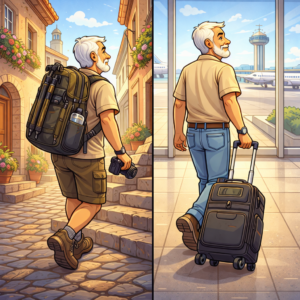
In most travel scenarios, a roller bag cannot fully replace a camera backpack. Roller bags work best on smooth surfaces and during transit, but they become cumbersome once you leave airports or hotels. Stairs, uneven streets, crowded sidewalks, and outdoor locations quickly expose their limitations.
A backpack allows you to keep shooting while moving, whereas a roller bag usually stays parked somewhere nearby. For this reason, many travelers view roller bags as transport tools rather than shooting companions. If you plan to walk, explore, and shoot throughout the day, a backpack remains the more practical option.
Are camera backpacks allowed as carry-on luggage?
Most travel-oriented camera backpacks are designed to meet standard airline carry-on size limits, making them suitable for overhead bins on many flights. However, airline policies vary widely, especially on international routes or budget carriers, where size and weight limits can be stricter.
It is always smart to check the specific airline requirements before flying. Packing efficiently also matters, since overstuffed backpacks may exceed limits even if the bag itself is designed for carry-on use. Compared to roller bags, backpacks offer more flexibility when navigating tighter cabin spaces.
Which option is better for beginners?
Beginners often benefit more from camera backpacks because they encourage balanced, lightweight kits and make it easier to move comfortably while learning. A backpack allows longer shooting days without strain, helping beginners practice more consistently.
Roller bags can unintentionally encourage overpacking early on, leading to heavier kits and less actual shooting. For someone still learning what gear they truly need, a backpack promotes better habits by limiting excess equipment and focusing attention on composition, timing, and storytelling rather than gear management.
Is it worth owning both?
For many travel creators, owning both a camera backpack and a roller bag is a practical long-term solution. Each bag excels in different situations, and travel rarely looks the same from day to day. Some days require carrying everything, while others only call for a minimal kit.
Using a roller bag for flights and a backpack for daily exploration reduces fatigue and improves efficiency. This flexibility allows you to adapt your setup to each trip, location, or shooting plan, ultimately making travel photography more comfortable and more productive overall.
Final Thoughts on Camera Backpack vs Roller Bag for Travel Camera Gear
Choosing between a camera backpack and a roller bag is about matching your bag to your travel reality. The best option is the one that supports how you move, how you shoot, and how much gear you actually use. When your bag works with you, shooting feels easier, more consistent, and more enjoyable.
Photography and Video References
- Take structured lessons from Sony Alpha Universe Academy courses.
- Learn post-production and on-set craft at Frame.io Insider.