
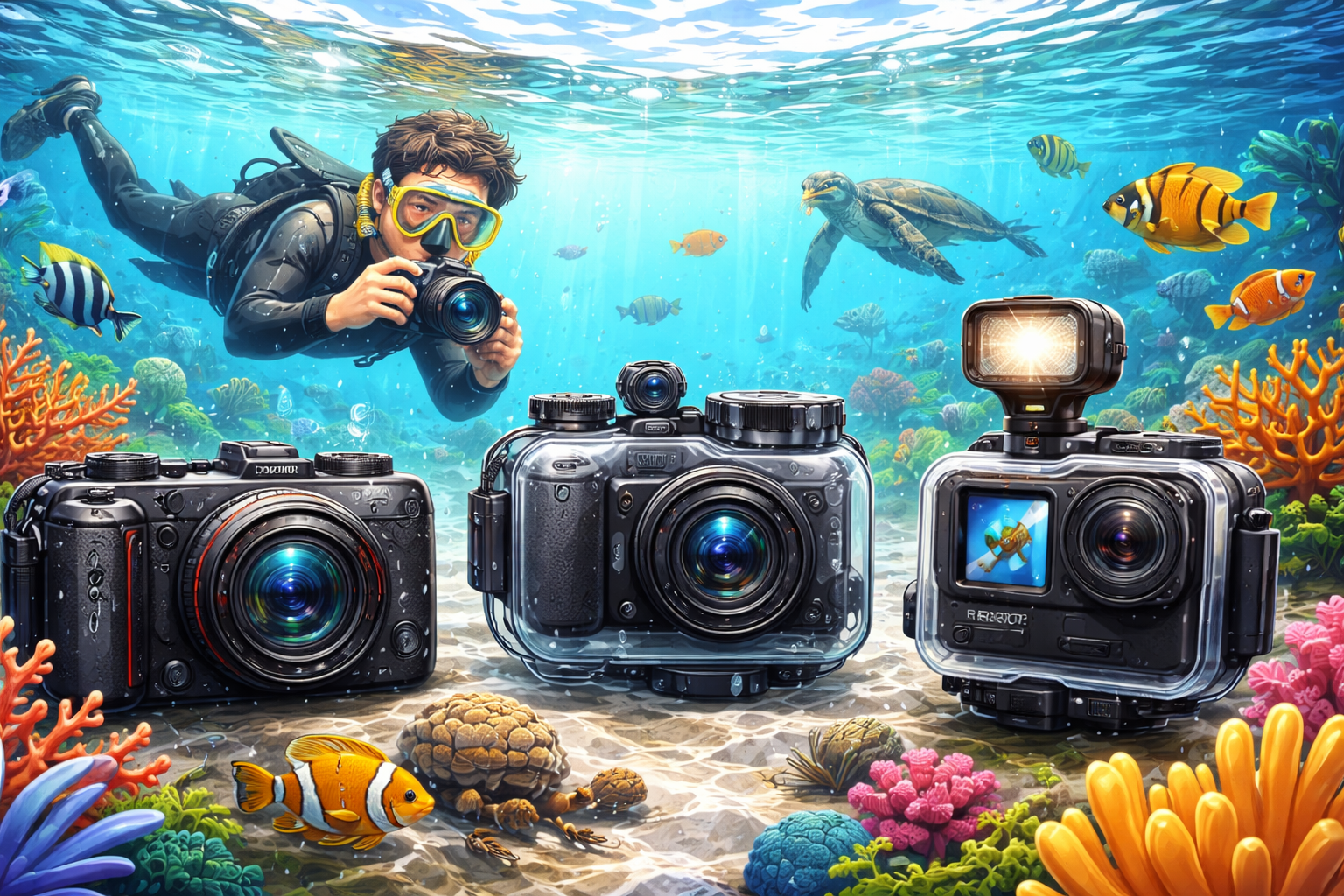
Best Underwater Cameras for Travel Photography in 2026
Best Underwater Cameras for Travel Photography in 2026
Travel photography changes the moment water enters the equation. Beaches, reefs, waterfalls, cenotes, rivers, and rainy cities all demand gear that can survive moisture while still producing sharp, usable images and video. If you want consistent results while traveling in 2026, choosing the right underwater camera is not optional. It is part of protecting your workflow and your investment.
When you search for underwater cameras for travel photography, the number of options can feel overwhelming.
Compact waterproof cameras, action cameras, mirrorless cameras with housings, and hybrid creator setups all promise quality, but they serve very different use cases. If you pick the wrong type, you either carry too much gear or sacrifice image quality when it matters most.
This guide helps you choose underwater cameras for travel photography based on how you actually shoot. You will learn what matters, which products make sense in 2026, and how to build a reliable setup without overcomplicating your kit.
Why Travel Photographers Need Purpose-Built Underwater Cameras
You are not shooting underwater in controlled studio conditions. You are dealing with saltwater, sand, humidity, pressure, and unpredictable movement. Travel photography adds even more variables, including airline restrictions, weight limits, long walking days, and fast transitions between environments.
Underwater cameras for travel photography must solve multiple problems at once:
• Protect sensitive electronics from water and pressure
• Deliver usable image quality in low light
• Remain compact enough for carry-on travel
• Allow fast operation with gloves or wet hands
• Transition smoothly between land and water shooting
A standard camera without proper protection fails immediately in water. A bulky dive housing may protect your camera, but ruin portability. The right solution balances protection, quality, and simplicity.
Key Features That Matter for Underwater Travel Photography
Before looking at specific models, you need to understand what features actually affect real-world performance.
Waterproof Depth Rating
Depth ratings determine how far you can safely submerge your camera without a housing. Many travel photographers snorkel or shoot near the surface, while others dive deeper.
Typical categories include:
• Splash proof or rain resistant only
• Waterproof to 10 to 15 meters for snorkeling
• Waterproof to 30 meters or more for diving
If you only snorkel or shoot near shore, you do not need extreme depth ratings. Buying deeper ratings than necessary often adds size and cost without benefit.
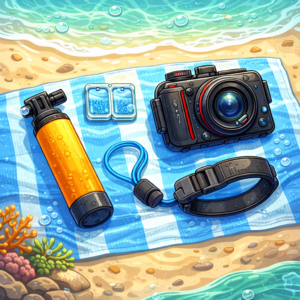
Image Quality in Low Light
Water absorbs light quickly. Colors fade, contrast drops, and noise becomes visible faster than on land. Sensor size, lens aperture, and processing matter more underwater than in bright daylight.
Look for cameras with:
• Larger sensors relative to body size
• Bright lenses
• Strong image stabilization
• Good video performance in mixed lighting
Ease of Use While Wet
Small buttons, confusing menus, and reliance on touchscreens become frustrating underwater. Cameras designed for underwater use prioritize physical controls, simple interfaces, and reliable operation when wet.
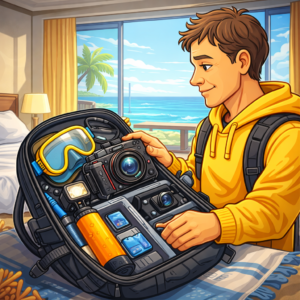
Underwater cameras for travel photography must fit in your carry-on and integrate into your existing travel kit. Heavy housings and complex rigs slow you down and increase fatigue.
Choosing the Right Type of Underwater Camera
Underwater cameras fall into three main categories. Each works best for different travel photography styles.
Compact Waterproof Cameras
These cameras are all-in-one solutions. They are waterproof without extra housings and designed for casual to intermediate underwater shooting.
Best for:
• Snorkeling
• Beach travel
• Casual underwater photography
• Lightweight travel kits
Action Cameras
Action cameras excel at video and durability. They are small, rugged, and easy to mount, but they sacrifice some still image quality.
Best for:
• Video-focused creators
• Movement-heavy shooting
• Social media content
• Minimalist travel setups
Interchangeable Lens Cameras with Housings
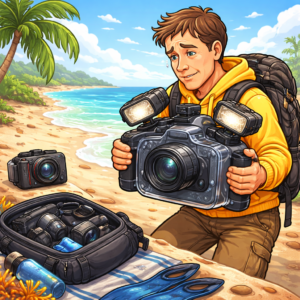
These offer the highest image quality but require housings, ports, and accessories. They are powerful but add bulk and complexity.
Best for:
• Serious underwater photography
• Mixed professional work
• Travelers prioritizing image quality over minimalism
Best Underwater Cameras for Travel Photography in 2026
The following recommendations focus on reliability, portability, and real-world usability for travelers.
Olympus Tough TG 7
Manufacturer: OM System
Style: Compact waterproof camera
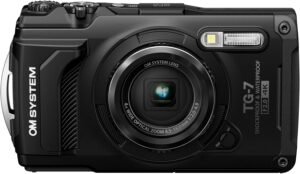
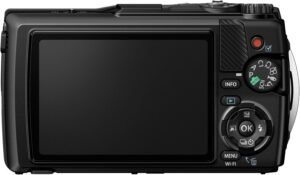
The Olympus Tough TG-7 remains one of the most reliable underwater cameras for travel photography in 2026. It is built for harsh conditions and requires no housing for depths up to 15 meters, making it ideal for snorkeling, beach photography, and rainy environments.
✅ Get Customer Reviews & Best Price
The camera features a bright lens and excellent macro performance, which is useful for capturing marine life, textures, and close-up details underwater. Physical buttons are easy to operate with wet hands, and the rugged body resists drops, dust, and freezing temperatures.
For travel photographers who want a dependable grab-and-go underwater solution without added bulk, this camera fits naturally into a carry-on kit.
Pros
• No housing required for shallow underwater use
• Rugged and travel-friendly
• Strong macro performance
• Simple operation
Cons
• Smaller sensor than mirrorless cameras
• Limited background blur
• Not ideal for deep diving
GoPro HERO12 Black
Manufacturer: GoPro
Style: Action camera
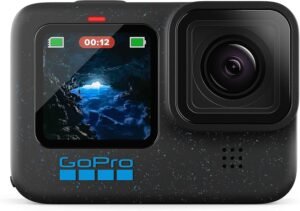
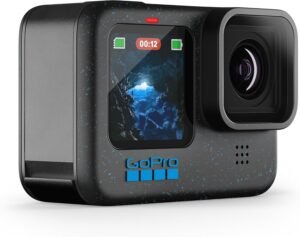
The GoPro HERO12 Black is one of the most versatile tools for underwater travel photography if your focus includes video and dynamic shooting. Its compact size, built-in stabilization, and waterproof design allow you to shoot confidently in water without worrying about protection.
✅ Get Customer Reviews & Best Price
While still images are not as detailed as those from larger-sensor cameras, the GoPro excels at capturing moments when movement matters. Snorkeling, swimming, waterfalls, and action shots translate well to social content.
For travelers who prioritize portability and speed, this camera fits easily into any backpack and complements a primary land camera.
Pros
• Extremely compact and lightweight
• Excellent video stabilization
• Waterproof without housing
• Ideal for social content
Cons
• Limited still photo quality
• Fixed ultra-wide perspective
• Less control over depth of field
Sony RX100 VII with Underwater Housing
Manufacturer: Sony
Style: Compact camera with housing
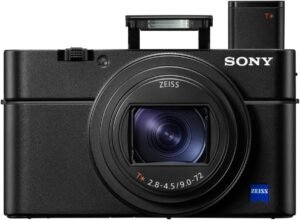
The Sony RX100 VII, paired with a quality underwater housing, offers a powerful balance between image quality and portability. The one-inch sensor delivers noticeably better stills and video than action cameras while remaining compact enough for travel.
✅ Get Customer Reviews & Best Price (Camera)
With the appropriate housing, this setup supports deeper dives and better control over exposure, focus, and color. It works well for travelers who want higher-quality underwater images without stepping into full mirrorless systems.
This setup requires more planning and care, but it rewards photographers with cleaner files and greater creative flexibility.
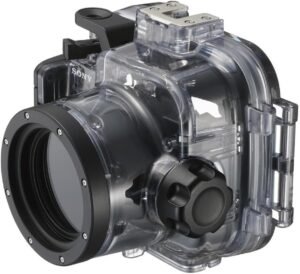
✅ Get Customer Reviews & Best Price (Underwater Housing)
Pros
• Strong image quality for its size
• Compact compared to mirrorless systems
• Good autofocus performance
• Flexible for photo and video
Cons
• Housing adds cost and bulk
• More complex setup
• Slower access than all-in-one solutions
Canon EOS R50 with Underwater Housing
Manufacturer: Canon
Style: Mirrorless camera with housing
For travelers who prioritize still image quality and creative control, the Canon EOS R50 with an underwater housing delivers professional-level results. The APS-C sensor provides excellent dynamic range and low-light performance underwater when paired with proper lighting.
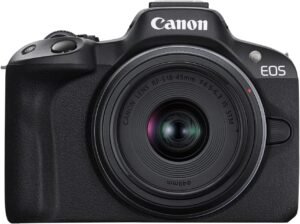
✅ Get Customer Reviews & Best Price (Camera)
This setup is larger and heavier than compact options, but it supports interchangeable lenses and advanced shooting techniques. It works best for travelers who plan underwater photography as a core part of their trip rather than an occasional activity.
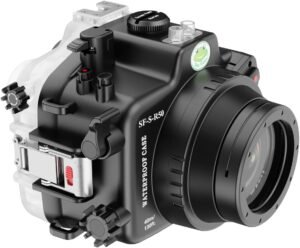
✅ Get Customer Reviews & Best Price (Underwater Housing)
Pros
• Excellent image quality
• Interchangeable lenses
• Strong autofocus
• Professional control
Cons
• Bulky and heavy for travel
• Expensive housing required
• Slower transitions between environments
Use Our Decision Tool
We created this quiz to help you select the best travel underwater camera for your needs. Just answer 6 questions, and the tool will recommend an underwater camera tailored to your situation.
Find Your Perfect Underwater Camera
Answer 6 quick questions to discover which underwater camera best fits your travel photography needs
Accessories That Improve Any Underwater Travel Setup
Even the best underwater cameras for travel photography perform better when paired with the right supporting accessories. These additions do not make your kit feel bulky. Instead, they increase reliability, protect your investment, and reduce the risk of missed shots caused by environmental factors. For travel photographers, accessories should stay lightweight, pack small, and solve real problems you will encounter in the water.
Floating Hand Grip
Recommended Product: The Handler Floating Grip
Manufacturer: MiPremium
A floating hand grip is one of the simplest but most valuable accessories for underwater travel photography. The GoPro The Handler is lightweight, easy to pack, and prevents your camera from sinking if it slips from your hand while swimming or snorkeling.
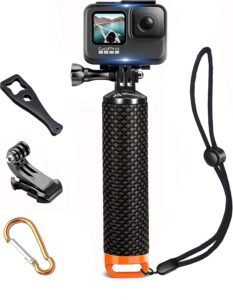
✅ Get Customer Reviews & Best Price
The bright end cap improves visibility in water, making retrieval easier if dropped. The grip also improves stability when shooting handheld, reducing shaky footage and helping maintain smoother framing in moving water. This accessory is especially useful for action cameras and compact underwater setups where wrist straps alone may not provide enough security.
Key benefits include added buoyancy, improved grip, and peace of mind in open water.
Anti Fog Inserts
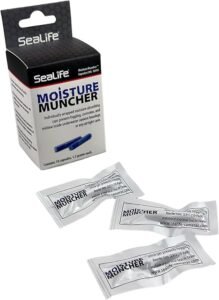
Recommended Product: SeaLife Moisture Muncher Anti-Fog Desiccant Capsules
Manufacturer: SeaLife
Fogging is one of the most common issues underwater photographers face, especially when moving between warm air and cooler water. Anti-fog inserts absorb internal moisture and help regulate temperature changes inside housings.
✅ Get Customer Reviews & Best Price
SeaLife Moisture Muncher capsules are compact, reusable, and designed specifically for underwater camera housings. They reduce condensation that can form on lenses and housing ports, preventing blurry images and ruined footage during longer sessions.
For travel photographers, these inserts add almost no weight and can save entire shooting sessions from being compromised by fog buildup. Key benefits include reduced condensation, clearer images, and increased reliability in humid or tropical environments.
How to Build a Balanced Travel Kit
Underwater photography should enhance your travel experience, not dominate it. Keep your kit intentional.
Ask yourself:
• How often will you shoot underwater
• How deep will you realistically go
• How important is still image quality
• How much weight can you carry comfortably
Most travel photographers benefit from compact waterproof cameras or action cameras paired with a strong land camera. Mirrorless underwater systems work best when underwater shooting is a priority rather than an occasional activity.
Common Mistakes Travelers Make
• Buying deeper-rated gear than needed
• Carrying heavy housings for casual snorkeling
• Ignoring ergonomics and control placement
• Forgetting fog prevention accessories
Avoiding these mistakes keeps your travel kit lighter and your shooting more enjoyable.
Final Buying Guidance
The best underwater cameras for travel photography in 2026 are the ones that fit your real workflow. You do not need the most expensive system to capture meaningful images. You need reliability, portability, and image quality that matches your goals.
When your camera works without friction, you focus on composition, timing, and storytelling instead of worrying about gear.
Authority Resources for Further Learning
- Get deep camera test results with DPReview’s reviews and learning hub.
- Follow practical gear breakdowns on CameraLabs camera and lens guides.