
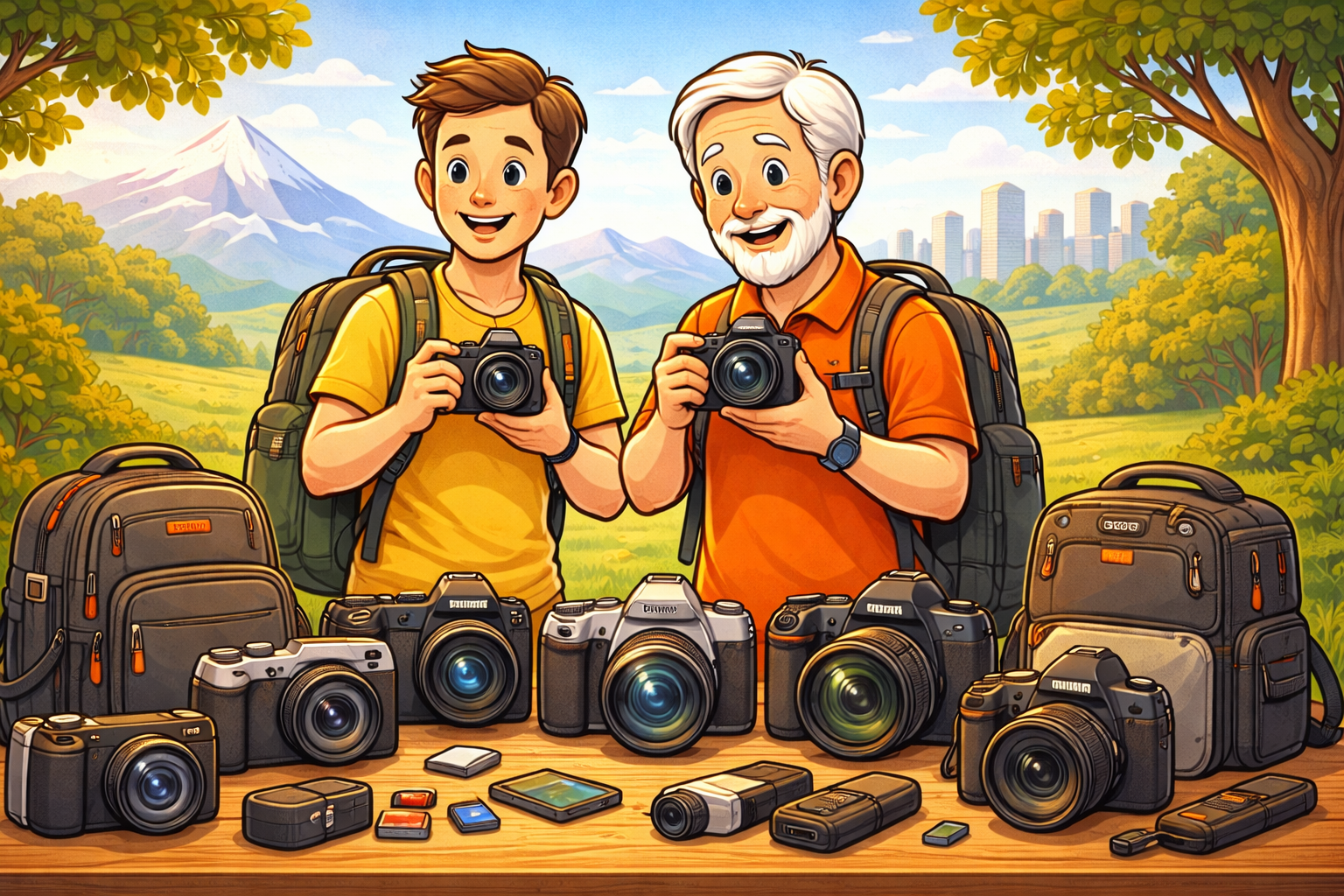
Best Travel Cameras for Beginner vs Intermediate Creators
Best Travel Cameras for Beginner vs Intermediate Creators
You are standing in a camera store aisle, scrolling endlessly on your phone, trying to decide what you actually need for your next trip. Every brand promises professional quality, every review feels different, and every creator you follow seems to use something completely different.
That is exactly why the question of the Best Travel Cameras for Beginner vs Intermediate Creators matters so much.
You are not just buying a camera. You are choosing how you will experience travel, how you will capture memories, and how confidently you will show up online.
If you are an aspiring or intermediate creator, you want something portable, reliable, and capable of producing professional-looking results without overwhelming you with complexity. You also want gear that performs in real travel conditions, not just in a studio or controlled environment.
This guide is written directly to you in the second person because your mindset, frustrations, and goals shape this decision far more than spec sheets ever could. You are looking for clarity, not hype. You want a camera that supports your creativity rather than complicating it.
Why does this decision feel so overwhelming?
You probably feel pulled in multiple directions. On one hand, you want excellent image and video quality for social media, personal branding, or client work. On the other hand, you do not want to lug around a massive setup that makes travel exhausting.
You see mirrorless cameras, DSLRs, compact cameras, and action cameras all competing for your attention. You wonder which features truly matter and which are just marketing buzzwords. You worry about spending too much on gear you may not fully use yet, but you also fear buying something too basic that you outgrow quickly.
This tension between simplicity and performance is at the heart of choosing the Best Travel Cameras for Beginner vs Intermediate Creators. The right choice should meet you where you are now while leaving room to grow.
Understanding your creative level
Before comparing cameras, you need to understand where you sit on the beginner-to-intermediate spectrum.
If you are a beginner creator
You are still learning the fundamentals of photography and video. You want a camera that:
-
Is easy to use
-
Has good automatic modes
-
Produces clean images without heavy editing
-
Is lightweight enough to carry all day
-
Does not require a steep learning curve
Your biggest pain points are confusion, information overload, and fear of making the wrong purchase. You want something that builds confidence rather than intimidation.
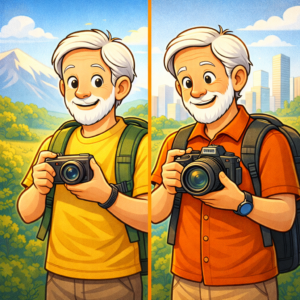
If you are an intermediate creator
You are more comfortable with settings like aperture, shutter speed, and ISO. You care about:
-
Better low-light performance
-
Faster autofocus
-
Higher video quality
-
Lens flexibility
-
More creative control
You want a camera that helps you level up your content without forcing you into bulky professional gear.
What actually matters for travel cameras
When you think about travel, you are not just sitting in one place. You are walking, flying, waiting, moving, and adapting to changing light. Your camera needs to support that lifestyle.
Portability and weight
For you, portability is often more important than raw technical power. A slightly less powerful camera that you actually carry will always outperform a top-tier camera that stays in your hotel room.
Lightweight mirrorless cameras or high-end compact cameras are usually the best balance for travel.
Autofocus reliability
When you are shooting street scenes, candid portraits, or fast-moving moments, autofocus speed matters. You do not want to miss a shot because your camera hesitates.
Beginners benefit from cameras with simple, reliable autofocus systems that work well in automatic mode. Intermediate creators may prefer more advanced subject tracking features.

Video capability
If you create social media content, video matters just as much as photos. Look for:
-
At least 4K video
-
Good stabilization
-
Clean audio options
-
Flip screen for vlogging
Even if you do not shoot much video now, you may want this flexibility as your skills grow.
Battery life
Travel days are long. You do not want to constantly stop and recharge. Beginners may prefer cameras with longer battery life, while intermediates can manage spare batteries or power banks.
Best Travel Cameras for Beginners
If you are just starting out, you want something simple, lightweight, and forgiving.
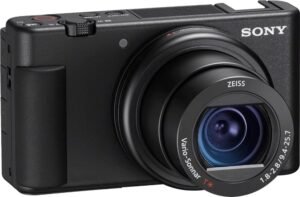
Sony ZV-1
Style: Compact travel camera
Manufacturer: Sony
✅ Get Customer Reviews & Best Price
Pros
-
Excellent automatic modes for beginners
-
Great image quality in a small body
-
Strong video performance
-
Flip screen for vlogging
-
Lightweight and pocketable
Cons
-
No interchangeable lenses
-
Limited zoom range
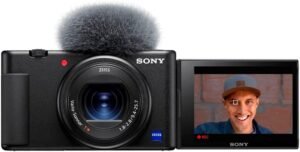
This is ideal if you want professional-looking content without technical complexity.
The Sony ZV-1 handles both photos and video exceptionally well for its size, making it a favorite among travelers who want one camera that does it all. Its autofocus reliably locks onto faces and eyes, which is helpful when capturing people or movement without spending time tweaking focus settings.
Because it is so lightweight, you can carry it all day without fatigue, letting you stay spontaneous and ready for unexpected shots. It also performs smoothly in low light relative to other compacts, and its built-in neutral density filter helps maintain smooth shutter speeds outdoors.
For creators who prioritize simplicity without sacrificing capability, this camera strikes a strong balance.
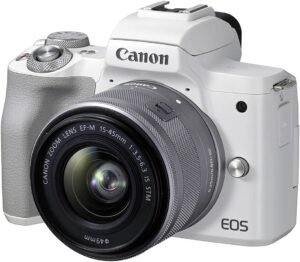
Canon EOS M50 Mark II
Style: Mirrorless camera
Manufacturer: Canon
✅ Get Customer Reviews & Best Price
Pros
-
Beginner-friendly controls
-
Good autofocus for photos and video
-
Interchangeable lenses
-
Lightweight and travel-ready
-
Strong color science for social media
Cons
-
Limited battery life
-
Smaller lens selection compared to other systems
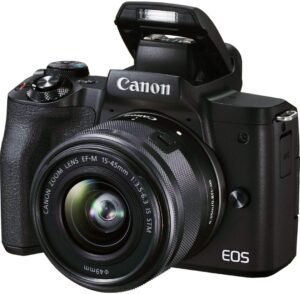
This camera helps you grow from beginner to intermediate without switching systems.
The Canon EOS M50 Mark II excels at helping you learn while you shoot. Its intuitive menu and touchscreen controls make it easy to switch between modes and experiment with settings as you gain confidence.
The camera’s Dual Pixel autofocus system is especially useful when shooting people or fast action, reducing the chance of missing a moment. The ability to change lenses means you can start with a versatile zoom and later expand into primes or specialty glass, scaling your kit as your skills improve.
It also offers built-in Wi-Fi and Bluetooth for easy sharing to social media or cloud storage. Its compact size makes it a natural fit for everyday travel, whether you are exploring cities or shooting landscapes.
Best Travel Cameras for Intermediate Creators
If you are already comfortable with basic settings, you want more power, flexibility, and control.
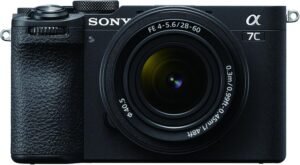
Sony A7CII
Style: Full-frame mirrorless
Manufacturer: Sony
✅ Get Customer Reviews & Best Price
Pros
-
Outstanding image quality
-
Compact full-frame body
-
Excellent low-light performance
-
Advanced autofocus tracking
-
Great for hybrid photo and video creators
Cons
-
Expensive
-
Larger lenses can reduce portability
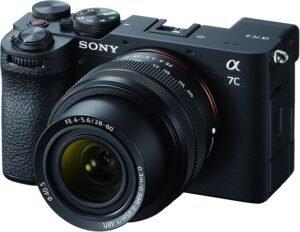
This is a strong choice if you want professional results in a relatively compact package.
The Sony A7CII brings true full-frame performance to a body nearly the size of many crop-sensor cameras, which makes it a compelling choice for intermediate travelers who want pro-level results without undue bulk.
Its sensitivity in low light lets you shoot deeper into dawn and dusk without needing heavy tripods or high ISO compromises. The autofocus system is sophisticated enough to often follow subjects across the frame without intervention, which is ideal for street photography and dynamic scenes.
Its video modes give you flexibility for travel vlogging or documentary work, and it supports external microphone input for cleaner audio. Interchangeable lenses mean you can tailor the camera to each trip’s needs, whether you want a wide lens for landscapes or a compact prime for portraits.
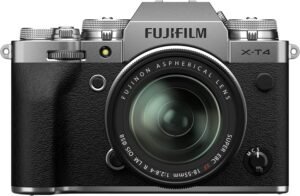
Fujifilm X-T4
Style: APS-C mirrorless
Manufacturer: Fujifilm
✅ Get Customer Reviews & Best Price
Pros
-
Beautiful film-style color profiles
-
Excellent stabilization
-
Strong video features
-
Great lens ecosystem
-
Durable build
Cons
-
The menu system can feel complex
-
Not as compact as some alternatives
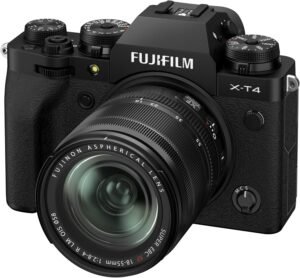
This camera is perfect if you care about aesthetics as much as technical performance.
The Fujifilm X-T4 stands out not just for its performance but also for the shooting experience. Its tactile dials and responsive controls make you feel connected to your images, which can be especially rewarding on long travel shoots.
Image processing gives photos a character that many creators prize, reducing post-editing time. In-body stabilization helps both stills and video remain usable without gimbals or tripods, which matters when you are walking city streets or capturing moving scenes.
The lens ecosystem for Fujifilm includes excellent options for travel-friendly primes and zooms that remain compact. Durability and weather resistance add confidence in varied climates, and the battery life supports long days of continuous shooting.
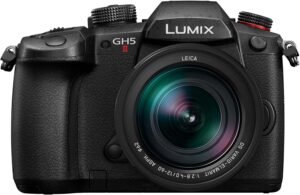
Panasonic Lumix GH5 II
Style: Mirrorless video-focused camera
Manufacturer: Panasonic
✅ Get Customer Reviews & Best Price
Pros
-
Outstanding video quality
-
Strong stabilization
-
Reliable autofocus for video
-
Great for travel filmmakers
-
Durable and weather-sealed
Cons
-
Not ideal for low-light photography
-
Slightly heavier
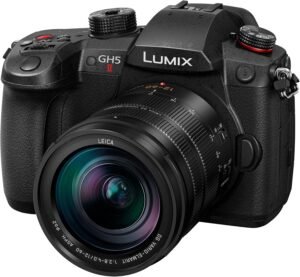
If video is your priority, this camera gives you professional tools in a travel-friendly body.
The Panasonic Lumix GH5 II is designed for creators who shoot both photos and long-form video. Its video capabilities include professional-level frame rates, flexible recording options, and a clean HDMI output, making it easier to integrate into larger rigs or external recorders as your travel production grows.
It’s built-in stabilization works well with a variety of lenses, helping smooth handheld footage even on uneven terrain or while on the move. The GH5 II also features a robust body that handles dust, moisture, and active travel environments with confidence.
Although heavier than some still-centric cameras, its advanced features reward creators who pursue both stills and video equally. The camera also supports creative features like focus stacking and time-lapse, expanding your storytelling tools on the road.
Use Our Decision Tool
We created this quiz to help you select the best travel camera for beginners for your needs. Just answer the 6 questions, and the tool will recommend a beginner’s travel camera for your unique situation.
Find Your Perfect Travel Camera
Answer 6 quick questions to get a personalized camera recommendation
How to decide between beginner and intermediate cameras
You should ask yourself three key questions:
-
How often do you travel?
-
How much time are you willing to spend learning settings?
-
What matters more to you, simplicity or control?
If you travel frequently and want stress-free shooting, start with a beginner-friendly camera. If you already know your way around manual settings and want creative depth, go intermediate.
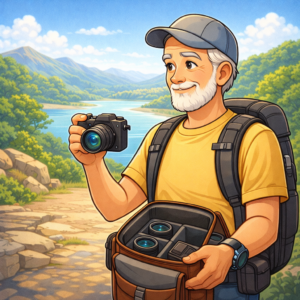
Even the best camera is only as good as how you carry it. You should pair your camera with a smart travel bag. For guidance on choosing a camera backpack that fits your creative workflow, read Camera Backpack Buying Guide for Social Creators.
Accessories to Complement Your Travel Cameras
To get the most value out of your travel camera setup, consider these accessories:
1. Travel Tripod or Mini Tripod
A compact travel tripod helps you capture stable long exposures, group shots, and video without fatigue. Look for one that is lightweight, fast to deploy, and sturdy enough for uneven terrain.
2. Extra Batteries and Power Bank
Long days of shooting, especially video, can drain batteries quickly. Extra batteries and a power bank ensure you stay powered through travel days without hunting for outlets mid shoot.
3. Memory Card Organizer Wallet
This keeps your cards labeled, protected, and easy to find. Losing memory cards can be a nightmare on the road, so this simple accessory reduces stress and organizational headaches.
Matching camera choice to your travel style
If you walk a lot, prioritize lightweight cameras. If you fly often, prioritize compact gear that fits easily in a personal item bag. If you shoot mostly video, prioritize stabilization and audio options.
The Best Travel Cameras for Beginner vs Intermediate Creators are the ones that fit seamlessly into your real travel habits.
Frequently Asked Questions
Should beginners buy mirrorless or compact cameras?
Beginners often benefit from compact cameras because they are simple, portable, and produce strong results without technical complexity. Mirrorless cameras are better if you want to learn lenses and manual settings quickly.
A compact camera reduces decision fatigue, letting you focus on composition, light, and storytelling rather than menus and accessories. You can slip it in a pocket, pull it out instantly, and start shooting without hesitation.
This encourages more consistent practice, which accelerates learning. Mirrorless cameras, on the other hand, reward curiosity. They introduce you to interchangeable lenses, depth-of-field control, and more advanced autofocus systems.
If you already enjoy tinkering with settings and want room to grow, mirrorless makes sense. If you want confidence and simplicity first, compact is usually the smoother starting point for travel creators.
Do I need 4K video for travel?
You do not need it, but it gives you more flexibility for editing and cropping. Many creators prefer 4K for professional-looking content.
4K allows you to reframe shots in post-production without noticeable quality loss, which is especially useful when you misjudge framing on the move. It also future-proofs your footage as platforms and displays continue to favor higher resolution content.
That said, 4K files are larger, require faster memory cards, and can drain batteries more quickly. If you mainly post short clips to social media, 1080p may still serve you well and simplify your workflow. The best choice depends on how much you value editing flexibility versus storage, speed, and battery efficiency while traveling.

Are full-frame cameras too big for travel?
Not necessarily, but lenses can add weight. Compact full-frame bodies can work well if paired with lightweight lenses.
Modern full-frame mirrorless cameras are significantly smaller than older DSLR systems, making them more travel-friendly than many people expect. The real size challenge often comes from lenses, especially fast zooms or specialty glass.
Choosing smaller prime lenses or lightweight travel zooms can keep your kit manageable. Full-frame sensors also perform better in low light, reducing the need for tripods or extra lighting.
If you prioritize image quality and shoot in dim environments, full-frame can be worthwhile. If portability is your top concern, an APS-C or compact camera may still feel easier to carry all day.
How many lenses should I carry?
Most travelers only need two lenses: one versatile zoom and one fast prime for low light.
A standard zoom covers wide landscapes, street scenes, and everyday moments without constant lens changes. A fast prime helps you shoot in dim cafes, night streets, or golden hour with cleaner results and beautiful background blur.
Carrying more lenses often leads to decision fatigue and heavier bags. It also increases the chance that the gear stays in your hotel instead of being used. If your trip includes wildlife or sports, you might add one telephoto lens, but for most travel creators, two lenses strike the ideal balance between flexibility and simplicity.
This approach keeps your kit light, organized, and ready for spontaneous moments.

Is image stabilization important?
Yes, especially if you shoot handheld video or in low light. Built-in stabilization reduces shaky footage.
Stabilization becomes even more valuable when you are walking, riding transit, or filming in crowded environments where tripods are impractical. It smooths micro-movements that the human eye barely notices, but cameras exaggerate them.
In photography, stabilization lets you shoot at slower shutter speeds without blur, which is helpful indoors or at dusk. Some systems combine in-body and lens stabilization for even better results.
While you can stabilize footage in editing, having it built into your camera saves time and preserves quality. For travel creators who move constantly, stabilization often makes the difference between usable and shaky footage.
Can beginners grow with beginner cameras?
Yes. Many beginner cameras offer manual modes that let you progress without upgrading right away.
You can start in automatic mode, then gradually experiment with aperture, shutter speed, and ISO as your confidence increases. Over time, you learn how light behaves, how to control the depth of field, and how to shape your images intentionally.
Beginner cameras are also lighter, which helps you shoot more consistently. When you eventually outgrow the camera, you will have a clearer sense of what features you actually need in your next upgrade.
This makes your future purchase more intentional rather than impulsive. Starting simple often leads to stronger skills and smarter gear decisions later.

Should I prioritize photos or video?
Your priority should match your goals. If social media is key, consider a camera that excels at both.
If your main focus is still photography, prioritize image quality, lens selection, and low-light performance. If you lean toward vlogging or storytelling through motion, prioritize video features like stabilization, autofocus, and audio inputs.
Many modern cameras perform well in both areas, which reduces the need to choose strictly between them. Think about how you actually share content. If you post Reels, TikToks, or YouTube videos regularly, hybrid performance becomes more important.
Aligning your camera choice with your creative habits ensures your gear supports your vision rather than slowing you down.
Final thoughts on Best Travel Cameras for Beginner vs Intermediate Creators
Choosing the Best Travel Cameras for Beginner vs Intermediate Creators is not about finding the most expensive gear. It is about finding the camera that supports your creativity, fits your travel style, and helps you tell better stories.
If you are a beginner, start simple, build confidence, and enjoy the process. If you are an intermediate photographer, choose a camera that challenges you creatively without becoming a burden.
The right camera should feel like an extension of your curiosity, not a barrier to it.
Authority Resources for Further Learning
- Get deep camera test results with DPReview’s reviews and learning hub.
- Follow practical gear breakdowns on CameraLabs camera and lens guides.