
Best Travel Cameras 2026 for Instagram, TikTok & YouTube
The Complete Guide to Choosing the Best Travel Camera for Content Creation in 2026
The entire conversation around what makes a “good” travel camera has been completely rewritten by the demands of vertical video, algorithmic content distribution, and the frankly exhausting reality that you’re not just taking photos anymore.
You’re running a mobile production studio while navigating foreign train stations with questionable Wi-Fi.
The traditional wisdom about travel cameras used to center on megapixels, sensor size, and how many landscape shots you could squeeze onto an SD card before your laptop’s hard drive begged for mercy. That advice feels almost quaint now.

What actually matters in 2026 is whether your camera can shoot vertical 4K at 60 fps without overheating in the Moroccan summer heat.
It’s also important to know whether the camera can track your face while you’re walking backwards through a crowded market in Bangkok, and whether you can transfer files to your phone fast enough to edit and post before the golden hour moment you just captured becomes algorithmically irrelevant.
Understanding the 2026 Content Creator Camera Landscape
The camera industry finally woke up to something that should’ve been obvious years ago. The majority of visual content consumed globally now happens on smartphones, in vertical orientation, on platforms that prioritize video over stills.
This realization has created an entirely new category of hybrid cameras that straddle the line between traditional photography and pure video capture in ways that would’ve required separate pieces of equipment just a generation ago.
The really fascinating development is how computational photography has migrated into dedicated camera systems. The stuff that made smartphone cameras genuinely impressive now lives in mirrorless cameras.
The Sony Alpha 7C III and Canon EOS R6 Mark III both incorporate AI-powered subject recognition that goes well beyond face tracking.
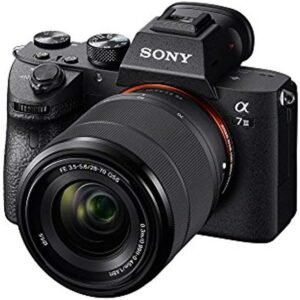
✅ Go Here for Reviews & Best Price on the Sony 7C III
These systems can identify and maintain focus on specific body parts, vehicles, animals, and even recognize when you’re trying to capture a particular type of scene and adjust settings accordingly.
This sounds gimmicky until you’re trying to film yourself walking through a dimly lit European cathedral, and the camera just knows to boost shadows while maintaining highlight detail in the stained-glass windows.
The practical application of this technology becomes immediately obvious when you’re creating content solo. Traditional travel photography allowed for contemplation and composition.
You could set up a tripod, frame your shot, and wait for the light.
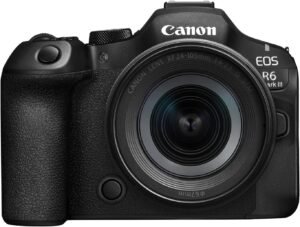
✅ Get Discounted Price on the Canon EOS R6 Mark III Here
Modern travel content creation demands that you simultaneously be the cinematographer, the subject, the audio engineer, and the editor, often while actually experiencing the place you’re documenting. The cameras that succeed in 2026 are the ones that reduce the cognitive load of that juggling act.
The biggest challenge you’ll face comes from too many good options. The gap between entry-level and professional gear has narrowed to the point where feature sets overlap in confusing ways.
A mid-range mirrorless camera now offers capabilities that would’ve required cinema cameras costing tens of thousands of dollars five years ago.
The real question becomes what your specific workflow actually needs, not what the camera can theoretically do.
Choosing the Right Camera System for Your Content Strategy
Before you even look at specific models, you need to honestly assess what kind of content you’re actually creating. This sounds obvious, but I’ve watched too many creators drop serious money on cameras optimized for the wrong use case.

If you’re primarily posting Instagram Stories and TikToks, you don’t need cinema-grade color science and ProRes recording. If you’re building a YouTube channel around travel documentaries, you can’t get away with a camera that overheats after twelve minutes of 4K recording.
DJI Osmo Pocket 3 Creator Combo
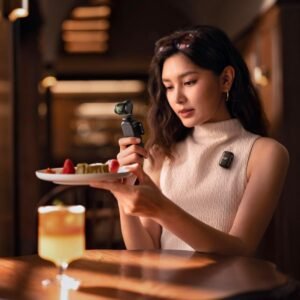
Let me start with something that technically isn’t a traditional camera at all, but has become absolutely essential in my kit. The DJI Osmo Pocket 3 represents a fundamental rethinking of what portable video capture can be.
It combines a three-axis gimbal with an integrated one-inch sensor camera, and in 2026, it’s been refined to the point where it handles about 70% of my quick-capture social content.
The genius of this device is that it eliminates the need for a separate stabilization system. You can literally pull it out of your pocket, and it’s already stabilized and ready to shoot.
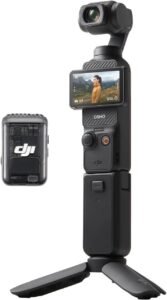
✅ Go Here for Reviews & Best Price
The third-generation model finally addressed the low-light limitations that plagued earlier versions, and the ability to shoot vertical natively without any adapters or weird mounting solutions makes it purpose-built for modern platforms.
What really sells me on the Pocket 3 is workflow efficiency. It connects to your phone wirelessly but doesn’t need your phone to operate.
You can shoot all day with the built-in screen, then transfer everything over Wi-Fi later when you’re back at your accommodation.
The battery life is genuinely impressive. I regularly get three to four hours of intermittent shooting before needing to charge.
✅ Get a Discounted Price on the DJI Osmo Pocket 3 Here
The limitation you’ll hit is creative control. The one-inch sensor produces great results but can’t match the depth-of-field control and low-light performance of larger sensors.
The fixed lens means you’re working with a single field of view, which can feel restrictive if you’re trying to create varied visual content.
It’s also not great for traditional photography. While it captures stills, you’re really buying this for video.
Fujifilm X-S20
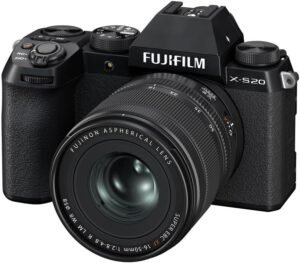
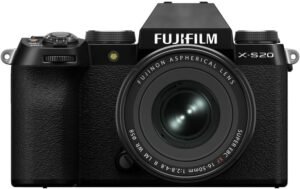
This is the camera I recommend most often to creators transitioning from smartphone content who want something that feels like a real step up without the overwhelming complexity of professional systems. The X-S20 is Fujifilm’s compact APS-C mirrorless camera, and it punches way above its weight class for content creation.
The standout feature is the fully articulating touchscreen that flips out to face forward. This seems like a small thing until you’re trying to frame yourself in a shot and you can actually see what you look like instead of guessing and checking footage later.
✅ Go Here for Reviews & Best Price
The autofocus system has been dramatically improved from previous Fujifilm generations, with face and eye detection that actually works reliably, which was a legitimate weakness for the brand until recently.
Fujifilm’s film simulation modes give you an aesthetic quality straight out of the camera, reducing editing time considerably. The Classic Chrome and Classic Neg profiles produce colors that just look good without extensive grading.
For Instagram and TikTok, where you’re often editing on your phone, having footage that already looks polished is a genuine advantage.
The X-S20 handles heat management well, which sounds boring until you’re trying to film a fifteen-minute talking-head piece in direct sunlight and other cameras are shutting down. The battery life is decent but not exceptional.
You’ll want at least two spare batteries for a full day of shooting.
The camera is also genuinely comfortable to hold and operate for extended periods, which matters more than you’d think when you’re carrying gear around all day.
Where it falls short is in low-light situations. The APS-C sensor is good, but it can’t compete with full-frame options when you’re shooting in dimly lit restaurants or evening street scenes.
The lens selection for Fujifilm’s X-mount is excellent, but it’s smaller than that for Canon’s or Sony’s ecosystems, which can limit specialized options.
Sony ZV-E1
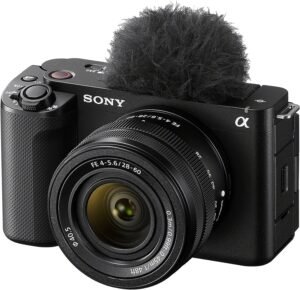
Sony took everything they learned from their Alpha series and created a camera specifically for vloggers and content creators. The ZV-E1 is essentially a stripped-down A7S III in a more compact body, and it’s become the default choice for serious YouTube travel creators in 2026.
The full-frame sensor provides exceptional low-light performance and that cinematic depth of field that makes content look noticeably more professional. The camera’s Auto Framing feature uses AI to detect subjects and dynamically adjust the active crop area to keep you centered in the frame.
✅ Go Here for Reviews & Best Price
It sounds gimmicky, but it’s genuinely useful when you’re filming yourself exploring a location and don’t want to constantly adjust framing.
Sony’s autofocus is legitimately the best in the industry. The real-time eye autofocus works reliably even in challenging conditions, and the camera can track subjects moving through complex backgrounds without hunting.
This is the kind of feature you don’t appreciate until you’ve experienced other systems that fail at it constantly.
The built-in five-axis stabilization is solid, though you’ll still want a gimbal for walking shots if you’re aiming for truly smooth footage. The camera can record 4K at up to 120 fps, giving you beautiful slow-motion options that elevate b-roll.
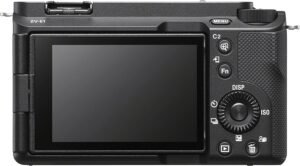
Battery life is respectable, and the dual card slots provide redundancy, which is important when you’re capturing once-in-a-lifetime travel moments.
The downsides are real, though. The ZV-E1 has no mechanical shutter, so you’ll encounter rolling shutter artifacts when shooting fast-moving subjects or panning quickly.
The camera also lacks a built-in viewfinder, which makes shooting in bright sunlight challenging since you’re relying entirely on the rear screen.
It’s also not weather-sealed, which is a significant concern if you’re traveling through unpredictable climates.
Canon EOS R6 Mark II
This is the camera I actually use as my primary body, and it represents the best balance of stills capability and video performance I’ve found for mixed-use travel content.
The R6 Mark II is Canon’s full-frame mirrorless workhorse, and the second generation refined all the rough edges of the original.
The 24-megapixel sensor is a sweet spot for both photography and video. It’s enough resolution for large prints and cropping flexibility, but not so much that file sizes become unmanageable when you’re traveling with limited storage.
The camera can shoot 4K at 60 fps without crop, delivering clean, full-sensor video that looks exceptional.
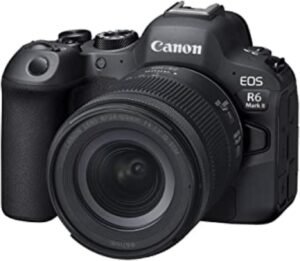
✅ Go Here for Reviews & Best Price
Canon’s color science is noticeably different from Sony’s, with skin tones that require less post-correction. This is subjective, but I find Canon footage looks more natural straight out of the camera, which again reduces the editing burden when you’re working on your phone or a laptop in a hostel with spotty power.
The in-body stabilization works harmoniously with optically stabilized RF lenses to provide up to eight stops of shake reduction. In practical terms, this means you can shoot handheld in situations that would’ve required a tripod or gimbal before.
I’ve captured usable footage at 1/4 second shutter speeds, which is almost ridiculous.
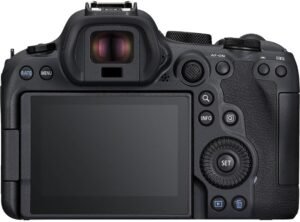
The R6 Mark II is also built like an actual tool rather than a consumer gadget. It’s weather-sealed, which I’ve tested extensively in rain, snow, and desert sandstorms.
The build quality inspires confidence that it’ll survive the physical demands of travel.
The battery life is excellent. I regularly get over 500 shots per charge and about 3 hours of intermittent video recording.
The main drawback is size and weight. With a lens attached, this is a substantial kit that takes up real space in a travel bag.
The RF lens system is also relatively expensive, though the quality is exceptional.
You’re really committing to the Canon ecosystem when you invest in this camera.
Nikon Z30
Nikon’s entry is specifically designed for content creators on a budget, and it’s an interesting option that prioritizes video features over stills capabilities.
The Z30 has an APS-C sensor and is significantly cheaper than the other cameras I’ve mentioned, making it accessible to creators just starting to monetize their content.
The camera records unlimited video length without overheating or clip limits, which is genuinely important for long-form content. You can shoot an hour-long talking piece without interruption, something that would cause many other cameras to overheat or hit file size limits.
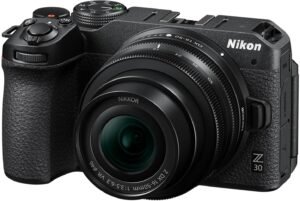
✅ Go Here for Reviews & Best Price
The flip-out screen faces forward, and there’s a red recording indicator light so you know definitively when you’re capturing.
Nikon included a proper stereo microphone and a 3.5mm input for external audio, acknowledging that audio quality matters as much as video quality for social content. The built-in mic actually produces usable audio in quiet environments, though you’ll still want an external solution for professional results.
The autofocus is reliable for video, with face and eye detection that works well in good lighting. It’s not quite as sophisticated as Sony’s system, but it’s more than adequate for typical vlogging scenarios.
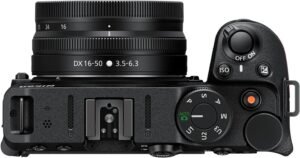
The camera is also very lightweight and compact, making it genuinely portable for extended travel.
Where you’ll feel the limitations is in photography capability and low-light performance. The Z30 has no viewfinder at all, which makes it challenging for traditional photography work.
The smaller APS-C sensor struggles in dim conditions compared to full-frame options.
The Nikon Z-mount lens ecosystem is still developing, with fewer affordable options than more established systems.
Use Our Decision Tool
We created this quiz to help you select the best hybrid camera for your needs. Just answer the 7 questions, and the tool will recommend the best camera for your unique situation.
Find Your Perfect Travel Camera
Answer 7 quick questions to get a personalized recommendation
Building Your Complete Travel Kit Around Your Camera Choice
Choosing the camera is actually the easy part. Building a complete system that supports your workflow while remaining portable enough to actually travel with is where most creators struggle.
I’ve learned, through painful trial and error, that what works in a studio or around your home city falls apart when you’re moving every few days with everything you own in a backpack.
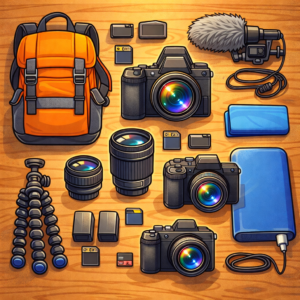
Your lens selection matters more than your camera body in many situations. For travel content, you want to minimize the number of lenses you’re carrying while maximizing versatility.
A quality 24-70mm equivalent zoom lens handles probably eighty percent of content creation scenarios.

You can capture wide establishing shots of locations and zoom in for detail work or tighter framing on yourself without swapping glass.
I also carry a compact prime lens, usually a 35mm or 50mm equivalent, for low-light situations and when I want a shallow depth-of-field look. Prime lenses are typically lighter and smaller than zooms while offering better image quality and wider apertures.
The limitation is that you’re stuck at a single focal length, but the improved low-light performance and background blur often make that trade-off worthwhile.
Audio equipment is non-negotiable despite what camera manufacturers want you to believe about their built-in microphones. I use a wireless lavalier system, specifically the Rode Wireless Pro, that clips to my shirt and sends to a receiver mounted on my camera.
This gives me clean, consistent audio regardless of camera distance, which is essential for vlogging and talking-head content.
The Wireless Pro also has onboard recording as a backup, which has saved me many times when wireless transmission dropped out.
Spare batteries are obviously critical, but what changed my workflow was investing in a compact USB-C power bank that can charge camera batteries directly. Many 2026 camera models support USB-C charging, so you can top up batteries while walking or on the go.
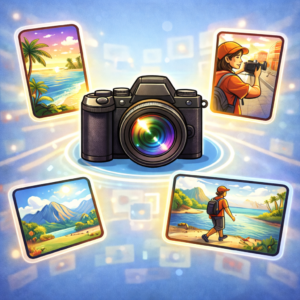
This eliminates the need to find wall outlets in unfamiliar countries with different plug types.
For stabilization, I carry a compact gimbal for specific shots that require truly smooth motion, but honestly, I use it less than I expected. Modern in-body stabilization handles most situations adequately, but the gimbal setup time often means missing spontaneous moments. I do carry a compact tabletop tripod that extends to about knee height.
It’s useful for low-angle shots and time-lapses without taking up much space.
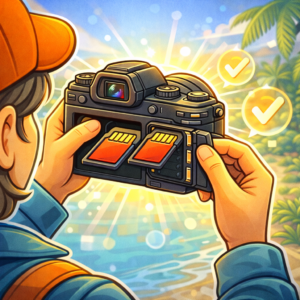
Storage management on the road needs actual planning. I shoot to dual SD cards when possible, with one card serving as a backup.
At the end of each day, I transfer footage to a portable SSD drive.
I use two drives in rotation, keeping them in separate bags so that if one bag is lost or stolen, I haven’t lost all my content. Cloud backup is ideal but often impractical with the limited bandwidth available in many travel destinations.
Adapting Your Camera Setup for Different Content Platforms
The technical requirements for Instagram, TikTok, and YouTube differ enough that your camera settings need to adapt for each platform. This goes beyond aspect ratios, though those obviously matter.
You need to improve your entire shooting approach for how content is consumed on each platform.
Instagram in 2026 is increasingly favoring video content over stills, with Reels receiving significantly more algorithmic distribution than photo posts. For Reels and Stories, shoot in the 9:16 vertical format at 1080p.
Many cameras now have a vertical video mode that rotates the entire interface, making it easier to frame shots naturally.
However, I often shoot in 4K 16:9 and crop to vertical in post, giving me the flexibility to reframe and use the same footage across many platforms.
The Instagram algorithm seems to favor Reels content between 15 and 30 seconds, with a noticeable drop-off in performance for longer videos. This means you’re optimizing for quick cuts, dynamic motion, and immediate visual impact.
Your camera’s ability to shoot at high frame rates for slow motion becomes really valuable here.
A three-second real-time action shot can be stretched to fill 10 seconds when shot at 120 fps.
TikTok is similar to Instagram in format but different in content style. The platform rewards authentic, less polished content over highly produced material.
I’ve actually found that some of my most successful TikTok content was shot entirely on my phone rather than my main camera, because the slightly rougher quality signals authenticity to the algorithm and audience.
When I do use my camera for TikTok, I’m often intentionally shooting handheld rather than stabilized to maintain that authentic feel.
YouTube remains the platform where production quality matters most. Viewers expect and reward 4K resolution, good audio, thoughtful composition, and polished editing.
This is where investing in a serious camera setup pays dividends.
YouTube content also tends to be longer-form, which means you need to plan for sustained recording times without overheating or battery limitations. The 16:9 aspect ratio is still standard, though YouTube now supports vertical video for Shorts.
The workflow I’ve settled into is shooting most content in 4K 16:9, then cropping and reformatting for different platforms during editing. This maximizes the value of each shot, since I don’t have to capture the same moment in multiple orientations.
The downside is that it needs more storage space and more powerful editing equipment, but the efficiency gain is worth it.
Common Problems You’ll Encounter and How to Solve Them
Temperature management is going to frustrate you at some point. Cameras generate heat when recording video, and in hot climates or direct sunlight, they can overheat and shut down.
The newer cameras I’ve mentioned handle heat better than previous generations, but it’s still a real limitation.
I’ve learned to keep spare cold packs in my bag that I can rest the camera on between takes. Some creators wrap their cameras in damp cloths in extreme heat, though you need to be careful about moisture damage.
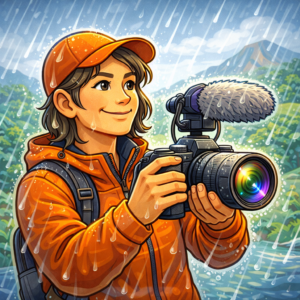
Humidity and rain pose different challenges. Even weather-sealed cameras can fail if water gets into the lens mount or card slots.
I carry a simple rain cover, basically a plastic bag with an elastic opening, that deploys in seconds when the weather turns.
I’ve shot in proper downpours with this setup and never had water damage. The key is to be proactive rather than wait until your gear is already wet.
Theft and loss are legitimate concerns when traveling with expensive camera gear. I never leave cameras visible in vehicles or accommodation.
When shooting in crowded areas, I use a camera strap that crosses my body rather than just hanging from my neck, making it much harder for someone to grab and run.
I also have all my gear insured through a specialized photography insurance policy that covers theft, loss, and damage worldwide.
File corruption happens eventually, no matter how careful you are. I’ve had SD cards fail, hard drives die, and random files become unreadable.
The solution is redundancy at every level.
Shoot with dual card slots when possible. Back up to many drives.

Keep the most critical content backed up to cloud storage even if bandwidth is limited. It’s inconvenient and sometimes expensive, but the choice is losing irreplaceable content.
Physical exhaustion from carrying gear is something nobody talks about, but everyone experiences. A camera, lenses, batteries, a gimbal, a tripod, and accessories can easily weigh ten to fifteen pounds.
After walking twenty thousand steps exploring a city, that weight becomes genuinely burdensome.
I’ve become ruthless about carrying only what I’ll actually use on specific shooting days. If I’m primarily doing walking tours and street content, I’ll leave the gimbal and extra lenses behind.
If I’m shooting landscape content at specific locations, I’ll carry the full kit but plan transportation that minimizes walking distance.
Frequently Asked Questions
What camera do most travel vloggers use?
Most professional travel vloggers in 2026 use the Sony ZV-E1 or Canon R6 Mark II as their primary cameras. These full-frame mirrorless cameras offer the best combination of video quality, autofocus performance, and manageable size for extended travel.
Budget-conscious creators often use the Fujifilm X-S20 or Nikon Z30, which provide excellent video capabilities at lower price points.
Can you use a mirrorless camera for Instagram Reels?
Yes, mirrorless cameras work excellently for Instagram Reels. Many modern mirrorless cameras have vertical video modes that make shooting 9:16 content easier.
The higher video quality, better low-light performance, and superior autofocus compared to smartphones result in more professional-looking Reels that tend to perform better algorithmically.
How do I transfer video from my camera to my phone quickly?
Most modern cameras have Wi-Fi connectivity that allows wireless transfer to smartphones through manufacturer apps. Canon’s Camera Connect, Sony’s Imaging Edge Mobile, and Fujifilm’s Camera Remote apps all support wireless file transfer.
For faster transfers, some cameras support USB-C direct connection to phones.
The DJI Osmo Pocket 3 has particularly fast wireless transfer speeds optimized for social media workflow.
What camera shoots the best video in low light?
The Sony ZV-E1 has the best low-light video performance among travel cameras, thanks to its full-frame sensor derived from the A7S III. It can shoot usable video at ISO 12800 and higher.
The Canon R6 Mark II also performs excellently in low light, with slightly different color science that some creators prefer for skin tones.
Do I need a gimbal for travel vlogging?
You don’t necessarily need a gimbal for travel vlogging if your camera has good in-body stabilization. The Canon R6 Mark II and Sony ZV-E1 both feature stabilization systems that deliver smooth handheld footage in most situations.
However, a gimbal is useful for specific walking shots that require perfectly smooth motion.
The DJI Osmo Pocket 3 has a built-in gimbal, eliminating the need for separate stabilization equipment.
How long can mirrorless cameras record video continuously?
Recording limits vary significantly by camera model. The Nikon Z30 has no recording time limit and can record continuously for hours without overheating.
The Canon R6 Mark II can typically record 4K video for about 40 minutes before heat becomes an issue.
The Sony ZV-E1 can record for extended periods but may overheat in warm environments after 30-60 minutes of continuous use.
What lens is best for travel content creation?
A 24-70mm f/2.8 or f/4 zoom lens is the most versatile option for travel content creation. This focal range covers wide establishing shots and tighter framing for portraits or details.
The constant aperture allows consistent exposure when zooming.
Many creators also carry a fast prime lens, such as a 35mm f/1.8, for low-light situations and shallow depth-of-field effects.
Key Takeaways
The best travel camera for content creation in 2026 aligns with your specific workflow and content style rather than focusing on the most impressive specs.
A smaller camera you’ll actually carry and use beats a technically superior camera that stays in your bag because it’s too bulky or complicated.
Video capability matters more than megapixel count for modern content creation. Autofocus reliability, stabilization systems, and thermal management are more important to most creators than sensor size.
Your complete kit, including lenses, audio equipment, stabilization, and backup systems, matters more than just the camera body. A mid-range camera with quality support equipment outperforms an expensive camera used in isolation.
Platform optimization needs to adapt both technical settings and content approach. What works on YouTube doesn’t necessarily work on TikTok, and understanding these differences drives better performance.
Workflow efficiency is critical when traveling. The ability to quickly capture, transfer, edit, and publish content from anywhere in the world with limited resources needs intentional system design and practice.
Manual control skills reduce editing time and improve consistency. Understanding how your camera works at a technical level gives you creative options that auto modes can’t provide.
Redundancy and backup systems are essential insurance against the inevitable equipment failures, theft, and accidents that happen during extended travel.
Industry Resources
- Read working-pro perspectives on The Phoblographer camera and lens reporting.
- Discover DIY rigs and creative hacks at DIY Photography technique ideas.