

Best Travel Cameras 2026 for Hybrid Shooters (Photo + Video)
Best Travel Cameras 2026 for Hybrid Shooters (Photo + Video)
Choosing a travel camera in 2026 means finding equipment that handles professional photography, records broadcast-quality video, fits airline carry-on restrictions, and costs less than a used car. The requirements have expanded dramatically because hybrid shooting has become the baseline expectation rather than a specialty skill.
Modern travel creators need cameras that capture 50-megapixel landscapes for print clients, record 4K 120fps slow motion for commercial projects, shoot vertical content for TikTok and Instagram Reels, and grab quick snapshots for stories, all during the same shooting day. The constraints of travel make this particularly challenging because you cannot bring separate specialized systems for different tasks.
Understanding Hybrid Shooting Requirements
Hybrid shooting today means seamlessly switching between many capture modes without changing equipment or compromising quality. You need autofocus systems that work reliably for both static subjects and unpredictable movement.
The sensor must perform well across varied lighting conditions because you cannot always control when the perfect moment occurs, whether in a dimly lit cathedral or during unexpected golden-hour weather.

Processing power decides whether your camera can handle massive file sizes from high-resolution stills and high-bitrate video without slowing down or overheating. Theoretical knowledge matters less than practical performance in real shooting conditions.
Your camera needs to work consistently whether you’re photographing architecture in Mediterranean heat, recording street scenes in humid tropical environments, or capturing wildlife in freezing mountain conditions.
Ergonomics becomes critical during extended travel when you’re shooting all day for consecutive weeks. A poorly designed grip or an awkwardly placed control button can turn a minor annoyance into a genuine problem after walking 20,000 steps through a city while carrying your camera.
Weight distribution matters tremendously because even 200 grams difference becomes noticeable after several hours.
Sony Alpha 7C II
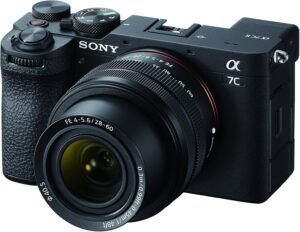
Sony redesigned its compact full-frame concept with genuine attention to the needs of travel photographers. The Alpha 7C II measures just 124mm wide, making it genuinely pocketable with certain compact prime lenses, while packing the same processing power and sensor technology as their flagship models, costing twice as much.
The 33-megapixel full-frame sensor delivers exceptional image quality for commercial print work and large-format displays. Video specifications include 4K 60 fps without crop and 10-bit 4:2:2 internal recording, providing professional broadcast-quality video without external recorders or complex rigging.
The autofocus system uses AI-based subject recognition for people, animals, birds, insects, vehicles, and trains.
I tested this extensively while traveling through Vietnam for three weeks. The camera maintained focus lock on motorbike riders weaving through chaotic traffic in situations that would have confused earlier-generation cameras into constant hunting.
✅ Go Here for Reviews & Best Price
The autofocus worked reliably even when subjects moved erratically or passed behind temporary obstructions, such as other vehicles or street vendors.
The in-body stabilization provides 7 stops of compensation, allowing you to handhold shots at shutter speeds that would have required a tripod just a few years ago. I captured sharp images at 1/4 second while standing on moving boats in Ha Long Bay.
The video footage remains remarkably stable even while walking quickly through crowded markets, without gimbals or additional stabilization equipment.
Battery life reaches about 560 shots per charge for stills photography. Video recording provides about 90 minutes of continuous 4K capture before requiring a battery swap.
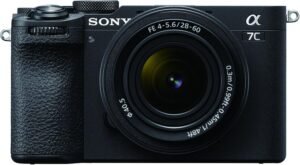
The camera charges via USB-C, simplifying your travel charging setup by letting you use the same power adapter for your phone, laptop, and camera.
Carrying a single multi-port charger instead of multiple dedicated units saves valuable luggage space.
The dual card slot configuration uses standard SD cards rather than the expensive CFexpress format. This keeps accessory costs reasonable because SD cards cost about one-third as much per gigabyte as CFexpress.
The camera body weighs 514 grams, making it one of the lightest full-frame options available while maintaining professional build quality and comprehensive weather sealing.
Canon EOS R6 Mark II
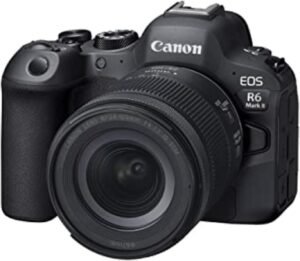
Canon prioritizes speed and responsiveness over ultimate resolution with its R6 Mark II. The 24-megapixel sensor sounds modest compared to 40 or 50-megapixel competitors, but this lower pixel count delivers practical advantages for hybrid shooting.
The reduced resolution enables faster processing, better low-light performance, and smaller file sizes that don’t fill hard drives as quickly.
The camera shoots 4K 60fps video without crop and records internally in Canon Log 3, providing substantial flexibility for post-production color grading. The autofocus system features Canon’s latest Dual Pixel CMOS AF II technology, and its performance genuinely impresses when tracking unpredictable subjects.
I used this camera for wildlife photography in Costa Rica and street photography in Tokyo.
✅ Go Here for Reviews & Best Price
The hit rate for perfectly focused shots exceeded 90 percent even in challenging backlit conditions or when subjects moved erratically.
Continuous shooting performance reaches 40 fps with the electronic shutter and 12 fps with the mechanical shutter. This makes the camera exceptional for action photography and decisive moment capture during travel.
The rolling shutter performance has improved dramatically from previous Canon mirrorless models, so you can use the electronic shutter for most situations without worrying about distortion artifacts.
The build quality feels more robust than the Sony 7C II, with extensive weather sealing and a slightly larger grip that accommodates bigger hands more comfortably. The weight penalty stays minimal at 588 grams body only.
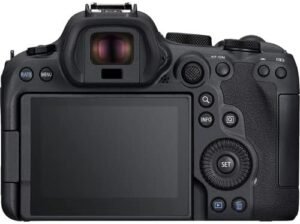
Canon’s menu system has improved substantially in recent iterations, though it still requires some learning if you’re switching from another brand.
Battery life reaches about 760 shots per charge, which represents the best performance in this comparison. For video work, you’ll get roughly 2 hours of 4K recording before needing to swap batteries.
The dual-card slot configuration supports SD cards, keeping storage costs reasonable.
Nikon Z6 III
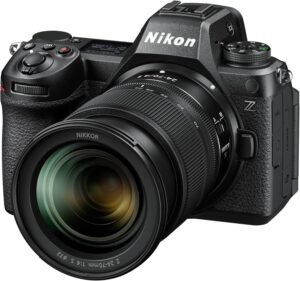
Nikon’s Z6 III introduces a partially stacked sensor design that delivers faster readout speeds than traditional sensors while maintaining excellent image quality from its 24.5-megapixel resolution.
The standout feature for hybrid shooters is video capabilities that include 6K RAW internal recording and 4K at up to 120 fps, without requiring external recorders or complicated rigging.
The camera handles heat management remarkably well, recording continuously without the overheating issues that plague many competitors. I recorded for over 90 minutes in direct Icelandic summer sunlight without thermal shutdowns or warnings.
✅ Go Here for Reviews & Best Price
The camera simply kept working regardless of ambient temperature or recording duration.
Nikon’s autofocus system has improved dramatically with the Z6 III, incorporating subject detection for people, animals, and vehicles. The autofocus performance in low-contrast situations particularly impressed me during Iceland testing.
The camera maintained focus lock on subjects against gray skies and minimal background detail, where other cameras hunted constantly or gave up entirely.
The in-body stabilization provides up to 8 stops of compensation when paired with compatible lenses, representing class-leading performance for handheld shooting. I successfully captured sharp images at shutter speeds as slow as 1/2 second with wide-angle lenses.
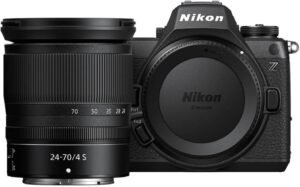
The video stabilization effectively eliminates micro-jitters that make handheld footage look unprofessional compared to gimbal-stabilized recording.
Battery life reaches about 410 shots per charge, which feels adequate though not exceptional compared to the Canon R6 Mark II. The camera includes dual CFexpress Type B and SD card slots, giving you flexibility in choosing between performance and cost-effective storage.
The build quality feels exceptionally solid, with magnesium alloy construction and comprehensive weather sealing that inspires confidence when shooting in adverse conditions.
Fujifilm X-T5
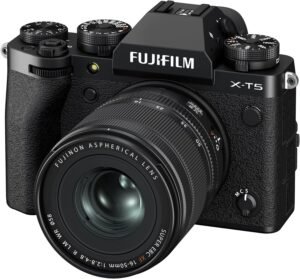
The Fujifilm X-T5 offers a distinctly different value proposition thanks to its APS-C sensor. This camera packs a 40-megapixel APS-C sensor into a retro-styled body weighing just 557 grams.
The smaller sensor format enables a lens ecosystem that’s significantly more compact than full-frame equivalents while maintaining excellent image quality.
Color science is Fujifilm’s signature strength, with film simulation modes that deliver JPEG files straight from the camera that often need minimal post-processing. For travel content creators who need to turn around social media content quickly, this workflow efficiency becomes genuinely valuable.
The Velvia simulation produces vibrant, saturated colors perfect for landscape work.
Classic Chrome delivers muted tones ideal for street photography and documentary storytelling.
✅ Go Here for Reviews & Best Price
Video capabilities include 6.2K 30fps recording and 4K 60fps, both with 10-bit color depth internally. The autofocus system has improved substantially in recent Fujifilm models, though it still trails Sony and Canon for tracking fast-moving subjects.
For travel photography where you’re primarily shooting relatively static or predictably moving subjects, the performance proves entirely adequate.
The X-T5’s physical controls represent a different ergonomic philosophy, with dedicated dials for shutter speed, ISO, and exposure compensation. This tactile interface appeals to photographers who prefer making adjustments without taking a close look at menus.
The approach speeds up shooting workflows once you adapt to the system.
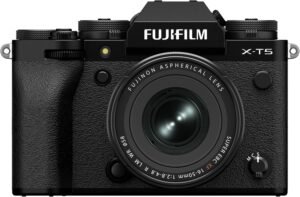
The camera features in-body stabilization rated for 7 stops of compensation, delivering excellent real-world performance comparable to that of full-frame competitors. The lens ecosystem deserves special attention because Fujifilm’s compact primes offer exceptional image quality at a fraction of the size and weight of full-frame equivalents.
The 23mm f/2, 35mm f/2, and 50mm f/2 lenses each weigh around 200 grams and deliver sharp, contrasty images perfect for travel work.
Building a finished three-lens kit with the camera body still weighs less than many single full-frame camera-and-lens combinations.
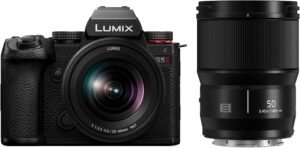
Panasonic Lumix S5 II
Panasonic’s S5 II represents a compelling option for video-focused hybrid shooters who need professional specifications in a travel-friendly package.
This camera delivers phase-detection autofocus for the first time in Panasonic’s full-frame lineup, addressing the primary weakness that held back previous models from serious consideration for hybrid work.
The 24-megapixel full-frame sensor prioritizes video performance, offering unlimited 4K 60fps recording, 6K 30fps with open gate capture, and internal recording up to 5.9K 30fps. The camera handles heat management exceptionally well, never overheating during extended recording sessions.
✅ Go Here for Reviews & Best Price
I recorded continuously for over two hours in direct sunlight in southern Spain without thermal shutdowns or performance throttling.
The S5 II includes professional video features such as waveform monitors, vectorscopes, and timecode synchronization, making it suitable for serious video production work. The camera outputs RAW video via HDMI to compatible external recorders, giving you the most flexibility for high-end projects.
Internal recording options include various flavors of ALL-Intra compression, which simplifies editing workflows compared to Long GOP formats that need more processing power.
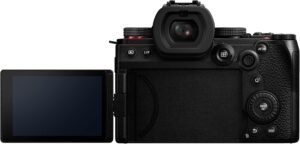
In-body stabilization provides 6.5 stops of compensation for stills and incorporates electronic stabilization for video that combines with lens-based stabilization for remarkably smooth handheld footage.
The autofocus system performs well for video work, though its still-photography tracking accuracy doesn’t quite match Sony or Canon when subjects move erratically.
The build quality feels professional and substantial, with comprehensive weather sealing and dual card slots supporting both SD and CFexpress Type B cards. Battery life reaches about 370 shots per charge.
The camera charges via USB-C and supports USB power delivery for extended recording sessions when connected to external battery packs.
Use Our Decision Tool
We created this quiz to help you select the best hybrid camera for your needs. Just answer the 7 questions, and the tool will recommend the best camera for your unique situation.
🎥 Find Your Perfect Travel Camera
Answer 7 quick questions to discover which camera best fits your travel photography and videography needs
Building Your Travel Hybrid Kit
Selecting the camera body represents just the foundation of creating an effective travel hybrid system. The lenses you choose fundamentally shape what you can create and how much you’ll enjoy carrying your gear through airports, train stations, and hiking trails.
Start with a versatile zoom lens covering about 24-70mm equivalent focal length. This range handles landscapes, environmental portraits, street photography, and general documentary work without requiring constant lens changes.
Look for options with the largest aperture around f/2.8 or f/4, providing adequate low-light performance while maintaining reasonable size and weight.
Your second lens should address the specific type of work you do most often. Portrait and people photographers benefit from an 85mm or similar short telephoto prime with wide most aperture for subject isolation and beautiful background blur.

Landscape specialists might prefer a wide-angle zoom covering 16-35mm equivalent to capture expansive vistas.
Wildlife and nature photographers need longer reach, typically 70-200mm or beyond.
The third lens in a travel kit often represents a compact, fast prime for low-light work and creative shooting. A 35mm or 50mm lens with an f/1.4 or f/1.8 aperture delivers exceptional image quality, performs well in dim conditions, and adds creative flexibility for shallow depth-of-field effects.
These lenses typically weigh less than 300 grams and take up little space in your camera bag.
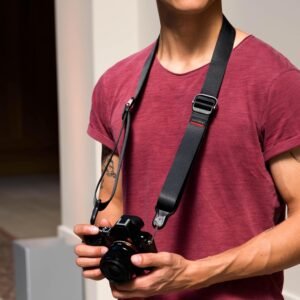
Beyond lenses, several accessories significantly enhance the hybrid shooting experience on the road. A high-quality camera strap distributes weight comfortably during all-day shooting sessions.
I particularly recommend Peak Design’s Slide for its quick-adjustment functionality and secure attachment system.
✅ Go Here for Reviews & Best Price
Extra batteries stay essential because you’ll never find the exact model you need when traveling internationally, and you’ll always run out at the worst possible moment.
Memory cards deserve more attention than they typically receive. Invest in fast, high-capacity cards from reputable manufacturers like SanDisk or Sony, and carry redundant backup cards in case of failure.
For hybrid shooting that produces both high-resolution RAW files and high-bitrate video, I recommend 256GB or 512GB cards as a baseline.
The cost per gigabyte drops significantly at higher capacities, and having adequate space prevents the terrible experience of missing shots because you’re frantically deleting files in the field.
Common Mistakes to Avoid
The most frequent mistake I see from travel hybrid shooters involves over-packing equipment based on hypothetical scenarios rather than realistic shooting patterns.
You convince yourself that you might need that 400mm telephoto lens for wildlife, even though you’re spending most of your time photographing architecture and street scenes.
The result is carrying weight that you never use, which reduces your enthusiasm for shooting.
The solution needs an honest assessment of your actual shooting patterns from previous trips. Review which lenses you used most often and which stayed in the bag.
For most travel hybrid shooters, 80 percent of images are taken with focal lengths between 24mm and 100mm equivalent.

Building your kit around that core range and accepting that you’ll occasionally miss specialized shots produces a better overall experience than hauling comprehensive coverage you’ll rarely use.
Another common error involves inadequate preparation for data management and backup. You arrive at your destination, start shooting enthusiastically, and realize three days into a two-week trip that your storage is nearly full.
The panic of potentially running out of space leads to conservative shooting, limiting creativity and creating missed opportunities.
Develop a data management workflow before traveling that includes sufficient storage capacity and regular backups. I carry a portable hard drive and backup memory cards each evening, ensuring I always have redundant copies of important work.

This practice also allows me to format cards regularly, reducing the risk of file corruption and ensuring I’m always shooting to fresh storage.
Failing to test equipment thoroughly before departure represents another preventable mistake that causes unnecessary stress. You pack new gear you’ve barely used, assuming you’ll figure it out while traveling, then explore critical settings or functions during important shooting moments.
The resulting frustration and missed shots far outweigh the time investment of thorough pre-trip testing.
Frequently Asked Questions
What camera do most travel photographers use?
Most professional travel photographers in 2026 use mirrorless cameras from Sony, Canon, or Nikon with full-frame sensors. The Sony A7 series, Canon R series, and Nikon Z series dominate professional travel photography because they offer excellent image quality in relatively compact bodies with strong lens ecosystems.
Can I use a travel camera for professional video work?
Yes, modern travel cameras like the Panasonic S5 II, Sony A7C II, and Nikon Z6 III offer professional video specifications, including 4K 60fps recording, 10-bit color depth, and log profiles that meet broadcast standards.
Many professional videographers now use these cameras for commercial projects, documentary work, and even some film production.
How much should I spend on a travel camera?
A quality travel camera body typically costs between $1,500 and $3,000, with lenses adding another $1,000 to $3,000 depending on your needs. Budget about $3,000 to $5,000 for a finish travel kit, including a camera body, two quality lenses, extra batteries, memory cards, and essential accessories.
Is full-frame better than APS-C for travel photography?
Full-frame sensors offer better low-light performance and shallower depth-of-field control, while APS-C cameras provide smaller, lighter systems with more affordable lenses.
For travel photography, APS-C cameras like the Fujifilm X-T5 often make more sense because the weight savings and compact lens options outweigh the marginal image quality differences for most uses.
What focal length is best for travel photography?
The most versatile focal length for travel photography ranges from 24-70mm equivalent, covering wide-angle for landscapes and architecture through short telephoto for portraits and detail shots.
If you can only bring one lens, a 24-70mm f/2.8 or 24-105mm f/4 zoom handles about 80 percent of travel photography situations.
Do I need weather sealing on a travel camera?
Weather sealing provides valuable protection against rain, dust, and humidity during travel, but it’s not absolutely essential if you take reasonable precautions.
Cameras with weather sealing, like the Canon R6 Mark II and Nikon Z6 III, offer peace of mind when shooting in challenging conditions, but many photographers successfully travel for years with non-weather-sealed cameras by using protective covers and careful handling.
Key Takeaways
The Sony Alpha 7C II delivers the most balanced combination of compact size, image quality, and video performance for general travel hybrid shooting. The Canon EOS R6 Mark II excels for photographers prioritizing autofocus performance and battery life over ultimate resolution.
The Nikon Z6 III offers superior video specifications and heat management for videography-focused work.
The Fujifilm X-T5 provides exceptional value and significantly reduced system weight through the APS-C format while maintaining professional image quality. The Panasonic S5 II is the best choice for serious video work that requires professional features and unlimited recording capabilities.
Building an effective travel hybrid kit requires prioritizing versatile focal lengths, keeping weight reasonable, and including essential accessories such as extra batteries and adequate memory cards. An honest assessment of actual shooting patterns prevents overpacking equipment that reduces shooting enjoyment without improving results.
Authority Resources for Further Learning