
Best Lightweight Travel Cameras 2026 (Pocket-Friendly Picks)
Best Lightweight Travel Cameras 2026 (Pocket-Friendly Picks)
If you were planning to climb Mount Kilimanjaro, you’d face a choice between bringing the professional camera gear that captures stunning shots and the lightweight setup you can actually carry to the summit.
The full-frame DSLR with three lenses would tempt you, but when you calculated the extra eight pounds on your back at 15,000 feet, you might reconsider that beaten path of heavy equipment.
The same thing happens with your travel photography aspirations. You’d love to capture gallery-worthy images everywhere you go, but when you see how that camera bag weighs you down after six hours of exploring Barcelona, you opt for your smartphone instead.
The photography world has really shifted in the past few years. Manufacturers finally understood that travelers don’t want to sacrifice their shoulders for marginally better image quality.

They’ve engineered cameras that slip into jacket pockets while delivering results that genuinely rival much larger systems.
I’ve watched this transformation firsthand, and honestly, some of these pocket-sized machines have completely changed how I approach travel photography.
The cameras I’m covering here have been purpose-built for the specific needs of people who move through the world with curiosity and limited luggage space. Some prioritize extreme portability with fixed lenses.
Others offer interchangeable lens systems that stay surprisingly compact.
A few push video capabilities for travel vloggers. Each one represents a different philosophy about what matters most when you’re 8,000 miles from home with stories to tell.
Understanding What Makes a Travel Camera Actually Work
The concept of a travel camera seems pretty straightforward until you start really thinking about what that means in practice. I’ve carried dozens of camera systems through airports, up mountains, across deserts, and into crowded markets.
The theoretical specifications matter far less than how a camera performs in those real-world situations.
Weight and size form the foundation, but they’re not the complete story. A camera that weighs 300 grams sounds fantastic until you realize its battery dies after 150 shots, forcing you to carry three spares.

Or it lacks weather sealing, so you’re constantly anxious about unexpected rain. Or the grip is so minimal that your hand cramps after twenty minutes of shooting.
The sensor size debate has dominated photography forums for years, but the discussion has become less critical as technology advances. Modern one-inch sensors produce images that print beautifully at poster sizes.
Micro Four Thirds sensors offer exceptional quality with truly compact lens options.
Even some APS-C sensors now fit into bodies smaller than vintage film cameras. Full-frame travel cameras exist now, too, though they push the boundaries of what I’d call genuinely pocket-friendly.
Lens flexibility creates another dimension to consider. Fixed-lens cameras eliminate the need for decisions and reduce size, but you’re locked into a single focal length or zoom range.
Interchangeable lens systems offer creative freedom but tempt you to carry many lenses, defeating their portability.

The sweet spot varies based on your shooting style and discipline.
Video capabilities have become essential for many travelers. Even if you primarily shoot stills, the ability to capture 4K footage of moments that demand motion adds tremendous value.
Stabilization, frame rates, codec options, and overheating performance all matter when you’re documenting experiences.
Battery life deserves serious attention because charging opportunities vary wildly when traveling. A camera that delivers 400 shots per charge works everywhere.
One that manages only 200 shots becomes problematic in remote locations or during full-day excursions.

USB charging has become increasingly important, letting you power up from portable battery banks during transit.
The interface and menu system might seem like minor details until you’re trying to adjust settings quickly in changing light. Touch screens speed up certain operations.
Physical dials provide tactile feedback.
Customizable buttons let you access often-used functions instantly. A camera that fights you constantly kills the enjoyment of photography.
Cameras That Prioritize Ultimate Portability
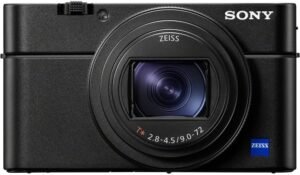
Sony RX100 VII
This camera represents the pinnacle of what you can pack into a truly pocket-sized body. The one-inch sensor delivers excellent image quality across ISO ranges that cover most travel scenarios.
The 24-200mm equivalent zoom range handles everything from wide architectural shots to compressed street portraits.
✅ Get Customer Reviews & Best Price
Real-world image stabilization keeps shots sharp even when you’re shooting handheld at the telephoto end during golden hour. The autofocus system tracks subjects with impressive tenacity, making it viable for capturing unexpected moments in busy environments.
I’ve used earlier RX100 models extensively, and the VII version brings professional-level responsiveness to a camera that literally fits in your jeans pocket.
The pop-up electronic viewfinder solves the visibility problem in bright daylight that plagues many compact cameras. Video shooters appreciate the 4K capabilities without significant cropping, plus the option for high-frame-rate recording for smooth slow-motion sequences.
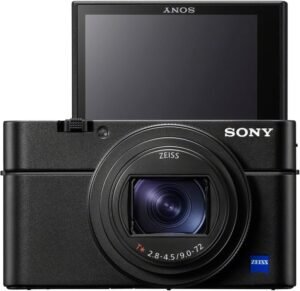
The microphone input adds proper audio capabilities, though it breaks the pure pocketability profile once you attach external gear.
The battery limitation remains the primary frustration. You’ll definitely want to carry at least two spares for a full day of mixed shooting.
The small size also means minimal physical controls, so you’ll navigate menus more than with larger cameras.
But for travelers who value having a capable camera always available, few packages match what this delivers.
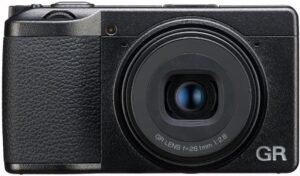
Ricoh GR IIIx
Ricoh took a completely different approach with the GR series by embracing a fixed focal length. The IIIx version uses a 40mm equivalent lens, which provides a slightly tighter perspective than the standard 28mm GR III.
This focal length feels really natural for environmental portraits, street photography, and travel documentation that emphasizes context without excessive distortion.
The APS-C sensor punches well above its weight for such a compact body. Image quality genuinely rivals that of interchangeable-lens cameras with similar sensors.
✅ Get Customer Reviews & Best Price
The sensor-shift stabilization helps in lower light, though the f/2.8 maximum aperture limits you compared to faster primes.
The built-in ND filter extends creative options for long exposures without carrying extra accessories.
What makes the GR IIIx special is how it encourages a particular style of shooting. You can’t zoom, so you move your feet.
You learn to see the world through that single focal length.
It becomes an extension of your vision rather than a tool you constantly adjust. Many photographers find this limitation actually enhances their creativity.
The snap focus function lets you preset a focus distance and shoot without any focus confirmation, enabling incredibly fast street photography. The touch-sensitive screen works well for selecting focus points.
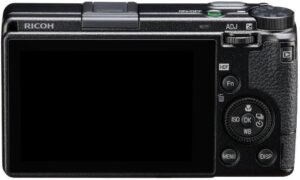
Customizable controls put often-used settings at your fingertips.
This is a photographer’s camera that rewards investment in learning its capabilities.
The complete lack of a viewfinder won’t work for everyone. Video capabilities are basic at best.
But for still photography, with a preference for a specific focal-length perspective, few cameras deliver this combination of image quality and genuine pocketability.
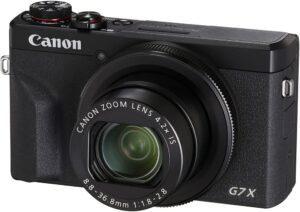
Canon PowerShot G7 X Mark III
Canon’s G7 X line has always targeted travel photographers and vloggers, emphasizing user-friendly operation. The Mark III version brings solid improvements in autofocus and adds microphone input for serious video work.
The one-inch sensor produces pleasing colors straight out of the camera, with Canon’s signature warm tone that many find appealing for travel imagery.
✅ Get Customer Reviews & Best Price
The 24-100mm equivalent zoom range covers really useful ground without pushing into the telephoto extremes that compromise image quality. The f/1.8-2.8 maximum aperture provides decent low-light performance and reasonable background blur for closer subjects.
The lens remains quite sharp across the zoom range, which matters more than having extreme reach.
YouTube creators have embraced this camera for travel vlogging because the flip-up screen enables selfie-style shooting while maintaining good autofocus and stabilization. The compact size doesn’t intimidate subjects or draw attention in public spaces.
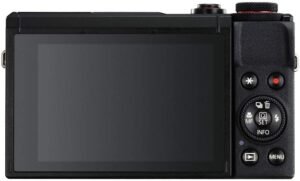
Live streaming capabilities directly from the camera open creative possibilities for content creators.
Traditional photographers might find the control layout less satisfying than the Sony RX100 series. The touchscreen compensates somewhat, but the design clearly favors hybrid shooters who value stills and video equally.
Battery life falls within the acceptable range at about 265 shots per charge, though video drains it faster.
The price positioning makes it attractive for travelers who want strong performance without premium pricing. It won’t wow pixel-peepers examining 100% crops, but it consistently delivers images that look excellent at normal viewing sizes and use cases.
Compact Systems with Interchangeable Lenses
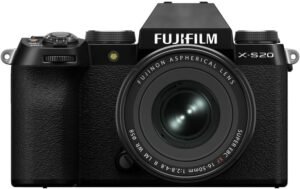
Fujifilm X-S20 with Compact Prime Lenses
Fujifilm’s X-S20 pushes the definition of pocket-friendly because the body alone doesn’t fit in most pockets.
However, paired with compact primes like the 27mm f/2.8 or 35mm f/2, the complete system remains remarkably portable for an APS-C camera with interchangeable lenses.
The combination delivers image quality that genuinely rivals full-frame systems while maintaining a travel-appropriate profile.
✅ Get Customer Reviews & Best Price
The sensor produces Fujifilm’s characteristic color rendering, often requiring minimal post-processing.
The film simulation modes let you achieve different looks in-camera, which I’ve found really valuable when traveling without consistent access to computers for editing.
Velvia for landscapes, Classic Chrome for street scenes, Acros for black and white, these presets actually work well as opposed to feeling like gimmicks.
Battery life improved significantly over earlier X-series cameras, with the larger battery delivering around 800 shots per charge. That’s legitimately all-day performance for most shooting styles.
USB charging lets you top up on the go with power banks or use hotel USB ports overnight.
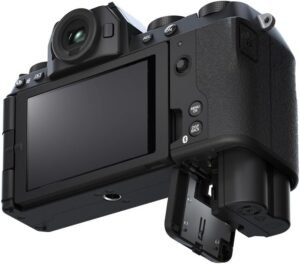
Video capabilities include 6K open-gate recording, giving content creators flexibility in post-production. The sensor stabilization works across any lens you attach, enabling handheld shooting in surprisingly low light.
The vlog mode and articulating screen accommodate video shooters without compromising still photography ergonomics.
The challenge with any interchangeable lens system is resisting the temptation to bring many lenses. The 18-55mm kit zoom offers excellent performance and reasonable size, but you’ll want those compact primes for even better portability and low-light capability.
Building a focused two or three-lens kit needs discipline but delivers tremendous creative range without excessive weight.
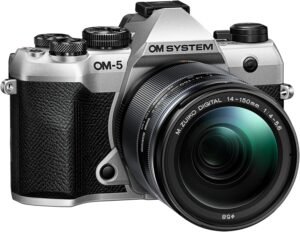
OM System OM-5
The Micro Four Thirds format has always offered advantages for travel photography, thanks to its smaller lenses and bodies.
The OM-5 carries forward Olympus’s weather-sealing excellence while adding modern features like improved autofocus and computational photography capabilities.
Paired with compact lenses like the 12-45mm f/4 Pro or 25mm f/1.8, it creates a system that balances capability with portability.
The sensor size limitation that critics focus on matters less in practice than specifications suggest. The image stabilization system is genuinely exceptional, providing up to 7.5 stops of compensation.
✅ Get Customer Reviews & Best Price
This lets you shoot handheld in conditions that would require a tripod with other systems.
For travel photography, where you often can’t or won’t carry a tripod, this advantage is really significant.
The weather sealing extends to many OM System lenses, creating a complete system that handles adverse conditions without anxiety. I’ve shot with similar Olympus cameras in rain, snow, and dusty environments where I wouldn’t risk less protected gear.
That confidence changes what you’re willing to photograph.
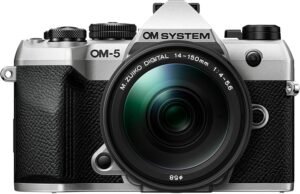
The computational photography features include live ND filters, focus stacking, and high-resolution shot mode. These in-camera capabilities reduce post-processing needs and enable techniques that would otherwise need extra gear or software.
The live composite mode for light trails and star photography works beautifully without hauling a laptop into the field.
Battery life is adequate rather than exceptional, at around 310 shots per charge. The electronic viewfinder and rear screen both perform well in bright conditions.
The control layout provides good access to important settings without overwhelming complexity.
This is a thoughtfully designed camera that prioritizes real-world usability over spec sheet bragging rights.
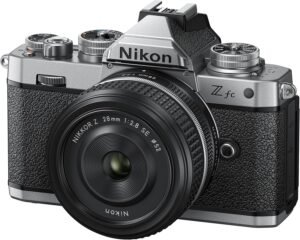
Nikon Z fc with Compact Lenses
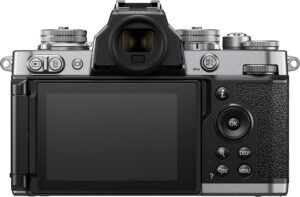
Nikon’s retro-styled Z fc combines genuinely good APS-C sensor performance with appealing vintage aesthetics. Beyond the looks, it offers practical advantages for travel.
The physical dials for shutter speed, exposure compensation, and ISO put key controls immediately accessible without menu diving.
The compact Z-mount lenses, such as the 28mm f/2.8 or the 16-50mm kit zoom, keep the system portable.
✅ Get Customer Reviews & Best Price
The 20-megapixel sensor provides resolution that covers most practical needs without generating massive files. This matters when traveling because you’re not constantly managing storage or spending forever transferring images.
The sensor performs well across typical ISO ranges, though it doesn’t push the limits of low light like some competitors.
The articulating touchscreen allows different shooting angles, particularly useful for food photography, low-angle architecture shots, and self-portraits. The autofocus system works reliably for general travel shooting, though it doesn’t match the subject tracking capabilities of more advanced cameras.
For typical travel scenarios with relatively static subjects, it performs well enough.
Video shooters get 4K at reasonable frame rates without excessive cropping. The specifications aren’t extraordinary, but they cover typical vlogging and travel video needs adequately.
The single SD card slot might concern professional photographers, but it simplifies the workflow for travelers who aren’t shooting paid assignments.
The nostalgic design aesthetic might seem like superficial marketing, but it actually influences how people respond to being photographed. The retro look feels less threatening than aggressive modern camera designs, often making subjects more comfortable. I’ve noticed this effect repeatedly when shooting candid portraits while traveling.
Use Our Decision Tool
We created this quiz to help you select the best hybrid camera for your needs. Just answer the 7 questions, and the tool will recommend the best camera for your unique situation.
📷 Find Your Perfect Travel Camera
Answer 6 quick questions to discover which lightweight camera matches your travel photography style
People Also Asked
What is the best compact camera for travel photography?
The Sony RX100 VII now leads the compact camera category for travel photography. It combines a one-inch sensor with a versatile 24-200mm zoom range in a body that genuinely fits in your pocket.
The autofocus performs reliably, the image stabilization works well, and the pop-up viewfinder solves visibility issues in bright sunlight.
For travelers who prioritize having a camera always available without carrying a bag, this represents the best balance of capability and portability.
Are mirrorless cameras good for traveling?
Mirrorless cameras excel for travel because they deliver excellent image quality in significantly smaller packages than traditional DSLRs. Modern mirrorless systems like the Fujifilm X-S20 or OM System OM-5 weigh considerably less while offering comparable or better performance.
The elimination of the mirror mechanism allows for more compact bodies, and the lens selections include truly portable options.
Battery life has improved to acceptable levels, making them practical for full-day shooting.
How much should I spend on a travel camera?
Budget between $500 to $1,500 for a capable travel camera that balances quality and portability. Cameras in the $500-800 range, like the Canon G7 X Mark III, deliver solid performance for most travelers.
Spending $1,000-1,500 gets you advanced features like the Sony RX100 VII or entry-level interchangeable lens systems.
Beyond $1,500, you’re paying for specialized capabilities or premium build quality that may not significantly improve your travel photos.
What camera do professional travel photographers use?
Professional travel photographers typically use interchangeable-lens systems, such as Fujifilm X-series, Sony Alpha, or OM System cameras, paired with compact prime lenses. The specific choice depends on their shooting style and assignment requirements.
Many professionals actually carry two systems: a compact like the Ricoh GR IIIx for everyday documentation and a more capable interchangeable-lens setup for planned shoots.
The trend moves toward lighter gear as image quality improves across smaller sensors.
Is a GoPro good enough for travel photography?
A GoPro excels at specific travel photography situations, but it doesn’t replace a traditional camera. The ultra-wide perspective, waterproof housing, and extreme durability enable creative angles and active shooting scenarios.
However, the fixed lens limits compositional flexibility, and low-light performance lags behind dedicated cameras.
Use a GoPro as a supplementary camera alongside a primary system, rather than as your sole photography tool.
Do I need a full-frame camera for travel?
You don’t need a full-frame camera for travel photography. Modern APS-C and Micro Four Thirds sensors deliver excellent image quality that meets the needs of the vast majority of travel photography.
The size and weight savings of smaller sensor systems matter more for travel than the marginal image quality advantages of full-frame.
Full-frame makes sense only if you regularly shoot in extremely low light or need maximum background blur for your specific style.
The Wrapup
Modern lightweight travel cameras deliver image quality that genuinely rivals much larger systems while still fitting in pockets or small bags.
The best choice depends on your specific priorities regarding portability, image quality, lens flexibility, and video capabilities, rather than a single universal recommendation.
Fixed lens compacts like the Sony RX100 VII or Ricoh GR IIIx maximize portability while delivering excellent results within their design constraints.
Interchangeable lens systems like the Fujifilm X-S20 or OM System OM-5 offer more creative flexibility while remaining considerably lighter than full-frame DSLRs.

Specialized tools like action cameras excel at specific tasks that traditional cameras handle poorly.
Building an effective travel photography system extends beyond the camera body to include thoughtful accessory selection, backup strategies, and workflows that match your travel style.
The camera that stays with you and gets used consistently matters more than the theoretically superior one that remains in your hotel because it’s too heavy or complicated.
Learning Hubs
- Use buyer-friendly explainers from B&H Explora Learn Photography.
- Level up your filmmaking basics in Adorama’s videography learning section.